
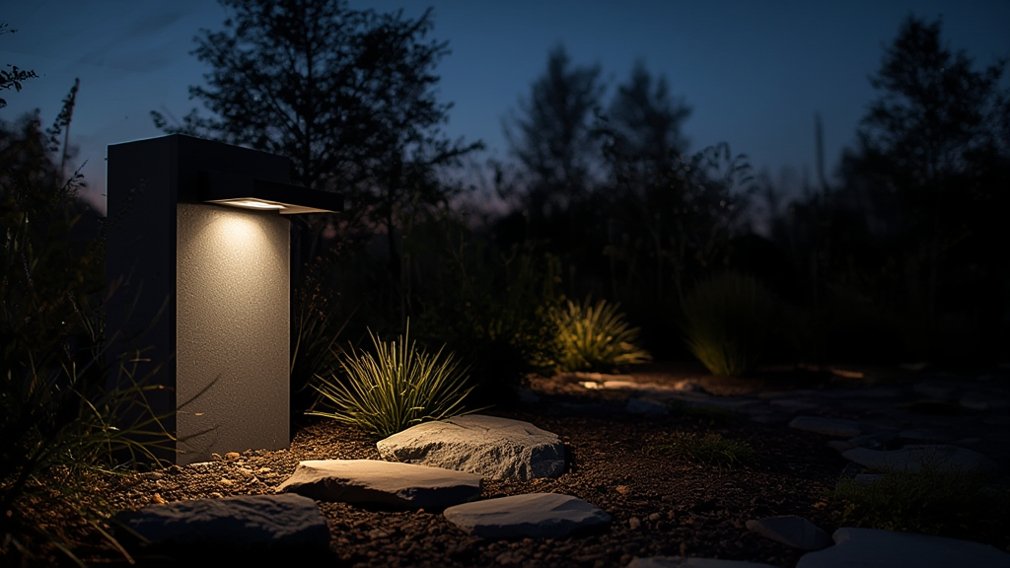
Dark Sky Lighting is the fastest route to safer, more beautiful landscapes that don’t harm birds, pollinators, or disrupt your night sky. Yet, not all products with “Dark Sky” on the box meet true standards. This guide gives you a step-by-step, no-nonsense approach—whether you’re a homeowner, landscaper, or park manager—to buy and install truly certified, wildlife-friendly outdoor lighting.
Key Takeaways
- Not all “Dark Sky Lighting” is certified—demand IDA-approved proof and photometric reports.
- Essential features: CCT ≤3000K (preferably 2700K), full-cutoff shielding, dimming, fixed mounting, and minimal uplight.
- Rebates and real cost data are scarce—contact local utilities directly and always verify compliance before purchase.
- Why “Dark Sky Lighting” on the label isn’t enough
- What the IDA actually requires (quick spec cheat‑sheet)
- Top technical specs for motion sensor landscape lights that meet Dark Sky goals
- Beam angles, shielding and mounting — what to ask for when buying fixtures
- Choosing the right color temperature — is 2700K/low‑kelvin best for wildlife?
- Real-world evidence and limits — what studies actually say about wildlife, birds and pollinators
- Common homeowner and landscaper pain points (and how to avoid them)
- Costs, rebates and municipal incentives — what we know and what’s missing
- A 5-step buying & installation checklist (actionable CTA)
- Three critical information gaps competitors miss (opportunities to outrank)
- Product callouts and sample spec language for bids (templates)
- Resources and next steps (where to verify and who to contact)
Why “Dark Sky Lighting” on the label isn’t enough
Many outdoor fixture brands claim to offer “Dark Sky Lighting” but don’t meet the International Dark-Sky Association (IDA) certification. This isn’t just a minor detail—true certification means real protections for wildlife and the night sky, not just reduced wattage or vague marketing. IDA approval requires photometric test data, strict uplight limits, low-blue spectrum output, and proper shielding. In 2024, there’s no published percentage of marketed “Dark Sky” fixtures that are genuinely certified, but reports show many LED options—especially those marketed on energy efficiency—fall short. Always demand an IDA approval or a photometric report. Don’t settle for buzzwords.
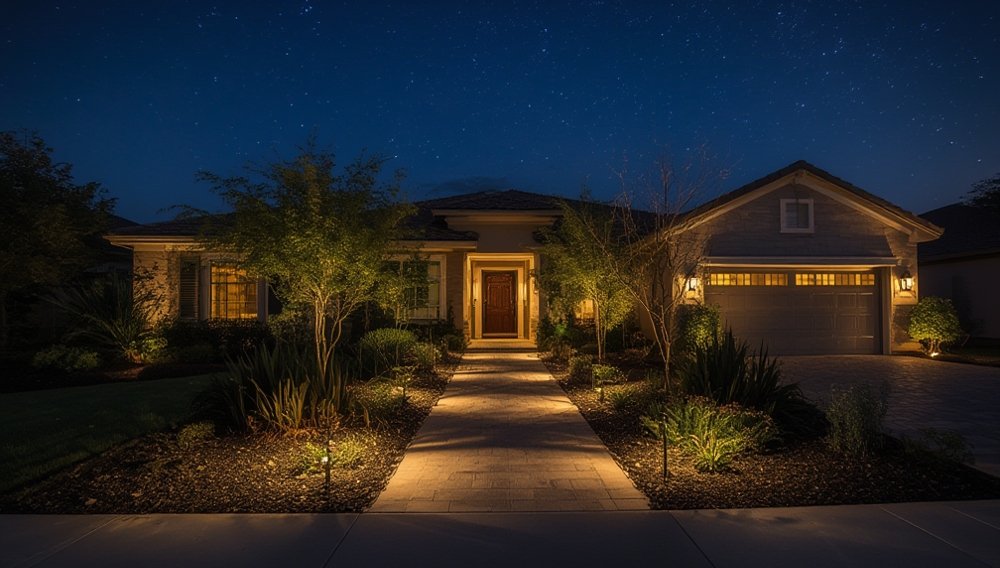
What the IDA actually requires (quick spec cheat‑sheet)
To truly protect local ecosystems, you need to know what counts. Here’s your bulletproof requirement list for Dark Sky Lighting and shielded garden fixtures:
- Uplight: Max 50 lumens directed upward (residential), commercial ≤0.5% of total fixture output above horizontal.
- Shielding: Full-cutoff—no direct view of the bulb or light source from above horizontal line-of-sight.
- CCT (Color Temperature): 3000K max (lower is better—aim for 2700K garden LEDs when aesthetics and wildlife protection matter).
- Dimming: Ability to dim lights to at least 10% of full brightness (see IDA dimming details), 1% for “innovation” class products.
- Mounting: Fixed mount with less than ±10° adjustability allowed.
- Photometric Validation: IES test files (such as .ies format) proving no uplight and CCT compliance.
For a deeper dive into landscape design and how lighting complements it, check out our Complete Guide to Landscaping Services and Backyard Ideas.
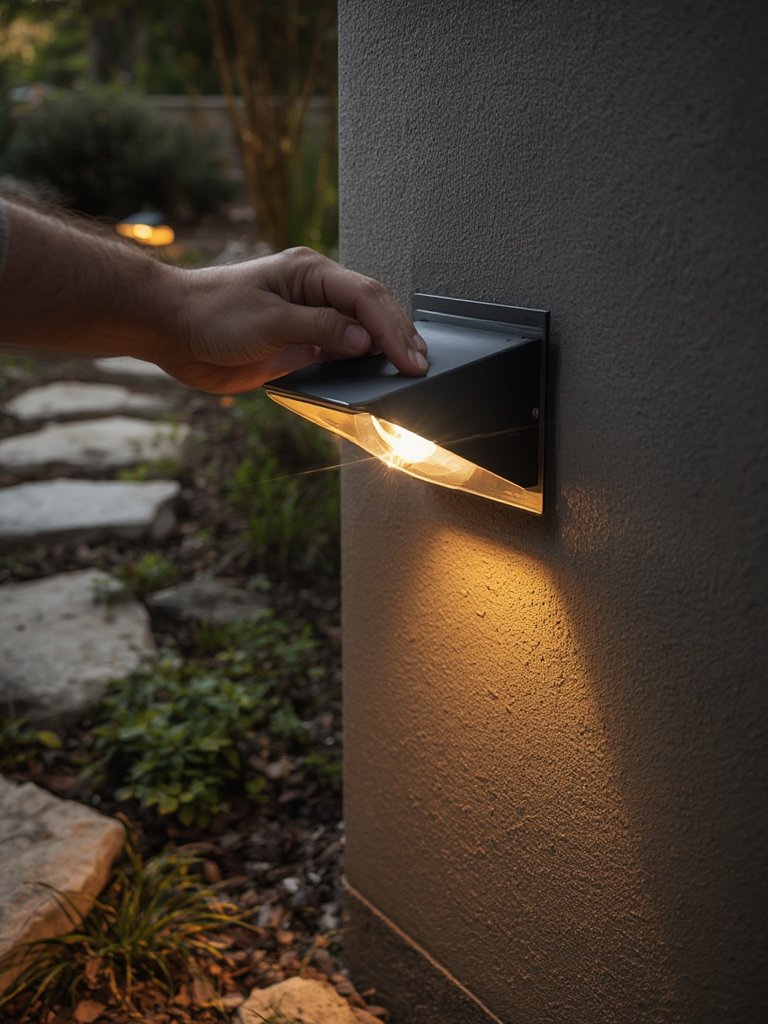
Top technical specs for motion sensor landscape lights that meet Dark Sky goals
Most motion sensor landscape lights don’t combine wildlife protection and real night safety. Here’s what to demand:
- Sensor type: Prefer hybrid (PIR plus microwave) to avoid missed detections but ensure sensitivity is tunable—shielding is mandatory to prevent stray illumination. Only consider fixtures with proven sensor field diagrams.
- Beam control: Always choose products with photometrically confirmed shielded garden fixtures—no direct uplight past the horizontal.
- Dimming and curfews: IDA-compliant sensors must dim lights to 10% (or lower) outside activity hours and support “curfew” modes to eliminate all light after set times, per IDA guidance.
- Timeout settings: Require programmable timeouts (under 5 minutes after trigger recommended).
- Compliance documentation: For any public park, HOA, or commercial install, require IES photometric confirmation and written sensor specs.
Combining these features helps protect wildlife and ensures practicality for homeowners and landscapers. For more on technology-driven home upgrades, compare our Smart Home Voice Control Guide.
Beam angles, shielding and mounting — what to ask for when buying fixtures
Shielded garden fixtures are only as good as their specification. Consider these angles:
- Full-cutoff optics: The light source is completely hidden above the horizontal. No visible bulb from the side—ask for a “full-cutoff” diagram.
- Beam angle: For path lighting, 40°–60° works well. For accent or focal-point spots, keep beams tightly controlled to avoid spill above horizontal.
- Mounting: All installations should hold position, not tilt more than ±10° from level. Demand a fixed mounting bracket in your purchase order.
- Photometric proof: Always request .ies files showing ≤50 lumens uplight (residential) or ≤0.5% output (commercial).
If you are specifying for a small public park or community, these requirements need to be documented in your bid language (samples at end of this guide). Need inspiration for outdoor living spaces? Explore our Outdoor Lounge Area Guide.
Choosing the right color temperature — is 2700K/low‑kelvin best for wildlife?
For wildlife and pollinator safety, low-kelvin outdoor bulbs are best practice. Aim for 2700K garden LEDs where possible—this produces a warm, amber-tinted light that’s less disruptive to birds and insects. According to IDA, CCT should not exceed 3000K, but their innovation standards go further: visible output between 380 and 520nm (the blue spectrum) must stay below 7%. While science supports the logic that warmer lighting is less harmful, real-world studies directly comparing 2700K to 3000K are still rare.
If you are conscious about local ecosystem health, look for bulbs explicitly rated at 2700K or select “amber” models. Unsure how this ties into your landscape? See our Biophilic Bathroom Design Guide for more nature-inspired home solutions.
Real-world evidence and limits — what studies actually say about wildlife, birds and pollinators
Despite strong ecological theory favoring low-kelvin and tightly shielded lighting, direct real-world comparative studies remain scant. Research shows consensus on reducing blue light and uplight for ecosystem health, but measurements of bird migration or pollinator behavior under different color temperatures are limited. No studies detailed in current technical literature let you decisively compare effects of 2700K garden LEDs against higher CCTs in authentic residential gardens.
Practical tip: Always consult local wildlife agencies or extension services for bespoke recommendations in your region—species sensitivities vary. For ideas on biodiversity-boosting plantings, consider our Keystone Plantings Guide.
Common homeowner and landscaper pain points (and how to avoid them)
Even when you buy the right shielded garden fixtures or motion sensor landscape lights, pitfalls abound:
| Common Problem | Realistic Solution |
|---|---|
| Misaligned heads/poor aiming | Use fixtures with fixed or lockable mounts; check alignment at night pre-drilling. |
| Unwanted glare/trespass into neighbor properties | Install full-cutoff shields and test at night before final mounting. |
| Complex photometric files or documentation missing | Contact manufacturer before purchase; insist on .ies files and sample compliance reports. |
| Sensor lights falsely triggered by wildlife or wind | Use motion sensors with tunable sensitivity; verify detection pattern with field test. |
| Unclear fixture compliance for rebates or HOA approval | Document installation with photos and specs; submit for pre-approval where possible. |
Feedback from real homeowners is scarce—and often, the most avoidable pain comes from skipping pre-purchase document checks. For more on investing wisely in outdoor home systems, read our Energy-Efficient Bathroom Upgrades Guide.
Costs, rebates and municipal incentives — what we know and what’s missing
2024 cost comparisons between standard outdoor lighting and certified Dark Sky Lighting are unavailable in any public or manufacturer databases. Anecdotally, expect certified shielded garden fixtures and high-quality sensors to cost more than traditional LEDs due to more advanced optics, dimming control, and housing. That said, payback appears strong where local incentives apply—but there are currently no central lists or average rebate data.
For current rebate or policy opportunities, contact your city or regional utility directly. Communities like Liberty Hill, TX have pursued Dark Sky certification, but published details focus on application process, not financial incentives. Always ask: Will my selected fixtures qualify for local rebate, HOA, or green-build programs? For more coverage of smart outdoor investments, read our Smart Solar Pergolas Guide.
A 5-step buying & installation checklist (actionable CTA)
- 1. Demand proof: Every fixture must be IDA certified or provide a photometric report confirming no more than 50 uplumen and 0% light above horizontal. Don’t guess—ask to see it before you buy.
- 2. Choose low-kelvin: Always select 2700K garden LEDs or amber where possible. Never exceed 3000K CCT.
- 3. Shield and fix: Only buy full-cutoff shielded garden fixtures with fixed mounting hardware (±10° max level adjustment).
- 4. Insist on smart controls: For motion sensor landscape lights, require dim-to-10% curfew modes and demonstrate detection pattern in your space.
- 5. Document everything: Save spec sheets, photometric files, and installation photos for compliance—and to speed any rebate or HOA process.
Stay strict with this checklist. If a product fails any item, move on.
Three critical information gaps competitors miss (opportunities to outrank)
Most articles skip these fundamentals—giving you leverage in product negotiations or as a contractor bidding jobs:
- Actual certification rates: No one publishes the percentage of “Dark Sky Lighting” on the market that’s truly IDA-approved. Always verify, don’t assume.
- Maintenance and complaint data: Real-world install frustrations (mounting, glare, sensor misfires) are rarely detailed—ask your supplier for references or case studies.
- Concrete cost and rebate charts for your city: There’s no public list by metro or state. Always call your city’s sustainability or utility office and ask, “What incentives do you offer for IDA-approved outdoor lights?”
Product callouts and sample spec language for bids (templates)
Use these short, tested requests to keep vendors honest and ensure agency or HOA approval:
- “Fixture must be IDA-approved or provide IES photometric documentation confirming ≤50 lumens uplight and 0% above horizontal.”
- “CCT not to exceed 3000K (preferably 2700K) and no more than 7% output in the 380–520nm spectrum.”
- “Provide dimming to 10% (or lower) plus a fixed mount with ±10° tolerance.”
- “Motion sensor landscape lights must support curfew and programmable timeout settings and include sensor field/detection diagrams.”
Routing these lines directly into RFPs or purchase orders saves headaches and ensures compliance on delivery.
Resources and next steps (where to verify and who to contact)
Never trust product packaging alone. Here’s where to verify and take action:
- Search the official IDA Approved Luminaires list for your exact model/SKU.
- Request .ies photometric files from your supplier or manufacturer before you purchase. Use free software to confirm Dark Sky Lighting compliance.
- Email or call your city utilities/energy department for the most up-to-date rebate or green incentive details—don’t wait for a rebate to show up on the web.
- Consult regional environmental or wildlife agencies for guidance on 2700K garden LEDs and best practices for pollinator and bird safety.
- For more on sustainable upgrades, check out guides like our Energy-Efficient Bathroom Upgrades or manufacturer compliance guidelines.
Conclusion
Buying Dark Sky Lighting is about more than checking a box—it’s a commitment to protecting your property, wildlife, and the view above. Always demand documentation, choose low-kelvin options, insist on full shielding and smart controls, and remember: most products with “Dark Sky” on the packaging are not certified. If you stay proactive and double-check compliance, your investment works for you, your neighbors, and your local ecosystem. Ready to upgrade? Start by requesting proof from your supplier—make every lumen count the right way.
Frequently Asked Questions
How can I tell if a product claiming to be “Dark Sky” is truly certified?
Verify directly on the IDA Approved Luminaires list or request a photometric report (.ies file) proving uplight limits, full shielding, and CCT compliance. Most store labels are not sufficient.
What color temperature (CCT) is best for wildlife and bird migration?
Prioritize fixtures at 2700K or use amber lights. These options minimize blue light output, which several ecological studies suggest causes the least disruption to nocturnal animals, though real-world results may vary by species.
Are motion sensor lights compatible with Dark Sky requirements?
Yes, if they include shielded optics, dim to 10% (or less), and feature programmable sensor curfews and timeouts. Confirm compliance for the specific fixture—many motion lights “leak” light outside intended areas if not carefully chosen.
Can I get a rebate for installing Dark Sky Lighting at my home?
There is no national list of rebates. Contact your local utilities or city directly to ask about any green-building or Dark Sky incentives—they frequently change by region and are not always advertised.
What’s the most common mistake when installing shielded garden fixtures?
Failing to get photometric or IDA documentation before purchase, leading to rejected installs or ineffective wildlife protection. Always request proof, and use fixtures with fixed, lockable mounts for consistent alignment.