

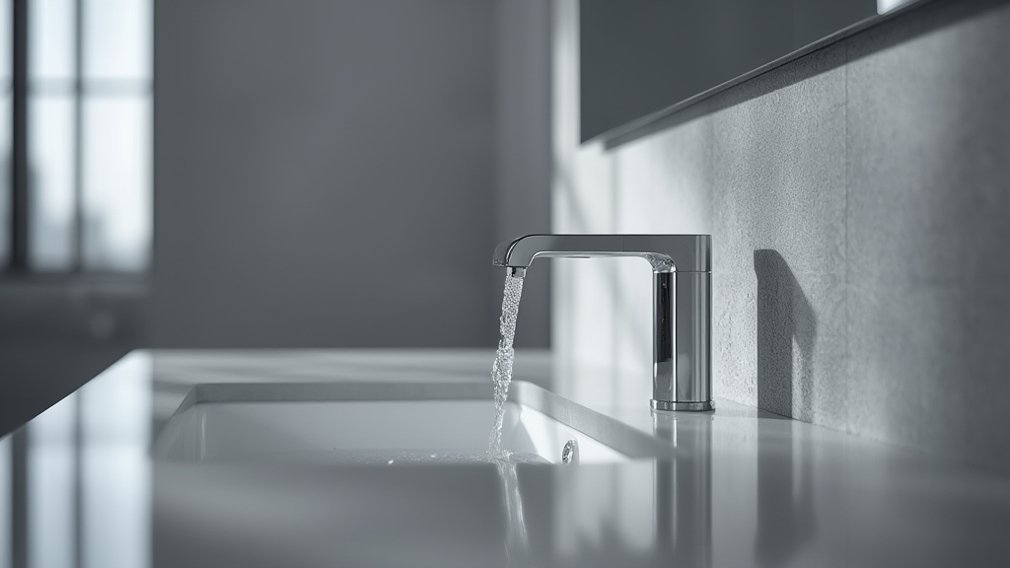
Touchless bathroom faucets are transforming hygiene standards and water efficiency for facility managers and homeowners in 2024, offering the rare blend of smart technology, ROI, and compliance advantages—when you know what to look for.
Key Takeaways
- Touchless bathroom faucets deliver measurable hygiene and water savings, with the market projected to grow 7% CAGR through 2030 (industry reports).
- Procurement decisions must balance upfront costs, sensor reliability, regulatory compliance, and real installation hurdles for both new builds and retrofits.
- Vendor-neutral specs, smarter buying frameworks, and a clear plan for maintenance are critical for maximizing lifecycle ROI.
- Market snapshot — Why touchless faucets matter in 2024
- Adoption trends — Commercial vs. residential: who’s buying and why
- Regional demand map — Where the market is concentrated
- Competitive landscape — Major brands and market share implications
- Common user complaints & real-world reliability issues (and how to mitigate)
- Technical spec checklist — What to compare before you buy
- Costs & installation — Budgeting for purchase, install, and upkeep
- Hygiene impact — What’s proven and what’s still unquantified
- Regulatory & standards landscape — Water rules, certifications, and compliance risks
- Installation challenges & common retrofit pitfalls (actionable how-to)
- Long-term value & ROI framework (5-year model)
- Product highlights & specs to showcase (examples to include in article)
- Content elements, visuals and CTAs that convert
- FAQ — Quick answers to buyer’s top questions
- Opportunity gaps for original reporting (what this post should add that competitors don’t)
Market snapshot — Why touchless faucets matter in 2024
Touchless bathroom faucets move beyond “nice to have” in 2024: the global market hit $2.5 billion this year, with a projected 7% CAGR through 2030, led by rapid advances in sensor technology and mounting pressure from building codes and public health standards. Commercial and institutional buildings are setting the pace, but affordable smart fixture models now make this upgrade attractive for high-ROI residential renovations.
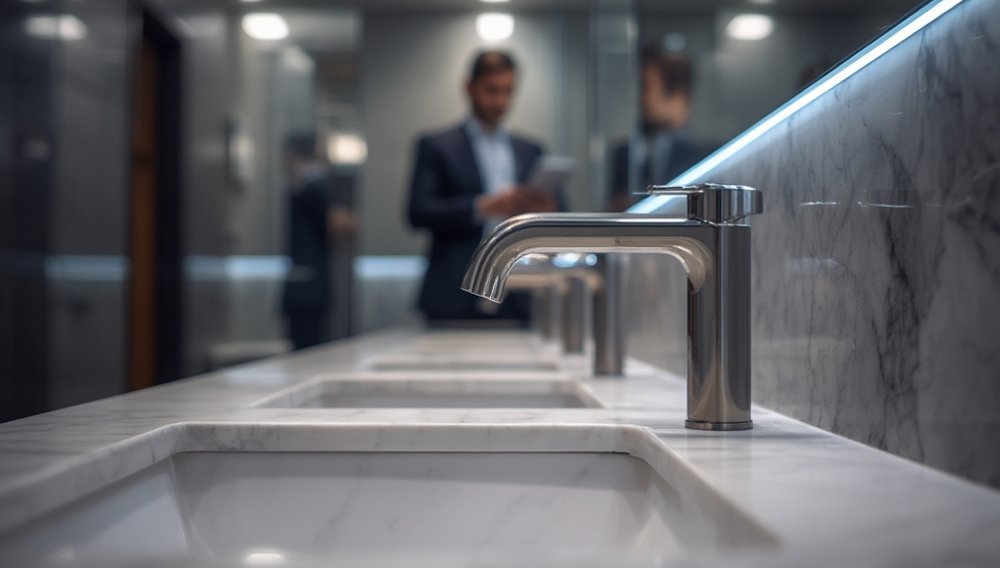
Major players—including Sloan Valve, Kohler, and Delta Faucet—command over 40% of the market [industry analysis]. Growth is now as much about compliance and lifecycle economics as it is about hygiene or visual upgrades. Procurement teams benefit from quantifiable savings on water costs and reduced cross-contamination—two numbers that drive decisions for both facilities and homeowners aware of sustainable, modern upgrades.
Adoption trends — Commercial vs. residential: who’s buying and why
Commercial buildings—hospitals, hospitality, office properties—lead touchless adoption. Why? Hands-free faucet and touchless sink requirements increasingly appear in hygiene and water conservation mandates. High foot traffic and exposure risk reinforce these investments.
But the residential segment is accelerating fast, thanks to more affordable models and the pandemic-driven demand for better home hygiene. Homeowners now seek the same touchless sink technology found in hotels and offices for bathrooms slated for modern remodels and smart-home upgrades. For residential buyers, lifestyle value (no more fingerprints or germ spread) sometimes outweighs the cost hurdle—especially in high-use family bathrooms.
Data: Commercial sector dominates touchless faucet purchases, but residential is the fastest-growing segment as prices drop and awareness rises (market reports).
Regional demand map — Where the market is concentrated
The regional picture shapes vendor lineups, regulatory urgency, and pricing. North America leads with over 50 million units annually, driven by building code revisions and healthcare demand. Europe follows (40 million units), benefiting from sustainability incentives and hospitality retrofits. Asia-Pacific now outpaces both, exceeding 60 million units a year—chiefly from urbanization and infrastructure in China and India (industry reports).
Regional compliance (like EPA WaterSense in the US) influences available options. If renovating overseas or for franchise portfolios, cross-check national standards early to avoid costly rework.
Competitive landscape — Major brands and market share implications
With Sloan Valve, Kohler, and Delta Faucet holding over 40% of the market, touchless bathroom faucet buyers must benchmark major brands for feature sets, warranty handling, and after-sales support [source]. The rest of the market is fragmented, with 50% held by smaller or regionally focused manufacturers. This means warranties, part supply, and service may be more reliable from top-tier brands—critical for high-traffic properties where uptime drives reputation or revenue.
Side note for homeowners: Going off-brand can be fine for a low-use guest bath, but main bathrooms benefit from the warranty clarity and sensor reliability offered by tier-one manufacturers. See examples in our roundup below, or check buying tips in energy-efficient bathroom upgrades.
Common user complaints & real-world reliability issues (and how to mitigate)
Touchless bathroom faucets consistently earn praise for look and convenience but draw complaints for:
- High initial outlay (still a barrier for mass adoption, especially in multi-unit retrofits)
- Sensor issues (poor sensitivity, unintended activation, or fail-to-activate errors)
- Maintenance headaches (battery or sensor failures, unclear replacement cycles, tech support waits)
Data: High upfront cost and tech dependence are the biggest restraints reported [market data]. Detailed user complaint surveying remains a gap in published research—so ask peers for real-world experience during procurement.
Some pitfalls can be mitigated by:
- Choosing models with manual override or hybrid “touch and touchless” controls
- Prioritizing faucets with adjustable sensors and accessible power supply (easy battery changes)
- Checking online forums and facility manager groups for service/maintenance reports on shortlist brands
Technical spec checklist — What to compare before you buy
Procurement teams—and homeowners—should demand hard numbers on these specs before selecting a sensor faucet or motion-activated smart fixture:
| Spec | Options/Details | Action Points |
|---|---|---|
| Sensor Type | Infrared (most common), Passive Infrared (PIR) | Ask about false triggers and sensitivity in busy settings |
| Adjustable Sensitivity/Range | Manual or app-controlled distances | Vital for public, ADA, or child-access settings |
| Failover Controls | Manual handle/touch backup (e.g. Delta Touch2O) | Reduces downtime from sensor or battery failure |
| Power Source | Battery, transformer, or hybrid | Check expected battery life—often missing from spec sheets |
| Low-Flow/Water Efficiency | EPA WaterSense, 0.5-1.5 GPM typical | Needed for code compliance and ROI |
| Safety Features | TempSense, LED indicators, anti-scald devices | Required in healthcare and child spaces |
| Smart Home Integration | Alexa, Google Home, app control | Ideal for high-end or future-proof projects (more on smart home syncs) |
| Housing/Finish | Brass, stainless, PVD, matte black | Match to heavy use/cleaning or design goals (matte black guide) |
Note: Vendor-supplied expected battery life and warranty figures are rarely published—always request these directly in the quote stage.

Costs & installation — Budgeting for purchase, install, and upkeep
Actual costs for touchless sink upgrades are tough to pin down, because average prices, installation fees, and maintenance figures are not published in 2024 market research (see data gap). Here’s a budgeting framework:
- Purchase cost: $100–$600 per unit for residential models; $300–$900+ for commercial/ADA-rated fixtures (varies by finish, sensor, and integration)
- Installation cost: New construction is lower/lump sum; retrofits may require new holes, deck work, or power outlets—add $200–$400 per unit for labor in complex settings
- Maintenance: Plan for periodic battery/part replacement (timing unclear without vendor data), and possible annual sensor recalibration
Advice: Always request a detailed cost projection from suppliers, line by line. For better budget benchmarking, see detailed remodel and planning tips in our complete guide to bathroom renovation costs.
Hygiene impact — What’s proven and what’s still unquantified
The best-documented benefit for hands-free faucet and touchless bathroom faucets? Reduced cross-contamination—more so in hospitals and care settings. Facilities note measurable drops in staff sick days and patient infection exposure when touchless is installed sitewide. However, published research lacks rigorously quantified, peer-reviewed metrics like bacteria reduction percentages for these products (industry report).
Action: When preparing a procurement or homeowner proposal, cite institutional studies (CDC, WHO, regional hospitals) for hygiene impact, and ask vendors for any unpublished data. For now, treat claims of “X% cleaner” with caution unless source-cited.
For more on creating a wellness- and hygiene-first space, view our Spa Bathroom guide.
Regulatory & standards landscape — Water rules, certifications, and compliance risks
Water conservation rules are tightening globally. As of 2024, many jurisdictions require smart fixture upgrades to low-flow, motion-activated, or sensor faucet installations as part of renovations or new builds. Yet, no new certifications (e.g., WaterSense, NSF, ADA) are documented in the most recent research—so always insist vendors verify compliance per project spec sheet (industry source).
Non-compliance means rejected inspections, fines, and expensive rework. Ask for written specs and documented compliance from all suppliers at the bid stage for both commercial and residential upgrades.
Installation challenges & common retrofit pitfalls (actionable how-to)
Upgrading to a touchless sink or hands-free faucet isn’t always plug-and-play. Here’s a checklist to flag and address the most common retrofit issues:
- Deck thickness—Check that countertop depth supports your unit’s mounting hardware.
- Hole compatibility—Many touchless models are single-hole; retrofitting multi-hole sinks may require plates or deeper plumbing adjustments.
- Power routing—Batteries are simpler for existing bathrooms, but hardwired (transformer) models cut down on future maintenance in facilities—either requires routing cables out of sight and away from water ingress.
- Valve/flow restrictions—Verify that your line pressure and shutoff sizes fit your chosen sensor faucet.
- Install time—Retrofits regularly take longer than vendor-estimated, especially in older or high-traffic commercial buildings—budget for downtime and staff alerts.
Pro tip: For complex installs, choose certified plumbers with sensor faucet experience—the learning curve is real, and DIY mistakes multiply costs. See more renovation surprises to watch for in this bathroom planning guide.

Long-term value & ROI framework (5-year model)
How do you justify touchless bathroom faucets to finance or procurement without solid numbers? Use this template to model 5-year ROI, plugging in real or vendor-supplied figures:
- Annual water usage per faucet (gallons/liters)
- Avg. local water cost per unit
- Annual maintenance (batteries, repairs)
- Initial install cost amortized over 5 years
- Projected warranty claims/expected lifespan
Current market reports offer no hard benchmarks for maintenance or battery costs—so require all vendors to provide these estimates in writing.
For DIY ROI calculators and more, see our guide to energy-efficient bathrooms.
Product highlights & specs to showcase (examples to include in article)
Here are three representative 2024 models across tiers:
- Delta Touch2O (May 2024): Motion-activated AND manual handle/tap; TempSense LED indicator (color for water temperature); low-flow (1.2 GPM); Alexa/Google Home compatibility. Good for both high-volume commercial and premium home installs. [source]
- Kohler K-13460: Infrared sensor activation; commercial-grade solid brass body; WaterSense certified; battery-powered or optional hardwire. Best for healthcare and hotels.
- Moen Align M-PACT: PIR sensor; manual override handle; “Reflex” docking spray head; integrates with Smart Water app for usage and leak alerts.
Review smart fixture features and limitations for each—ask about warranty, part availability, and whether upgrades can be field-retrofitted. More on material longevity and finish choices in our Matte Black Fixtures guide.
Content elements, visuals and CTAs that convert
Top competitor articles neglect detailed install breakdowns and realistic value analysis. Here’s what to request or include for better conversions and real results:
- Side-by-side spec tables—Visualize differences by use case, sensor, flow rate, and integration.
- Installation checklist infographic—Stepwise visual showing plumbing, mounting, and power options. (DIY tip: download, print, use as jobsite QA tool.)
- ROI calculator (embedded or downloadable)—Make it easy to model 3- to 5-year payback for both residential and commercial setups.
- Troubleshooting flowchart (PDF/graphic)—Enable staff to solve common sensor faucet or hands-free faucet errors without a service call.
- FAQs and buying guide cheatsheets to address battery life, warranty, install compatibility, and smart home connection (“Download our buying checklist” CTA).
Suggested CTAs: Get a line-item quote | Download full spec sheet | Schedule a technical consult | Download ROI calculator
FAQ — Quick answers to buyer’s top questions
How long do the batteries in touchless bathroom faucets typically last?
Battery life varies by brand and usage. Most commercial units claim 1–2 years; some heavy-use setups may need quarterly or semi-annual swaps. Request expected battery lifespan in writing from your chosen vendor.
Are warranties different for commercial vs. residential installations?
Yes. Commercial warranty terms are often shorter and exclude some parts. Always read the fine print and confirm in advance.
Do touchless sink faucets really improve sanitation?
Evidence points to reduced cross-contamination, but published studies rarely quantify specific germ reductions. Facilities report fewer touchpoints and improved compliance messaging.
Can existing manual faucets be retrofitted, or is replacement required?
Some hands-free faucet kits fit standard sinks, but most require dedicated power and hole patterns. Plan for possible deck and plumbing work—confirm with your installer first.
Will these work with my smart home system?
Most leading brands now offer Alexa or Google Home integration. Always verify compatibility before buying and ask for setup instructions specific to your smart fixture ecosystem.
Opportunity gaps for original reporting (what this post should add that competitors don’t)
Serious buyers and researchers should:
- Request detailed battery-life and sensor replacement specs from multiple leading vendors
- Compile five real-world case studies—commercial (hospital, hotel, office) and residential—showing install costs, time, and ROI
- Source or commission quantified hygiene studies, especially for institutional procurement cases
- Develop and share a free 5-year total cost and ROI calculator (multiple input scenarios for commercial and residential settings)
- Flag all gaps in public research: user-reported complaint rates, average upgrade cost, warranty/cycle variability, and actual achieved water savings
For more on budgeting or integrated smart fixture upgrades, see our Complete Guide to Kitchen and Bathroom Remodel Costs and Planning.
Conclusion
Touchless bathroom faucets are no longer just a luxury—they’re rapidly becoming an operational standard for facilities and a smart-value upgrade for homes. The real payoff comes from selecting the right specs for your situation, budgeting for all-in costs, and demanding hard numbers from vendors. Ready to specify or install touchless bathroom faucets? Get a tailored quote or spec sheet now, and leverage this guide’s actionable checklists and ROI models to streamline your next project.