

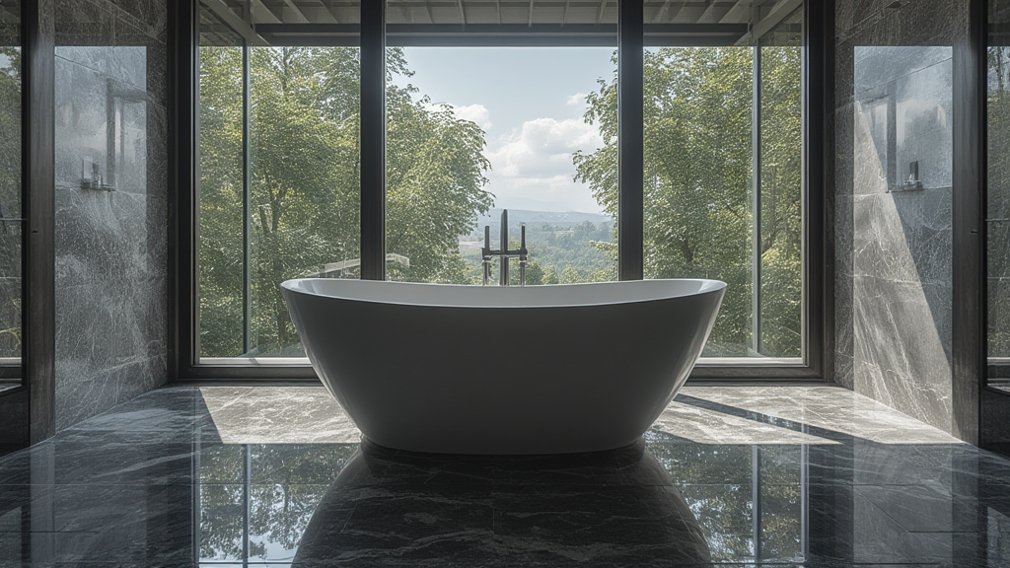
Ultimate Cost & Performance Guide to Choosing a Freestanding Soaking Tub as Your Statement Bathtub
If you’re remodeling a luxury bathroom, your freestanding soaking tub will get more attention—and use—than any other “statement bathtub.” But before you set your heart on a dramatic spa bathtub, get ready for a reality check on costs, specs, installation, and what it really means to own one, long term.
Key Takeaways
- Luxury freestanding soaking tubs can cost USD 5,000–25,000 all-in: material, shipping, install, upgrades, and finish work.
- Deep soaking, water volume, and hydrotherapy features impact floor reinforcement, hot water capacity, energy bills, and cleaning needs.
- Misjudged space, performance metrics, and maintenance access are top pain points—avoid with spec checklists, pro consultation, and careful planning.
- Market Snapshot — Why Freestanding Soaking Tubs Are the Trend Now
- Why Pick a Statement Bathtub — Benefits vs. Typical Tradeoffs
- Total Cost of Ownership & Infrastructure Requirements
- Installation & Space Planning — Exact Clearances, Layout Rules, and Problem Scenarios
- Materials, Weight, and Structural Considerations (Choose the Right Construction)
- Deep-Soaking Performance — Water Depth, Volume, and Real Impacts
- Hydrotherapy, Tech & Comfort Features That Justify Premium Prices
- Real User Pain Points and How to Avoid Them (Practical Solutions)
- Serviceability & Maintenance Checklist (What to Ask Suppliers/Contractors)
- Exact Spec Table to Request from Manufacturers
- Budget Planner & Step-by-Step Purchasing Timeline
- Final Recommendation & Next Steps
- FAQs
Market Snapshot — Why Freestanding Soaking Tubs Are the Trend Now
Freestanding soaking tubs have become nearly synonymous with the modern statement bathtub. According to Grand View Research, the global bathtub market is valued at about USD 10.26–10.29 billion in 2024, with freestanding models projected to capture approximately 46% of market revenue by 2025 (FMI). Design momentum comes from both wellness and contemporary showpiece value: spa-like bathing at home, striking visual forms, and luxury real estate trends are all driving a 5%+ compound annual growth in this segment.
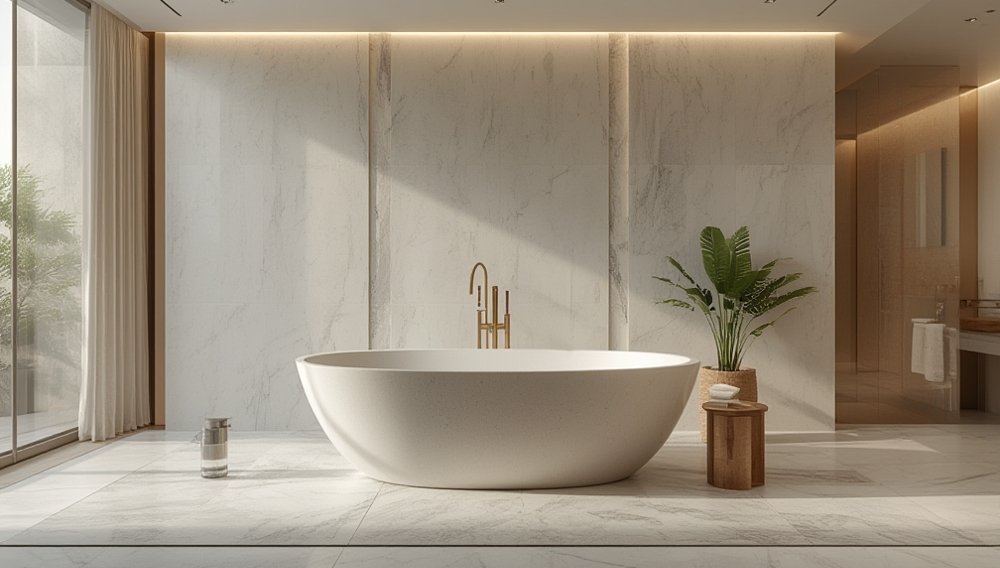
Buyers invest in these tubs expecting more than style photos—they want real “spa escape” immersion. With the typical luxury freestanding soaking tub falling between USD 3,000 and 7,000 (solid surface or stone versions can reach USD 8,000+), the price reflects both show-stopping design and high-performance spa comfort. If you are aiming to create a true spa bathroom, these tubs define the market’s direction.
Why Pick a Statement Bathtub — Benefits vs. Typical Tradeoffs
A statement bathtub creates a centerpiece: it elevates the look of your bathroom and can even boost resale in luxury markets. The freestanding soaking tub delivers spa-level deep immersion, ergonomic comfort, and flexible placement for designers. These features match the market trend toward wellness and at-home “spa” experiences cited in multiple industry analyses.
But big benefits come with big tradeoffs. Expect the tub to require more space, more hot water (deep soaks use 70–100+ gallons), and complex installation: plumbing moves, possible structural upgrades, and careful waterproofing. The cost is typically 20–25% higher than a built-in tub. Add the need for ongoing maintenance access, and the “wow factor” comes only with careful planning—you can’t afford to skip the details.
Get more ideas on merging style and function in your bathroom remodel.
Total Cost of Ownership & Infrastructure Requirements (The Often-Missing Section)
The price tag for a luxury freestanding tub extends far beyond the showroom ticket.
- Tub price: USD 3,000–7,000 for solid surface/stone composites; spa/hydrotherapy models from USD 6,000–15,000+ (industry research).
- Shipping: Curbside freight USD 150–400; white-glove, in-home delivery USD 300–800+.
- Professional install: USD 800–2,000 for basic install, but up to USD 5,000+ with plumbing moves and premium finish work. Freestanding tubs are 20–25% more expensive to install than built-ins.
- Structural upgrades: Heavy tubs (solid stone/iron + water) often need floor reinforcement. Add USD 500–3,500+ for engineering review, joist upgrades, and possibly subfloor modification.
- Water heater upgrades: For tubs over 70 gallons, budget USD 1,500–4,000+ if your heater can’t handle a full hot soak.
- Hydrotherapy electrical: For spa bathtubs, allow another USD 300–1,000+ for electrical circuits and GFCI.
- Finishing: Expect USD 500–2,000+ for tile work, waterproofing, trim, and final touches.
Most all-in projects for a luxury freestanding soaking tub land between USD 5,000–15,000 (non-hydro), or USD 8,000–25,000+ for spa/tech-heavy models.
For a smarter long-term investment, try this complete remodel budgeting guide.
Installation & Space Planning — Exact Clearances, Layout Rules, and Problem Scenarios
Start with true dimensions: most luxury freestanding soaking tubs are 59–71 inches long, 29–36 inches wide, 22–28 inches tall, and need between 60–100 gallons for a deep soak. Plan for a clearance of at least 12–18 inches on the primary entry/exit side, or 18–24 inches all around for an island install. Your minimum clear zone is about 70–80 inches by 50–60 inches, not counting other bathroom fixtures.
Plumbing and drain location have real consequences. Floor-penetrating drain lines may force expensive slab work. Centered drains and floor-set fillers offer a seamless look but increase complexity. Ensure your subfloor can hold the weight: a filled stone tub plus bather can top 1,000 pounds.
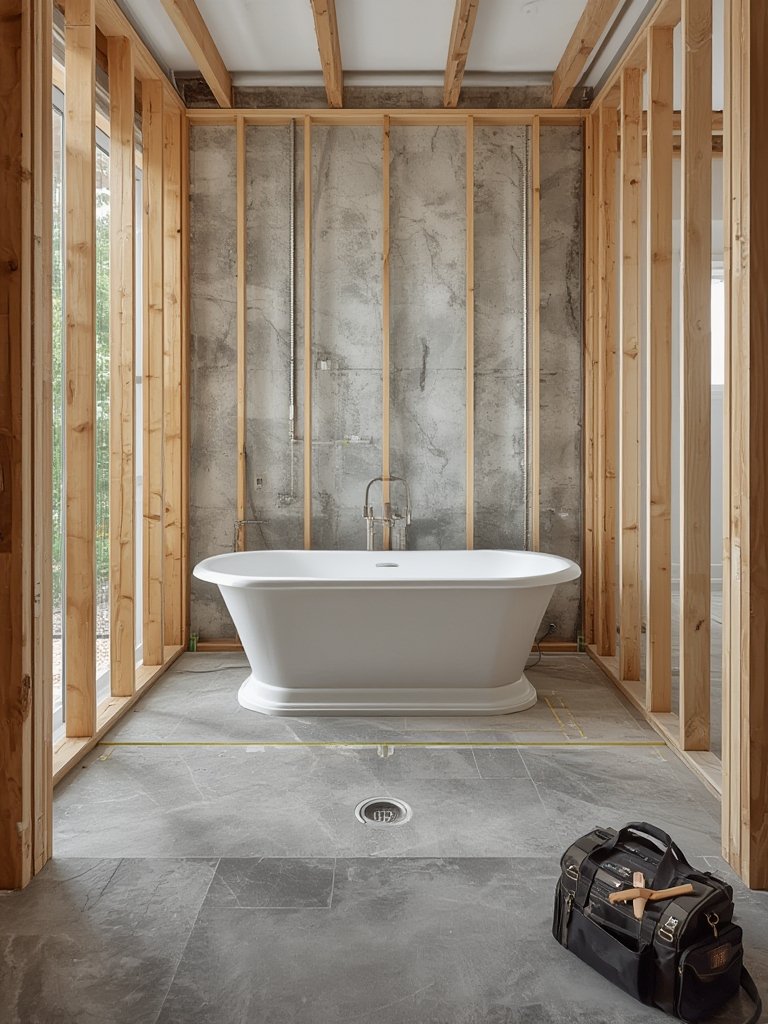
In older homes, structural upgrades are common. Always ask your contractor for a load calculation. If hot water is a concern, talk to an HVAC pro—the majority of deep soaking tubs cannot be filled adequately from a standard 40 or 50-gallon water heater. High-volume tubs may need a tankless system or a dedicated heater.
Materials, Weight, and Structural Considerations (Choose the Right Construction)
The material you pick impacts long-term comfort, durability, and even installation cost:
- Acrylic: Lightweight, retains heat moderately well, easier to move. Modern acrylics (2024) now have about 35% more scratch resistance and better coatings. Best for upper-story installs or tight access.
- Solid Surface/Stone Resin: Significantly heavier and denser, feels similar to real stone. Excellent heat retention, seamless matte finishes, but needs stronger support. Typical on sculptural, luxury statement tubs.
- Cast Iron: Extremely heavy (often 400+ pounds empty), highest thermal mass of all. Plan for both moving logistics and robust joist reinforcement.
- Metals (Copper, Stainless): Less common, visually striking, antimicrobial (copper), but may require custom install strategy and more maintenance for surface appearance.
For a more natural luxury aesthetic, see our advice on biophilic bathroom design.
Deep-Soaking Performance — Water Depth, Volume, and Real Impacts
Soaking comfort is about more than length. The real test is soaking depth to overflow, interior shape, and water volume:
- Typical capacity: 60–80 gallons for regular freestanding tubs, 70–100+ gallons for spa soaking.
- Depth: “Deep” tubs range 15–20+ inches from interior base to overflow.
- Two-person tubs: 80–120+ gallons—and these will exceed most home water heaters’ single-draw limits.
- Usable interior length: Essential for loungers, but rarely published—always request from the manufacturer.
A compact “Japanese-style” 17–20 inch deep tub can provide full-body immersion even at 58–60 inches long but prioritizes height over length. Large sculptural tubs deliver show-stopping visuals but may be less ergonomically comfortable for shorter users.
For smart, water-saving upgrades and realistic conservation, check these energy-efficient bathroom ideas.
Hydrotherapy, Tech & Comfort Features That Justify Premium Prices
What features make a premium spa bathtub worth the extra outlay?
- Hydrotherapy/jets: 21% of freestanding tubs sold in 2024 include jets/air systems for massage. Expect higher electric use, pump noise, and regular cleaning.
- Chromotherapy: LED ambient lighting, color cycle modes, underwater lights for mood. Check if controls are intuitive.
- Digital controls: Heated water, pre-set fills, smartphone/app interfaces. Adds cost and complexity—require robust service support.
- Shell insulation: Some high-end tubs feature double-wall insulated shells for longer hot soaks.
- Headrests & backrests: Small upgrades, big difference; look for good lumbar support and correct recline angle.
Many integrated features add both lifestyle value and maintenance requirements. Opt for only the features you will actually use—extra tech increases installation, energy, and potential service cost.
Real User Pain Points and How to Avoid Them (Practical Solutions)
Freestanding soaking tub buyers nearly always cite a few pain points:
- Surprise installation costs: Structural upgrades and plumbing moves are the #1 budget breaker.
- Difficult access for cleaning and servicing: Improper clearances around the tub make cleaning nearly impossible and can trap moisture.
- Running out of hot water: Failing to match tub volume to water heater size leads to disappointing soaks.
- Drain/supply relocation: Center drains may require slab drilling and re-waterproofing, adding unexpected expense.
- Jet/system maintenance: Lack of an access panel or poor placement causes headaches if pumps or electronics fail.
- Surface issues: Poor material choice means dealing with stains (solid matte) or scratches/abrasion (soft acrylics) that worsen quickly without upgraded coatings.
Solutions: Prioritize clear specs (see checklist), insist on service panels, match tub capacity to hot water system, pick upgraded materials/coatings, and never skip the flooring check.
Serviceability & Maintenance Checklist (What to Ask Suppliers/Contractors)
Key questions to resolve before signing off:
- Where is service access for jets/pumps (if any)?
- Is a removable plumbing cowl or trim panel included?
- What cleaners are recommended for long-term surface protection?
- What is the warranty? (structure, finish, electronics)
- How are repairs/parts sourced or serviced locally? Expected repair cost if out of warranty?
- Is quiet operation a priority? Listen to jet/pump demos. Ask for noise ratings.
- Jet cleaning and biofilm protocols: frequency, method, cost.
Fact: More brands are starting to ship “quick-clean” drain assemblies and advanced coated surfaces, which reduces annual maintenance, but always confirm. For more tips, see our in-depth bathroom maintenance guide.
Exact Spec Table to Request from Manufacturers
| Spec Category | Details to Request | Typical Ranges |
|---|---|---|
| Exterior Dimensions | Length, Width, Height (inches/cm) | 59–71 in L, 29–36 in W, 22–28 in H |
| Interior Length (usable) | Full recline measurement | 48–66 in |
| Soaking Depth (to overflow) | Vertical depth, floor to overflow | 15–20+ in |
| Water Capacity | Gallons/Liters to overflow | 60–100 gallons |
| Weight (empty/filled) | Pounds/Kilograms | Empty: 100–400+ lbs; Filled: 700–1,200+ lbs |
| Material and Finish | Acrylic/Solid Surface/Cast Iron/Metal | See above |
| Required Clearances | All sides from neighboring fixtures/walls | 12–18 in (access); 18–24 in (island) |
| Service Access Location | Panel/inset location for pumps/valves | Required for hydro/spa models |
| Pump/Electrical Requirements | Voltage, Amps, GFCI? | As per model |
| Backrest Angle | Measured degree incline | Optional, request for ergonomic review |
Copy and paste this table into your Request for Quote or contractor briefing to guarantee clarity and prevent surprises.
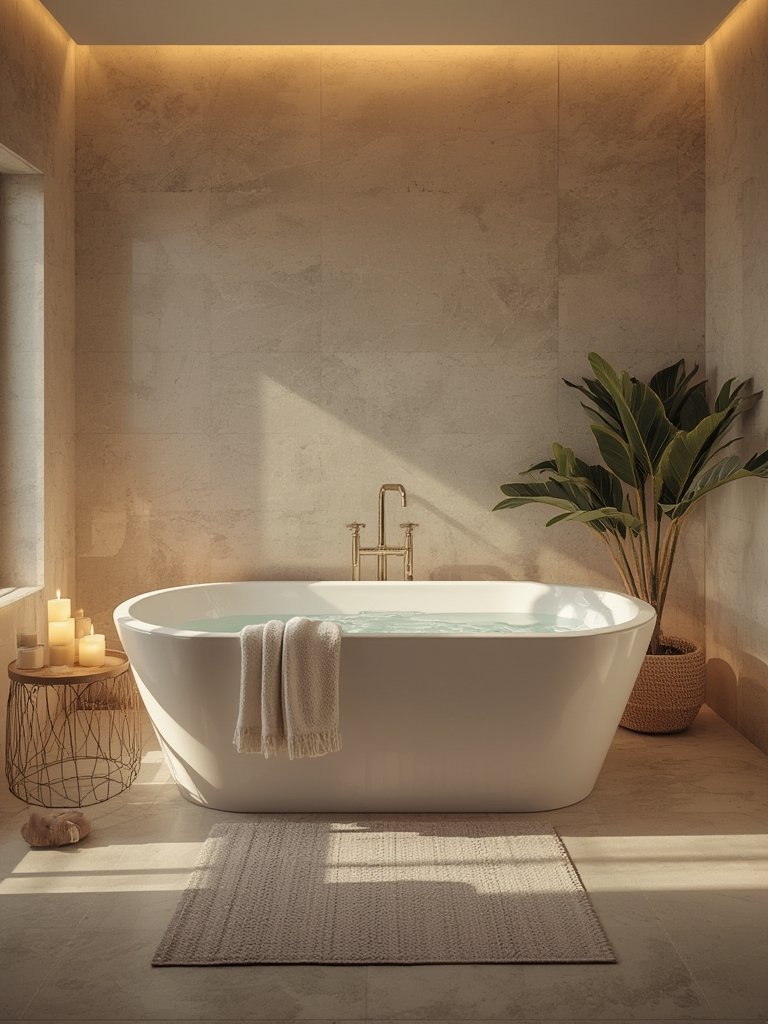
Budget Planner & Step-by-Step Purchasing Timeline
A staged approach keeps surprises minimal:
- Consultation and Spec: 2–4 weeks. Gather requirements, verify clearances, engineer check on floor strength, request full spec table from vendors.
- Tub Purchase and Shipping: 1–4 weeks. Get price on freight/white-glove delivery.
- Site Prep: 1–3 weeks. Plumbing moves, floor reinforcement, water heater upgrades as needed.
- Installation and Finishing: 1–2 weeks. Tub is placed, connected, tile is patched, finishing work done.
- Commissioning and First Service: 1 week. Fill, check for leaks, test hydrotherapy functions, educate on maintenance.
Budget checkpoints (USD):
- Tub: 2,000–15,000+
- Shipping: 150–800+
- Install/plumber: 800–2,000+
- Structural upgrades: 500–3,500+
- Electric (if spa): 300–1,000+
- Total: 5,000–25,000+ depending on complexity.
Decision points: Engage a structural engineer and licensed plumber for all heavy, hydrotherapy, or upper-story placements—don’t skip this step.
For a full bathroom planning workflow, see this bathroom cost and planning guide.
Final Recommendation & Next Steps (How to Choose the Right Statement Bathtub for Your Project)
To pick the right statement bathtub, first weigh your priorities: design impact, soaking performance, or ongoing ease of maintenance. Consult early with a structural engineer for support and a certified plumber for water heater and installation needs. Gather a complete spec checklist—don’t settle for vague promises.
Freestanding tubs are carving out nearly half the luxury bath market revenue mix by 2025, so take a holistic approach: plan budget, water, installation, and long-term care—right up front.
Download our manufacturer spec sheet or schedule a consult before purchase: This is the only way to guarantee your freestanding soaking tub delivers daily spa comfort with zero regrets.
FAQs
How much space do I need for a freestanding soaking tub?
Plan for at least a 70–80 inch by 50–60 inch clear zone for the tub plus 12–18 inches of access on the main side; island installs need 18–24 inches all around. This does not include other fixtures.
Can my existing water heater support a deep soaking tub?
Probably not if it’s a standard 40–50 gallon tank and your tub is over 70 gallons capacity. Upgrading to a larger or tankless system (USD 1,500–4,000+) is often necessary for full spa soaks.
Is it necessary to reinforce the floor for a freestanding tub?
If the tub is solid surface, stone resin, or cast iron, and installed in an upper story or older home, floor reinforcement is likely needed. Always have a structural engineer confirm before install.
What features are worth the premium on a spa bathtub?
True hydrotherapy/air jets, integrated heaters, and ergonomic design deliver the most performance value. Extras like chromotherapy and digital controls are appealing, but only if you use them.
How do I ensure easy maintenance in the future?
Order tubs with proper service panels and removable access, choose upgraded coatings/materials to resist stains and scratches, and ensure proper install clearances for cleaning and repairs.
—