
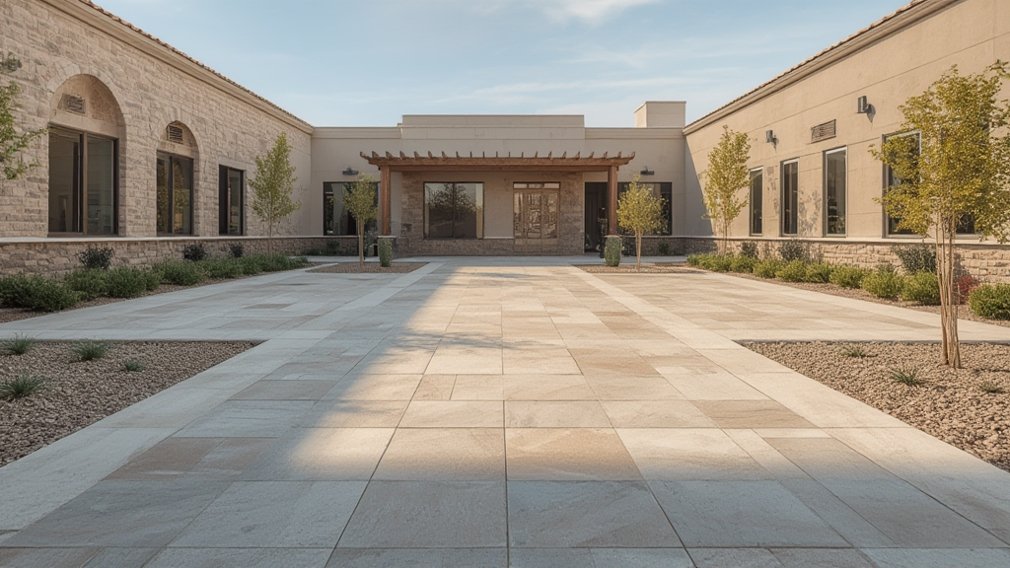
Ember-Resistant Hardscaping is quickly becoming a specification staple for landscape architects and procurement officers working in wildfire-prone regions. Yet, there are crucial evidence gaps and unclear standards when it comes to proven performance and cost. This post summarizes what’s known, where the gaps are, and lays out procurement-ready actions for anyone specifying hardscape as part of defensible space or wildfire mitigation projects.
Key Takeaways
- No 2024 statistics or case studies prove ember-resistant hardscaping prevents wildfire property damage.
- Standardized fire ratings and cost benchmarks are missing for most specified materials—pro-active vendor sourcing is required.
- Procurement teams must request third-party test certificates, durability data, and cost breakdowns before finalizing specs.
- Executive Summary and Takeaways
- Why Ember-Resistant Hardscaping Is Being Specified (Risk Context)
- What the Research Shows: Evidence Gaps and Limitations
- Porcelain Paving: Fire Ratings, Standards and What’s Missing
- Stone Wall Cladding: Durability, Anecdote vs. Evidence, and Current Limits
- Gravel-Hold Binders and Gravel Systems: Installation, Maintenance and Blind Spots
- Common Complaints and Failure Modes—What We Found (and Didn’t Find)
- Cost Guidance and Budgeting: Current Data Gaps and Immediate Procurement Ranges
- Top 3 Sub-Topics Missing from High-Ranking Content
- Technical Data / Case Study Needs for Stone Cladding and Other Hardscapes
- Spec Checklist and Recommended On-Page Assets
- Next Research Steps for the Writer (Must-Do Sourcing List)
- Suggested CTAs and Commercial Hooks
- FAQ
Executive Summary and Takeaways
Commercial projects in wildfire-exposed regions now routinely request ember-resistant hardscaping. However, current research finds no direct statistics—in 2024 or earlier—proving such features actually prevent property loss. There is also a lack of vendor-agnostic, procurement-grade certification data for fire performance and cost. The most actionable approach right now is requesting independent test reports (ASTM, EN, or UL), detailed vendor data, and clear warranties as part of every RFP and tender process.
Why Ember-Resistant Hardscaping Is Being Specified (Risk Context)
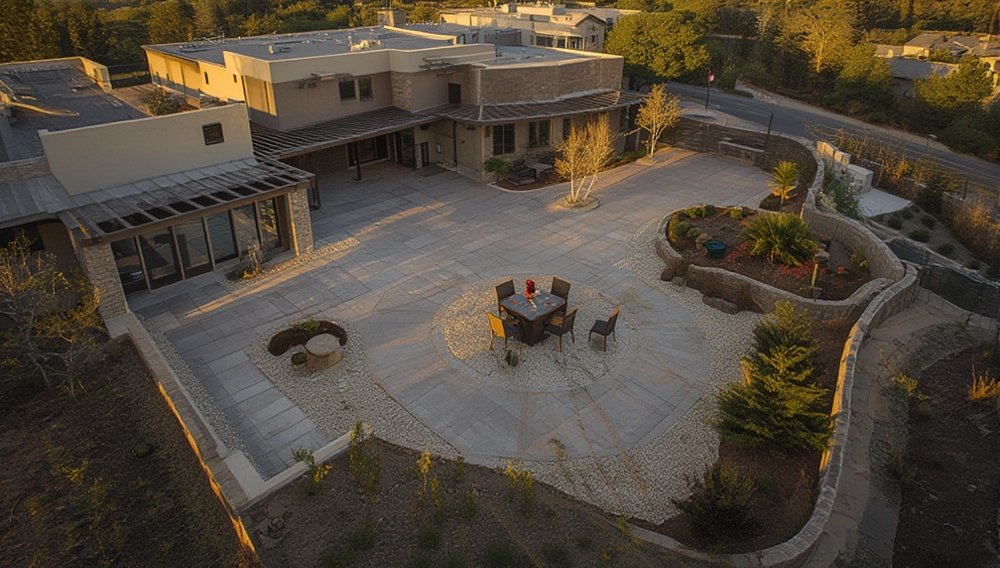
Ember-resistant hardscaping is increasingly specified as part of defensible space efforts in areas at high wildfire risk. The primary motivation is to provide a non-combustible buffer (“fuel break”) around structures and critical zones, reducing the likelihood of ignition from airborne embers. Regulatory authorities and insurers now often expect the use of hard surfaces like stone, porcelain, or stabilized gravel instead of traditional combustible groundcovers.
Yet, the guidance is qualitative: most resources recommend at least a 6-foot perimeter of non-combustible groundcover around fire features, but there are no published metrics on wildfire property-loss reduction resulting from these measures. “Fire-safe patio materials” remain a top search, but quantifiable risk reduction isn’t available.
What the Research Shows — Evidence Gaps and Limitations
Open-source research in early 2024 reveals fundamental evidence gaps. There are:
- No statistics on wildfire-related property damage reductions attributed specifically to ember-resistant hardscaping.
- No technical case studies rigorously testing hardscape material performance (porcelain, stone, gravel-hold binders) during wildfire/ember exposure.
- No centralized database listing fire ratings, empirical test results, or comparative longevity data for commercial vendors.
This documentation void complicates liability, specification, and procurement—leaving decision-makers with assumptions rather than guarantees. For procurement, relying solely on vendor claims or anecdotal evidence is a key risk.
For deeper analysis of defensible landscaping, see our Landscaping Services and Backyard Ideas Guide.
Porcelain Paving — Fire Ratings, Standards and What’s Missing
Porcelain paving is often touted for its low porosity, heat resistance, and long service life. In theory, it is non-combustible and should perform well around fire-prone areas, making it a favored fire-safe patio material. However, none of the reviewed 2024 sources include any official fire ratings (such as EN 13501-1, ASTM E84, or comparable international tests). Vendor websites rarely publish fire classification certificates—and almost never list third-party test numbers.
To close this gap, specifiers should:
- Request EN and ASTM/UL certificates (e.g., EN 13501-1, ASTM E84) for porcelain paving products from vendors.
- Document and compare all available fire test numbers and independent test reports in the tender process.
- Ask for insurance-accepted fire safety documentation before approval.
This information was not in the public domain as of 2024. For patio material selection, such as porcelain and stone, review our Outdoor Lounge Area Guide.
Stone Wall Cladding — Durability, Anecdote vs. Evidence, and Current Limits
Natural stone wall cladding is promoted by manufacturers for its longevity (often exceeding 50 years) and direct flame resistance. Still, no technical data or real-world case studies were found proving its effectiveness as a fire barrier in residential or commercial contexts. Most durability claims remain anecdotal or based on unrelated use cases like fire pit seating walls. To strengthen specs:
- Seek manufacturer and insurer-backed test certificates on heat absorption, ignition resistance, and post-fire stress.
- Document any instances of well-maintained stone barriers that have survived wildfire events (ideally with fire agency input).
Lack of recognized testing remains a significant specification limitation for commercial or municipal installs.
Gravel-Hold Binders and Gravel Systems — Installation, Maintenance and Blind Spots
Gravel-hold binders (engineered resins or polymers that lock gravel in place) are gaining traction for minimizing loose debris and improving wheelchair safety. The best practices include:
- Preparing a base with 6–8 inches of compacted angular crushed stone.
- Installing geotextile fabric for weed suppression and drainage.
- Selecting binder products specifically rated for exterior, UV and temperature extremes.
However, most top-ranking online articles omit:
- Product-by-product reviews of binder ember-resistance or ignition points.
- Long-term maintenance challenges under repeated ember exposure and heat cycling.
- Guaranteed lifespans or third-party vendor test data.
For a broader look at outdoor gravel and maintenance tradeoffs, visit our Landscaping Services and Backyard Ideas Guide.
Common Complaints and Failure Modes — What We Found (and Didn’t Find)
Surprisingly, no user complaints or documented failures have been reported for ember resistance, long-term durability or warranty disputes on today’s leading fire-safe patio materials. Natural stone is praised in trade literature for 50+ year lifespans and handling direct flame exposure without visible harm. Concrete blocks are commonly cited for 20–30 years of durability in related projects.
Procurement teams are cautioned not to extrapolate from generic fire pit or paving reviews—these rarely cover wildfire or ember-specific scenarios. Always request maintenance and failure statistics from potential vendors or installers.
Cost Guidance and Budgeting — Current Data Gaps and Immediate Procurement Ranges to Obtain
No reliable 2024 cost ranges per square foot were found for stone wall cladding, porcelain paving, or gravel-hold systems marketed as ember-resistant hardscape, making it difficult to produce budget forecasts or client briefings. Natural stone is often described as a premium initial investment, with limited ballpark figures for installation labor, substrate prep, or warranty transfer. To move forward:
- Obtain three or more vendor quotes per material, breaking out costs for materials, installation, binders, geotextile, and warranty.
- Ask about fire rating and maintenance premium compared to standard hardscape.
- Add a “future maintenance budget” placeholder to briefs and tender templates.
This data gap means every RFP or procurement request should specify line-itemized breakdowns for direct comparison. For guidance on estimating outdoor project costs, see our Fire-Smart Landscaping: 7 Best Ways to Protect Your Home.
Top 3 Sub-Topics Missing from High-Ranking Content (SEO & Editorial Opportunities)
Based on comprehensive reviews, three major content gaps persist across the web:
- No public tests or vendor data on true ember-specific resistance for hardscape materials under wildfire conditions.
- No side-by-side durability comparisons under repeated ember exposure (lab or field tested).
- No open-source cost-benefit analysis, or downloadable procurement templates for at-risk site installs.
Any blog or guidance that meaningfully addresses these gaps will outperform generic lists of “fire-safe patio materials.”
Technical Data / Case Study Needs for Stone Cladding and Other Hardscapes
Procurement and risk consultants should request the following technical documentation from vendors, agencies, or third-party testing labs:
- Lab fire resistance tests: ASTM E1354, ASTM E84, or EN 13501-1 (surface flammability, ignition, heat release).
- Vendor-supplied fire test certificates (UL, EN or equivalent).
- Fire agency or insurer post-wildfire site surveys documenting hardscape performance.
- Manufacturer-provided lifecycle durability testing (e.g., 10-year and post-fire maintenance data).
Without these, specifications remain assumption-based and expose projects to unnecessary risk.
Spec Checklist and Recommended On-Page Assets
To support procurement teams and designers, every project brief should include:
- Quick Spec Checklist: Required fire rating certificates, warranty details, base installation specs, binders and specialty products data.
- Vendor Documentation Table:
| Item | Description | Action |
|---|---|---|
| Fire Performance Certificates | EN, ASTM or UL test numbers and certificates for each material | Attach to RFP/bid |
| Maintenance Schedule | Cleaning, binder re-application, weed mitigation | Include in O&M docs |
| Warranty Documents | Material, installation, binder, substrate warranty years covered | Submit with bid |
| Cost Breakdown | Line-item material, labor, substrate prep, binder, drainage, maintenance | Request from vendor |
- Cost Estimate Template: Plug in per-square-foot data when available.
- Interview Targets: Manufacturer product leads, wildfire mitigation engineers, local fire marshals.
Download templates and checklists—or request them—during specification. For more guidance on cost and planning, reference our guide on Ultimate Complete Guide to Kitchen and Bathroom Remodel Costs and Planning for estimating approaches.
Next Research Steps for the Writer (Must-Do Sourcing List Before Draft)
Before final specification or draft writing, source the following primary documents:
- Manufacturer EN/ASTM/UL certificates on porcelain fire performance.
- Lab test reports for stone wall cladding (thermal, fire, maintenance).
- Fire agency or insurer field case studies.
- Installer quotes for full per-square-foot (material + labor + warranty) cost.
- Any insurer-published guidance on hardscape wildfire mitigation.
None of these were found in public sources as of early 2024. For a look at related specification needs, see our Flood-Proof Landscaping Guide.
Suggested CTAs and Commercial Hooks
For landscape architects, procurement officers, and project managers, we recommend:
- Download our specification checklist and cost-estimate template for ember-resistant hardscaping.
- Request a vendor “fire-test pack” including all current performance and maintenance certifications.
- Schedule an on-site wildfire risk review with your materials supplier or wildfire mitigation consultant.
- Access a gated procurement RFP template and maintenance schedule to enhance your next tender response.
Given that fire performance evidence and cost data are largely absent from public sources, these gated assets will enhance your technical documentation and competitive position.
FAQ
Is there any certified test data proving the effectiveness of ember-resistant hardscaping?
No. As of 2024, there is no published test data or case study that directly proves ember-resistant hardscaping prevents wildfire property damage. All claims remain unverified and procurement teams must request third-party test certificates before specifying.
What are the most reliable hardscape materials for fire resistance?
Natural stone and high-grade concrete blocks are both highly durable and naturally non-combustible. Porcelain pavers are theoretically resistant, but few products provide third-party fire test certificates. Always request documentation from your supplier.
How do gravel-hold binders perform in wildfire conditions?
There is no published evidence or comparative analysis of gravel-hold binders under ember exposure. Maintenance and longevity data remain limited. Buyers should ask vendors for ignition test results or real-world case studies.
What cost premiums should I expect for ember-resistant hardscaping?
No per-square-foot cost ranges are published for 2024. Expect natural stone and porcelain to carry a significant price premium over standard landscape options. Request detailed quotes and add maintenance budget placeholders.
Are maintenance schedules and warranties different for fire-safe patio materials?
Yes, especially for binders and specialty products. Always include maintenance intervals, warranty terms, and substrate requirements in your specification. Vendors should provide clear documentation up-front.