

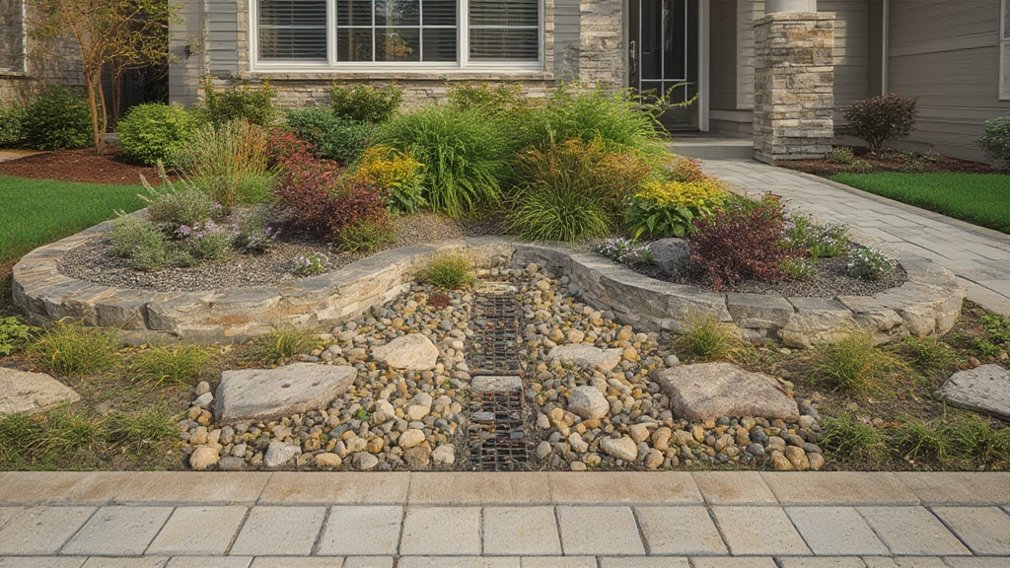
Flood-Proof Landscaping is now a frontline necessity for homeowners facing recurring yard flooding, soggy lawns, and risky water seepage after heavy rains. Urban storms and overloaded drains are getting worse, making evidence-based landscaping solutions essential. But new research shows there’s still a lot we do not know—especially about the costs, user complaints, and real-world effectiveness. Here’s what you need to navigate the hype and take decisive next steps.
Key Takeaways
- Flood-proof landscaping tackles yard runoff with methods like bioswales, rain gardens, and permeable paving, but research lacks hard data on individual effectiveness and cost.
- Homeowners must seek local guidance on plant choices, costs, and permitting; always confirm details with your municipality and get several contractor quotes.
- Improper design or skipped maintenance is a top cause of project failure—long-term, simple upkeep outpaces one-time fixes.
- Why flood-proof landscaping matters right now
- How landscape-scale solutions reduce runoff
- What the research DOES and DOES NOT show about effectiveness
- Typical homeowner drainage problems after heavy rain
- Bioswale garden design — practical design checklist for homeowners
- Rain garden plants — selection principles and gaps to resolve per USDA zone
- Permeable paving installation — materials, performance trade-offs, permit considerations
- Costs and ROI — what we could not find and how to get reliable local estimates
- Runoff management systems — user-ranked effectiveness and common complaints
- Permitting and technical standards — how to find local rules and what to expect
- Maintenance, longevity, and common failure modes competitors under-address
- Actionable next steps for homeowners
- Appendix / Resources to add before publish
Why flood-proof landscaping matters right now
Extreme rain events and climate change are raising the stakes. The United States now sees estimated annual flood losses of $179.8 to $496.0 billion, with over 37% of damage since 1988 directly tied to climate-driven inland flooding. Inadequate urban drainage and ever-expanding impermeable surfaces (like driveways, patios, and rooftops) send stormwater directly into overloaded sewers and, ultimately, basements and backyards.
Municipal systems cannot scale fast enough, and many neighborhoods now rely on flood-proof landscaping to slow, detain, or infiltrate runoff directly on residential plots. Distributed, yard-level solutions are the new frontline of flood defense for homeowners in risk zones.
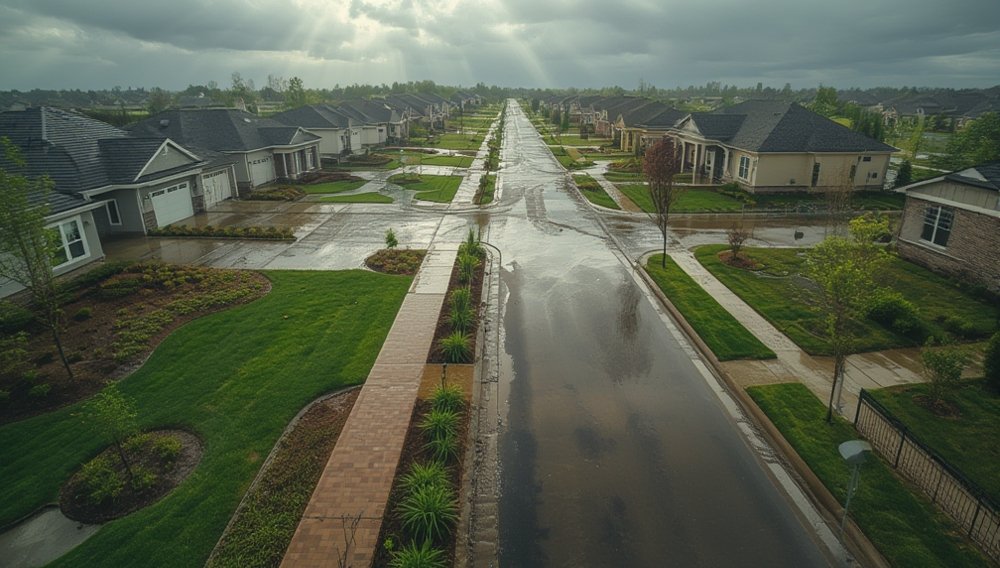
How landscape-scale solutions (bioswales, rain gardens, permeable paving) reduce runoff
Modern runoff management systems at the lot level work by four mechanisms:
- Infiltration: Water sinks into soil or media—best for main lawn, under downspouts, or along gentle slopes.
- Detention: Temporary storage holds water while it slowly releases (applies to basin-shaped rain gardens and bioswales).
- Evapotranspiration: Deep-rooted plants absorb and use captured water—critical for extreme rain recovery.
- Conveyance: Shallow swales direct overflow safely off site during big storms, reducing risk to basements or neighbors.
Here’s how three techniques typically fit:
- Bioswale garden design fits long property edges or between lots—with a gentle, grassy trough for water to avoid pooling near foundations.
- Rain gardens collect roof and patio runoff—best placed near downspout ends or low turf swales.
- Permeable paving installation swaps out solid concrete or asphalt on driveways and walkways so water sinks through instead of sheeting off the surface.
Research shows urban flooding is mostly driven by too many impermeable surfaces overwhelming drainage. Retrofits targeting infiltration where water collects are most effective for immediate risk reduction.

What the research DOES and DOES NOT show about effectiveness
There’s strong evidence that flooding and losses are on the rise, but here’s the reality: the research available does not measure the specific effectiveness of bioswale gardens, rain gardens, or permeable paving for reducing home flood damage at the yard scale. No controlled studies document before-and-after runoff volumes, home values, or insurance outcomes for these solutions by type.
This is a crucial information gap. Homeowners should treat any claims about the percentage reduction in runoff or risk as unproven unless linked to peer-reviewed or city-level case studies.
As a result, testing a pilot installation or phased retrofit is often smarter than a big one-time yard overhaul. Always ask contractors or landscape designers for references or evidence of project effectiveness, and focus on proven best practices, not marketing hype.
Looking for other proven outdoor upgrades? Check our Landscaping Services and Backyard Ideas Guide for practical inspiration.
Typical homeowner drainage problems after heavy rain (how they search for solutions)
Homeowner drainage issues are rarely documented in research but are widely reported in online forums and contractor reviews. Common pain points include:
- Standing water in the lawn or garden
- Basement or crawlspace seepage after rain
- Soggy, unusable turf or landscape beds
- Pools or sheet flow on driveways and walks
No comprehensive homeowner surveys were found in the research—this is an inferred list based on common sense and search intent.
Most homeowners search for terms like “cost to fix driveway drainage”, “rain garden plants for my area”, “will bioswale solve wet basement”, or “permit needed for permeable paving installation”. If you’re here, you’re likely tackling several of these pain points at once.
For a broader list of yard improvement solutions, visit our Small Screened-In Porch Ideas to uncover outdoor enhancements often overlooked during drainage planning.
Bioswale garden design — practical design checklist for homeowners
The basics: a bioswale is a gently sloped channel that captures stormwater, fills temporarily, then drains into the subsoil (if not clay). It uses partial or fully vegetated surfaces for slowing flow, filtering pollutants, and boosting infiltration.
- Layout: Place parallel to property boundary or downslope; at least 10 feet from the foundation.
- Sizing: Swale area should handle runoff from at least the adjacent roof or driveway zone. Rule of thumb: 1 square foot of bioswale per 10 square feet of contributing area.
- Soil/media: Only works if subsoil drains in 48 hours. If clay, excavate and add drain rock, sand, compost, or underdrain pipe as needed.
- Overflow: Include a rock-lined overflow exit where water can safely release in major storms.
- Planting: Mix perennial grass, native sedges, and tough, deep-rooted species. For high water table regions, prioritize species known for water tolerance.
- DIY vs. Contractor: Small swales under 25 feet long can be a DIY weekend job if you’re comfortable with digging and grading. For larger systems or where precision is critical (near homes, in clay), hire a professional for design and excavation.
- Low Maintenance: The best bioswale garden design features dense, weed-choking planting, a clear inlet to prevent clogging, and a defined mowing or trimming path for the first season.
Remember: according to recent findings, urban flooding is directly tied to impermeable surfaces, making bioswales an evidence-backed option for surface runoff reduction.
Rain garden plants — selection principles and gaps to resolve per USDA zone
Choosing rain garden plants starts with killer adaptability:
- Deep roots to break up soil and boost infiltration
- Tolerance for both standing water and drought
- Preference for native species that survive on rainfall alone after establishing
- Staggered heights/layers—tallest in the center, progressively shorter toward edges
- Seasonal interest to keep beds attractive year-round, especially in front yard locations
The biggest research gap: there are no one-size-fits-all species lists by USDA hardiness zone or by soil type. You MUST check with your local master gardener extension service or conservation group for precise recommendations before buying. The best-performing rain garden plants for Maine, Atlanta, or Dallas differ dramatically.
If you are unsure, collect several peer or municipal plant lists. Start with easy species like native sedge, iris, or aster in your zone. Watch their response in year one and plan to adjust as needed.
Find more inspiration for resilient and visually appealing outdoor spaces in our Complete Guide to Landscaping Services and Backyard Ideas Made Easy.
Permeable paving installation — materials, performance trade-offs, permit considerations
Swapping concrete or asphalt for permeable paving shifts water from “runoff” to “soaking in.” There are several product options worth considering:
- Permeable pavers: Individual blocks set with gaps over a graded stone base. Good for driveways/slopes.
- Porous asphalt: Similar look but specially mixed to let water pass through, requires skilled installer.
- Pervious concrete: Whiter and more open, best for patios.
- Gravel/gravel grids: Cheapest DIY, but can migrate, rut, or clog fast without geo-textile base and timely upkeep.
Every material involves:
- Excavation to create a thick, graded gravel sub-base for rapid infiltration.
- A careful edge detail so pavers or gravel don’t spread or “heave” in freeze-thaw cycles.
- Routine vacuum/pressure wash 2x/year to clear urban grit and prevent surface “sealing.”
Failure modes often occur from underbuilt bases, inadequate slope, or missed permits. Always ask your local planning department about current requirements: many cities now require an engineered section, an infiltration test, and a stormwater plan for front yard replacement and driveway projects. This is where most DIY projects fail code.
For other home upgrades with solid ROI and permit tips, check our Ultimate Complete Guide to Kitchen and Bathroom Remodel Costs and Planning.
Costs and ROI — what we could not find and how to get reliable local estimates
The available research does NOT provide the average cost for bioswales, rain gardens, or permeable paving installs. This is a critical gap, as local contractor rates and soil/site complexity play a huge role.
To get a reliable figure in your area:
- Sketch your desired solution (dimensions, locations, desired planting or paving type)
- Request at least three itemized bids from local, licensed contractors (ask for separate line-item prices on excavation, materials, planting, and hardscape/paving installation)
- Get unit pricing (e.g., per linear foot for bioswale, square foot for permeable paving)
- Ask for a list of recently completed local projects with before-and-after photos
- If you plan to DIY, request a materials and dump fee quote from your local supply yard and tool rental
Compare full-solution pricing to the likely cost of problems you’re trying to prevent (like recurrent basement water or turf loss). Without reliable research, local quotes and peer projects are your best bet for cost and ROI clarity.
Runoff management systems — user-ranked effectiveness and common complaints (evidence gap)
Here’s an honest reality check: no published rankings or large-scale consumer reviews were found assessing bioswales, rain gardens, permeable paving, French drains, or related runoff management systems by actual users. There are only scattered anecdotes in blogs and contractor marketing.
Typical homeowner priorities appear to be:
- Effectiveness: Does this solution keep my basement/yard dry in big storms?
- Maintenance: How much time and money after install?
- Longevity: Did it last more than two or three seasons intact?
- Permit surprises or insurance impact
Complaints frequently mention clogged pavers, weedy swales, failed rain garden plants, or over-spending on ineffective or noncompliant upgrades, but no data was collected for “most common complaint” status. Genuine “best of” rankings will need independent research and local user polls.
For a comparison of other highly-rated outdoor lounge upgrades, discover our Outdoor Lounge Area Guide.
Permitting and technical standards — how to find local rules and what to expect
Permitting and standards for runoff management systems change city by city, even street by street. No research or online database holds all current municipal requirements, so you must check:
- Your city/county stormwater management or engineering office
- Planning and zoning departments
- Your Homeowners Association (HOA), if relevant
- State or regional conservation/environmental services
Typical documents needed:
- Simple site sketch and infiltration area dimensions
- Soil infiltration test results
- Engineered section drawings for permeable pavers or swales
- Material specs and a planting list
If unsure, request a pre-application meeting with your planning/stormwater department. They will clarify if your project qualifies for a streamlined, over-the-counter permit or if detailed engineering is required.
Visit our prime guide on Fire-Smart Landscaping for a permit checklist approach relevant to code-heavy areas.
Maintenance, longevity, and common failure modes competitors under-address
Most commercial guides skim ongoing care, but ignoring maintenance is a fast path to system failure. Top failure mechanisms include:
| Solution | Main Maintenance Task | Common Failure |
|---|---|---|
| Bioswale garden design | Remove sediment, re-grade edges, cut back volunteers | Weed invasion, edge collapse, standing water from clogging |
| Rain garden plants | Seasonal mulch, replant failed species each spring | Plant death (esp. in drought or extreme winter), compaction |
| Permeable paving installation | Vacuum/pressure wash 2x/year | Surface clogging, heaving from freeze-thaw, stone migration |
Your maintenance checklist:
- Inspect all systems every spring and after major storms.
- Regrade, weed, and replant as needed (aim for 85% vegetative cover after year 2).
- Flush and clear inlets/outlets; vacuum permeable surfaces twice per year minimum.
- Document performance and problems—adjust design if persistent failures occur.
Most competitor content skips these long-term basics or glosses over site-specific challenges. For integrated, realistic advice, always demand before-and-after user photos and maintenance logs—not stock marketing images.
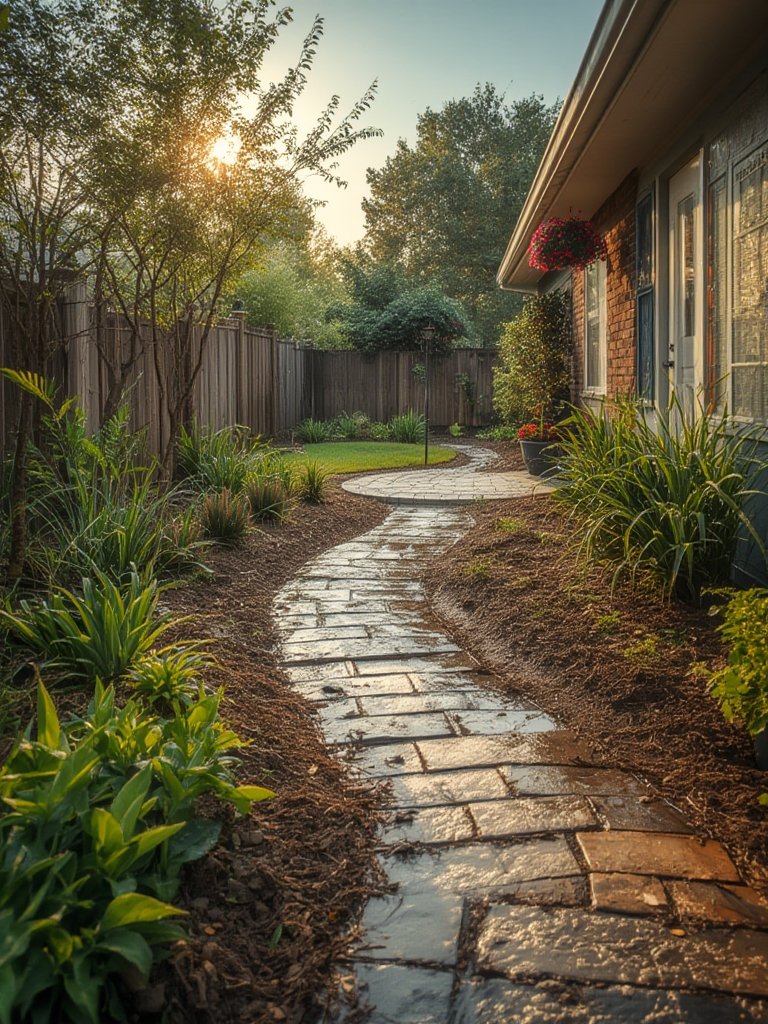
Actionable next steps for homeowners (local data, contractors, permits, pilot projects)
Ready to act? Here’s a decision-ready checklist:
- Walk your lot after heavy rain; document problem areas with photos and rough measurements.
- Prioritize a single, small pilot (like a 25 square foot rain garden near the most problematic downspout).
- Order a soil infiltration test, especially if you suspect heavy clay or shallow groundwater.
- Compile a list of 3-5 local landscape or hardscape contractors with bioswale garden design or permeable paving installation experience; request quotes detailing unit pricing and references.
- Contact your city/county stormwater or planning office early for permit/technical standards guidance and potential stormwater rebate programs.
- Gather local plant lists from county extension or state conservation offices for USDA zone-specific rain garden plants; confirm with contractors or local peer groups.
- Observe pilot performance after the next storm, adjusting design and maintenance plans as needed before scaling up.
Given that US flood costs top $179.8–$496 billion annually and urban flooding is rising due to too many hard surfaces, taking local, evidence-aware action is time well spent.
Appendix / Resources to add before publish (research tasks for writer)
To deliver a truly authoritative guide to flood-proof landscaping, you must source and append:
- Current local cost ranges for bioswale/rain garden/permeable paving from 3+ 2024 contractor quotes
- Peer-reviewed studies or city/municipal case studies demonstrating before-and-after yard-scale runoff volumes
- USDA hardiness zone plant lists from master gardener or extension services
- Sample municipal permitting/technical standards language for relevant solution types
- User review summaries/complaint rates for all runoff system types
- Clear installation diagrams and site photos illustrating pilot and mature projects
The current research only addresses broad national flood losses and climate impacts. It lacks all listed implementation, cost, effectiveness, species selection, and permit compliance data—these must be gathered for post-publication reviews.
For more in-depth cost/permit management strategies, see our Fire-Smart Landscaping Guide and Bathroom Remodels That Enhance Style and Function.
FAQ
Can I flood-proof my yard without replacing all my lawn or hardscape?
Yes. Start with small pilot areas like a single rain garden or a strip of permeable pavers. Target your worst runoff problems first and scale up as you validate effectiveness.
What is the most low-maintenance flood-proof landscaping option?
Bioswales with dense native plantings are typically low-maintenance after year two. Permeable paving requires periodic cleaning but less replanting or yard work long-term.
Will flood-proof landscaping solutions increase my home value?
There is not enough research to guarantee a boost in home value, but many buyers value reduced flood risk and attractive native landscaping. Value impact varies by region and implementation quality.
Do I need a permit for a rain garden or permeable driveway?
Most municipalities require a permit or simple site review for driveway or front yard changes involving soil grading or hardscape replacement. Always check with your local planning or stormwater officials before starting work.
What are the signs my rain garden or bioswale is failing?
Common failure indicators are standing water lasting more than 48 hours, invasive weeds, dead plants, or eroding channel sides. Address these with maintenance and, if needed, redesign before the next big storm.