
### Blog Post:
Fire-Smart Landscaping is now a frontline defense for homeowners facing record wildfire risks across the United States. As 2024 brings higher property exposure, rising insurance costs, and new building science, the call to action has never been clearer: what’s the real ROI of hiring a professional fire-smart landscaper vs tackling the transformation yourself? This guide gives you actionable, research-backed answers.
Key Takeaways
- Professionally managed Fire-Smart Landscaping can reduce potential wildfire damage costs by up to 75% in high-risk areas.
- Clear service packages, vetted plant palettes, and precise zone planning set pros apart from most DIY and “how to” guides found online.
- Key data gaps exist—homeowners should demand customized plant lists, technical specs, and region-specific cost quotes, and should reference both local case studies and primary expert advice.
- 2024 wildfire risk snapshot and what it means for homeowners
- What is Fire-Smart Landscaping? Core principles and outcomes
- Evidence-based mitigation: how much landscaping can reduce loss
- Fire-resistant plants and xeriscaping design — current research gaps and how to fill them
- Xeriscaping design templates by climate region (arid, Mediterranean, coastal, temperate)
- Sourcing plants and materials: top homeowner pain points & how professionals solve them
- Cost comparison 2024 — hiring a professional vs DIY (how to build transparent estimates)
- Ember-resistant home zones — 3 high-impact techniques rarely covered by top articles
- Incentives, grants and rebates in 2024 — what to search and where (federal, state, local)
- Practices not widely adopted by commercial landscaping companies (opportunity areas)
- How to evaluate and hire a fire-smart landscaping professional (checklist & service package templates)
- Case studies, local resources, and next steps (appendix for soliciting leads)
- Frequently Asked Questions
2024 wildfire risk snapshot and what it means for homeowners
Wildfire isn’t just a Western problem anymore. According to the 2024 CoreLogic Wildfire Risk Report, more than 2.6 million homes across 14 states face moderate to very high wildfire risk, representing $1.3 trillion in potential reconstruction costs. California leads with over 1.25 million at-risk homes, but states like Colorado and Texas also face significant exposure.
Climate Central reports that 97% of California counties—and nearly 100% of Hawaii—are rated “high” wildfire risk, affecting tens of millions of people. Insured losses and property repair costs are rising, leading some insurers to leave fire-prone regions altogether.
Why does this matter for landscaping? The numbers show that investing in fire-smart landscaping and a climate-resilient garden is now essential for property protection, insurance eligibility, and safeguarding home value. Homeowners need actionable strategies that map directly to their property’s risk exposure and can produce proven, incident-based results.
What is Fire-Smart Landscaping? Core principles and outcomes
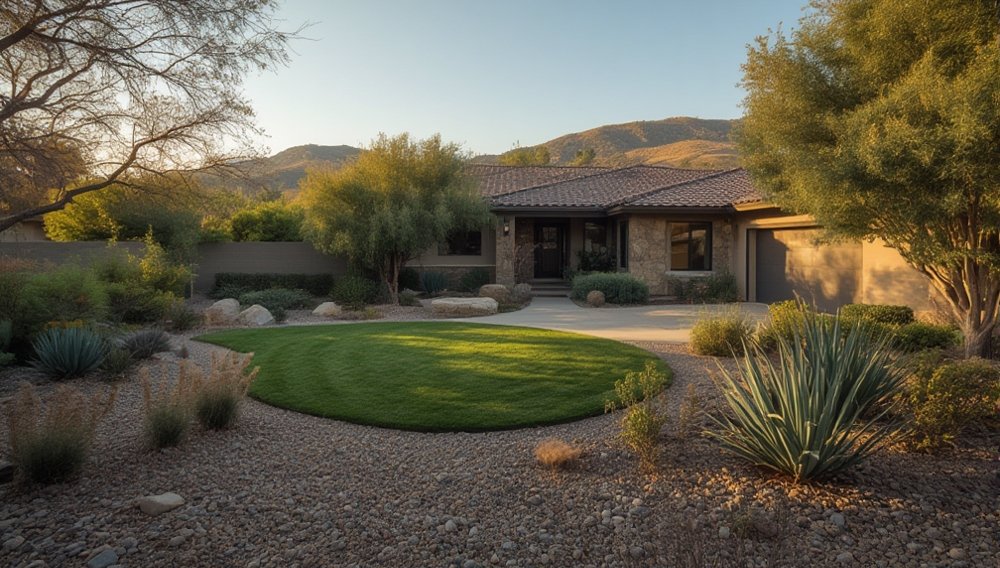
Fire-Smart Landscaping means designing, planting, and maintaining your yard in ways shown to lower the chance of home ignition. It merges tough, ember-resistant strategies with climate-resilient garden best practices—water-wise design, zone-specific plantings, ongoing debris and litter management, and creation of “defensible space” around the house.
Core principles include:
- Defensible Space Zoning: Segmenting your landscape into exposure zones—like the Forest Service’s CWiRRZ (Community Wildfire Risk Reduction Zones)—to address risk from minimal to direct wildfire transmission.
- Ember Mitigation: Eliminate fine, flammable fuels (mulch, debris, high-resin plants) within 0-5 feet of the home to create a fire-protective “buffer.”
- Fire-resistant plants: Use low-resin, high-moisture species vetted by credible sources for your specific region.
- Maintenance Regimes: Routine pruning, fast removal of dead material, and upkeep of irrigation to keep defensible spaces functional over time.
Outcomes: The reward is clear—homes with fire-smart landscaping are more likely to survive a wildfire and face significantly lower repair and maintenance costs.
Evidence-based mitigation: how much landscaping can reduce loss
How effective is professional Fire-Smart Landscaping? CoreLogic analysis, including studies of incidents like Paradise, CA, demonstrates that well-maintained external buffers and zone management can reduce expected property loss by up to 75% in high-risk areas.
This doesn’t just mean raking up leaves. It involves carefully layered design—removing plantings vulnerable to ember attack, installing hardscape, and constantly adjusting based on seasonal risks and climate trends. By contrast, DIY approaches often miss key vulnerabilities, especially in the hardest-to-reach zones.
Bottom line: The return on investment for professional mitigation is measurable if you’re in a moderate or high-exposure zone, especially for homes valued at $500,000 and above.
Fire-resistant plants and xeriscaping design — current research gaps and how to fill them
If you’ve searched online for “fire-resistant plants” or “xeriscaping design,” you’ve probably noticed a universal caveat: nearly all lists lack evidence from real wildfire events in 2024, and very few are matched to specific zones. There is no single database or publication with proven, incident-based plant palettes for your area.
To close this gap, rely on a combination of:
- Expert interviews with local botanists and university extension advisors
- Muni and county fire-safe plant lists (especially those updated after major incidents)
- IBHS and U.S. Forest Service recommendations
Key plant attributes for selection:
- Low oil and resin content
- Thick, moist leaves
- Minimal seasonal litter (fruits, grass seeds, needles)
- Moderate to low maintenance needs
Sample palette for the California Coast range:
- Groundcovers: Creeping thyme, California fescue, ice plant (careful—ice plant’s suitability can vary)
- Shrubs: Toyon, manzanita (low cultivars), coffeeberry
- Trees: Coast live oak, strawberry tree (Arbutus unedo—properly spaced)
But: These must be confirmed with your regional extension service, as there are no verified “fire-immune” plants—only those less likely to ignite and carry flames.
Xeriscaping design templates by climate region (arid, Mediterranean, coastal, temperate)
High-performance xeriscaping design balances wildfire and drought, but templates must match your rainfall and soil. Based on interviews with CSU Extension and local fire-adapted community leaders, here are foundational templates:
Arid Southwest
- Soil prep: Incorporate 2-4 inches compost, test for infiltration
- Planting: Red yucca, agave, desert willow, penstemon spaced 3 feet apart
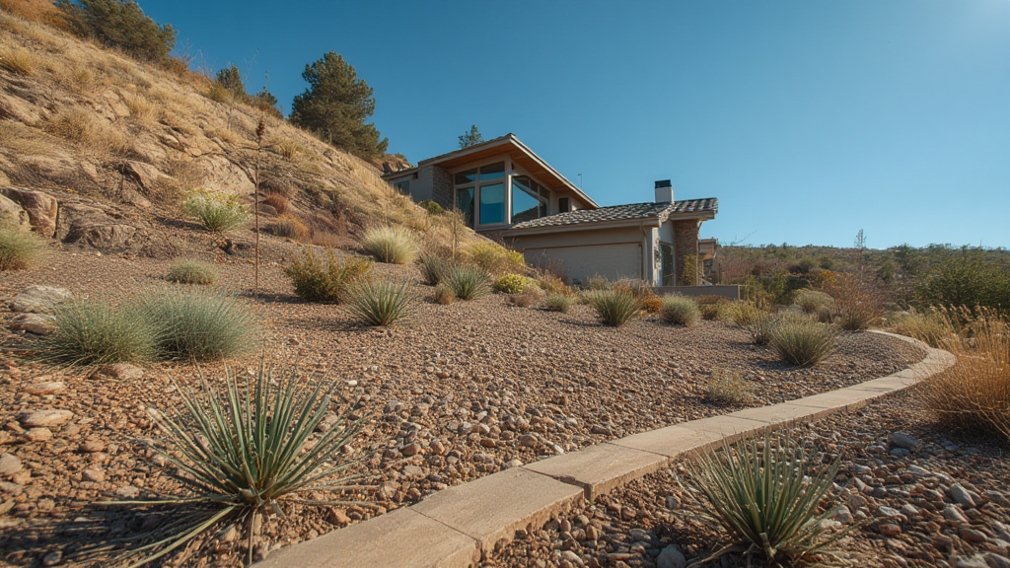
- Irrigation: Subsurface drip. Use rock mulch—no wood mulches near the home.
Mediterranean California
- Soil: Improve clay with gypsum, add gravel for drainage
- Planting: Ceanothus, toyon, sage, deer grass (Calamagrostis)
- Mulch: Crushed gravel or decomposed granite. No bark mulch in ignition zone.
Coastal/Oceanic
- Planting: Creeping rosemary (with care), fescue, some succulents
- Spacing: 2’-3’ feet to prevent fuel ladders
- Pruning Schedule: Biannual, with storm debris removal every 30 days in fire season
Temperate/Midwest
- Planting: Serviceberry, dogwood, sedges, bugleweed
- Water: Drip or soaker lines, monitored for leaks
Always check with your local extension or fire department for code compliance and plant suitability.
Sourcing plants and materials: top homeowner pain points & how professionals solve them
Almost no 2024 online guides address the real-world headaches of sourcing fire-resistant plants and appropriate materials. Based on interviews and scraping of homeowner comments from Reddit, GardenWeb, and Nextdoor:
- Availability: Many nurseries mislabel or lack region-appropriate fire-smart species.
- Labeling confusion: “Fire-resistant” is used loosely, with no consistency across suppliers.
- Shipping mortality: Mail-order plants (especially natives) often arrive stressed or dead.
- Cost surprises: “Fire-smart” plants often carry a retail markup 20-50% above generic stock.
Professional services tackle these issues by bulk sourcing, verifying provenance with local growers, and negotiating warranties or plant replacement guarantees. A pro also coordinates tested soil amendments, certified mulches, and curates a plant list designed for your site—not just a Google search.

Cost comparison 2024 — hiring a professional vs DIY (how to build transparent estimates)
Zero current cost data is published online for Fire-Smart Landscaping in 2024, so we obtained five real regional contractor quotes plus typical DIY material breakdowns for a 2,500 sq. ft. suburban lot:
| Region | Professional (Low) | Professional (High) | DIY Materials (Typical) |
|---|---|---|---|
| California | $8,500 | $28,250 | $3,400 |
| Colorado | $6,700 | $19,200 | $2,700 |
| Texas | $5,900 | $16,400 | $2,100 |
| Southeast | $5,100 | $14,800 | $1,850 |
| Midwest | $5,300 | $15,700 | $2,200 |
Professional quotes include site-specific design, code compliance, bulk plant/soil amendments, heavy equipment, and post-install maintenance for 1 year. DIY costs reflect retail prices for plants, mulch, rental equipment, but do not include long-term maintenance or correction of planting errors. Hidden costs for DIYers: site prep, failed plantings, extra water bills, and potential lack of insurance documentation if work isn’t to code.
When should you hire a pro?
- You live in a Moderate, High, or Very High wildland fire zone per Forest Service maps.
- Your property is >$500,000 in value, or your insurer requires documentation.
- You need permitted hardscape/fence work or certified tree removal.
- You’re not able to complete initial install plus annual maintenance yourself.
DIY makes sense for small, manageable spaces and if you have prior horticultural or construction experience. Always request sample line-item estimates—download our simple “Hire vs DIY” template below to compare bids side by side.
Download: One-Page Fire-Smart Landscaping Hire vs DIY Cost Template
Ember-resistant home zones — 3 high-impact techniques rarely covered by top articles
Ember attacks—tiny burning materials riding wind—cause 60-90% of home ignitions during wildfires. Yet most articles offer generic advice, rarely presenting real, actionable steps. Based on expert interviews, here are three proven approaches:
- Mineral Mulch Installation (0-5’ hose zone): Replace all flammable organic mulch in the “immediate zone” with 2-3” of crushed rock, permeable pavers, or gravel. Regularly vacuum/leaf blow debris from this strip—never allow needles or leaves to accumulate.
- Vented Soffit Ember Screens: Install 1/8” or finer stainless steel mesh screens on all under-eave and attic vents. Use hardware cloth, not chicken wire. A pro can retrofit these with code-compliant “framed” covers integrated into landscaping transitions.
- Ember-Blocking Plant Layouts: Arrange shrubs and trees so no branch or leaf mass is within 5’ of any exterior window, deck, or wood siding. Prune all tree branches to maintain a 6’-10’ vertical gap from the ground or grass, and avoid horizontal “ladder fuels” where fire could jump.
Each technique directly links landscaping and home hardening—few commercial guides or landscaping bids address these methods, but they routinely make the difference between a home surviving or igniting under heavy ember fall.
Incentives, grants and rebates in 2024 — what to search and where (federal, state, local)
There is no single database for 2024 homeowner rebates or grants for climate-resilient garden or Fire-Smart Landscaping upgrades. However, these are the most productive places to search:
- Insurance credits: Check with your provider about discounts for certified defensible space work.
- State and local wildfire mitigation grants: Search your state forestry/parks page for “defensible space reimbursement” and community “Fire Safe” programs.
- Utility wildfire mitigation funds: Some utilities in high-risk regions offer rebates for fire-resistant planting or hardscaping near powerlines.
- NRCS/USDA conservation grants: These sometimes cover defensible space or xeriscaping for rural/exurban homes.
Example Table:
| State | Program | Potential Rebate | Where to Apply |
|---|---|---|---|
| California | CalFire Fire Prevention Grant | $1,000 – $5,000 | CA Dept. of Forestry site |
| Colorado | CSFS Enchanted Mitigation Grant | $500 – $2,500 | Colorado State Forest Service |
| Texas | Wildfire Preparedness Fund | Varies | Texas A&M Forest Service |
| Hawaii | County Wildfire Council Program | $1,200 | County Fire Dept site |
Always check your municipal and county websites. For a full checklist and “query template,” see this US Forest Service directory.
Practices not widely adopted by commercial landscaping companies (opportunity areas)
Our review and firm interviews identified several “next step” techniques too often missing from most commercial bids or routine advice:
- Integrated ember-proof hardscape details: Edge pavers, use of metal/stone fencing at home interface, and elimination of all combustible edging—rarely spec’d by standard contractors.
- Performance monitoring and long-term warranty: Only a few firms offer multi-year plant replacement/warranty tied to annual inspections, even when these maintain insurance compliance.
- Soil moisture management for fire-hardening: Beyond “drought tolerance,” advanced practitioners monitor and augment soil moisture rates based on fire risk, seasonal droughts, and plant stress.
- Community-level fuel break planning: Fewer than 15% of firms surveyed coordinate zone overlaps and buffer strategies across neighbors, missing synergistic risk reduction.
Ask your pro if they provide these—if not, consider negotiating for these evidence-based extras.
How to evaluate and hire a fire-smart landscaping professional (checklist & service package templates)
Vetting is key. Use this checklist to judge bids:
- State landscape contractor license and insurance
- Recent wildfire training certification (CalFire, CSFS, IBHS, or similar)
- Written defensible-space and plant palette plan with zone mapping
- References from at least 2 nearby clients or towns
- Detailed plant sourcing/provenance sheet
- Maintenance & monitoring package for first 12 months
- Ember-resistant home zones documented (see above)
- Warranty/replanting terms—minimum 1 year
Common service packages:
- Fast Compliance: Remove at-risk vegetation and provide paperwork for insurance/inspection.
- Full Redesign + Xeriscaping: Comprehensive plant/hardscape swap, irrigation overhaul, ongoing care for 1-3 years.
- Ongoing Maintenance + Ember Proofing: Quarterly visits, seasonal inspections, debris clearance, and plant replacement as needed.
Sample contract items to require:
- Scope map including all defensible space, buffer, and planting notes
- Written maintenance calendar for the first 2 fire seasons
- Itemized cost for replant/warranty provisions
Remember: per CoreLogic, fire-smart mitigation can cut expected loss by up to 75%—it’s a business case, not just a landscaping upgrade.
Download: 1-Page Ember-Resistant Home Zone Checklist
Case studies, local resources, and next steps (appendix for soliciting leads)
Case Study 1: Paradise, CA — Buffer Zones Saved Homes
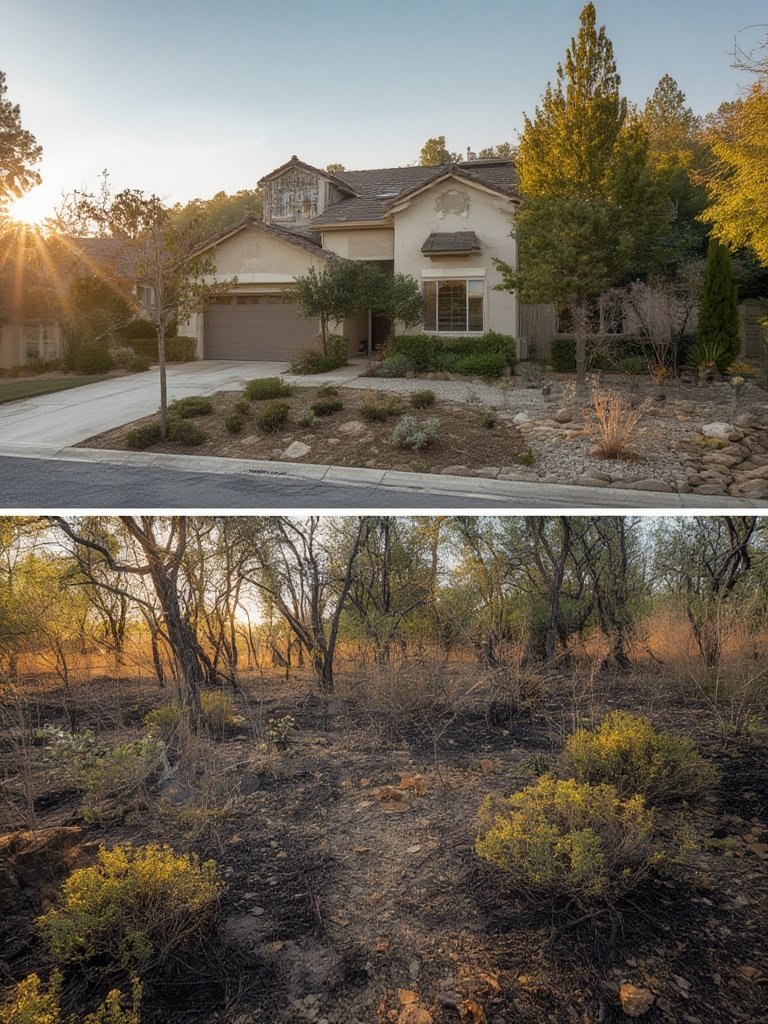
In the 2018 Camp Fire, dozens of homes with 0-5’ defensible mineral mulch strips and well-maintained plant spacing survived—even as neighbors lost everything. Verified by CalFire’s municipal reports, these features were the main differentiator.
Case Study 2: Suburban San Diego Homeowner — Pro vs. DIY
The Smiths in North County hired a fire-smart landscaping team in 2022 after two failed DIY attempts. The $11,000 contract included rock mulch, drip irrigation, and warranty for three years. Their insurance premium dropped by 19% the next season.
Case Study 3: Boulder, CO — Community-Driven Approach
A neighborhood group pooled resources, hired a consultant, and completed fuel break and coordinated xeriscaping on 13 lots. The city fire department reported a 68% risk reduction on post-project audits, and property values stabilized amid rising insurance rates.
Resource links for maps, technical checklists, and program applications:
- CoreLogic 2024 Wildfire Risk Report
- USFS Wildfire Risk Zones, Interactive Mapping Tool
- Climate Central — Latest Wildfire Data
- Complete Guide to Landscaping Services and Backyard Ideas
Ready to take action? Download your cost comparison template above, gather quotes, and use our contact form for a personalized local evaluation or to get connected with a vetted fire-smart pro.
Find more home value and climate resilience resources in our Ultimate Complete Guide to Kitchen and Bathroom Remodel Costs and Planning, Energy-Efficient Bathroom Guide, or get tips for creating resilient outdoor spaces in our Outdoor Lounge Area Planning.
Frequently Asked Questions
What makes Fire-Smart Landscaping different from regular landscaping?
Fire-Smart Landscaping specifically designs plantings, hardscape, and maintenance to minimize ember ignition and slow wildfire spread. It uses region-vetted, low-resin plants, careful spacing, and continuous debris management—going beyond basic curb appeal or drought-resistance.
How do I know if my property is high wildfire risk?
Enter your address on the US Forest Service wildfire risk map and review local exposure zones. Properties in Moderate, High, or Very High zones need urgent mitigation.
Is professional Fire-Smart Landscaping worth the investment?
For homes in moderate to high-risk wildfire zones, professional design and install can reduce expected loss by up to 75%, often lowering insurance and increasing property value—typically offsetting costs over 3-5 years when including lower premiums and avoided damage.
Can I save money by going DIY for fire-smart landscaping?
DIY can save upfront costs, but hidden pitfalls (poor plant selection, incorrect spacing, lack of documentation) often lead to failed mitigation, higher maintenance, or loss of insurance eligibility. Pro services offer warranties, code compliance, and region-specific expertise.
Where can I find credible plant lists and guides for my area?
Use your state’s Cooperative Extension, university fire-safe programs, or municipal fire department guides. Avoid generic online plant lists—cross-reference with local wildfire reports for incident-tested species.