
### Blog Post:
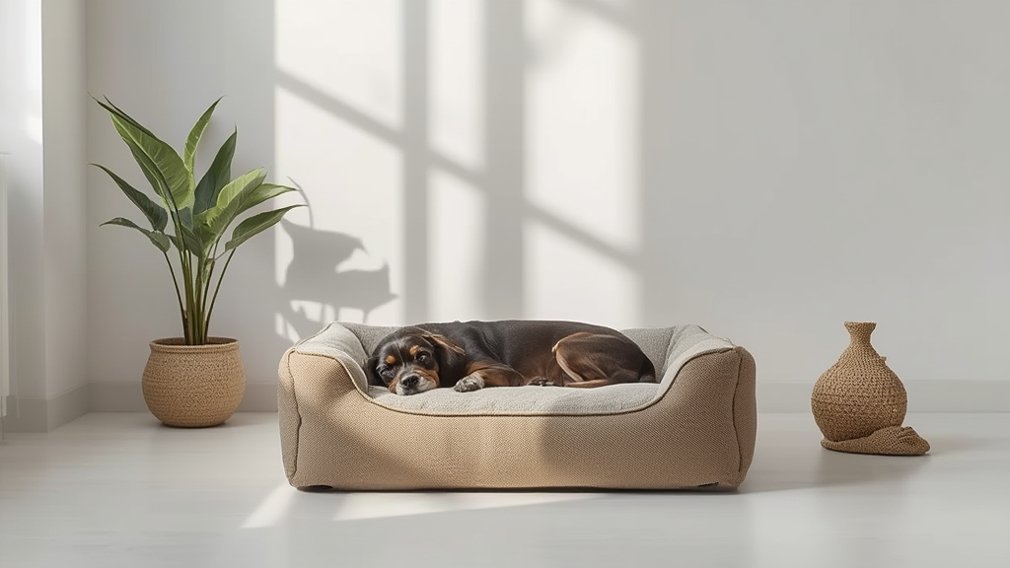
Upcycled Pet Bedding is quickly moving from niche trend to a core expectation for eco-conscious Gen Z and Millennial pet owners in major cities. If you’re looking for real numbers and credible proof behind eco pet beds—especially rPET recycled dog beds and ocean plastic pet mats—this guide gives you financial facts, environmental details, and practical buyer advice. No greenwashing, just direct transparency for you and your pet.
Key Takeaways
- Sustainable pet bedding—especially rPET and upcycled materials—makes up a fast-growing, premium segment, projected to surpass USD 3.15 billion by 2028 (source).
- Gen Z and Millennial shoppers demand proof: certifications, supply-chain transparency, and end-of-life details now determine purchase—premium price alone is not enough.
- Data gaps in environmental impact and lifespan mean brands and retailers must provide full product LCAs and certification documents or risk losing buyer trust.
- Why upcycled pet bedding is a real market — not just a trend
- Regional opportunity map — where to market premium eco pet beds first
- What eco-conscious Gen Z & Millennials are buying — motivations & expectations
- The top consumer pain points to address on product pages
- Claims & certification — what to show and what to verify
- Environmental impact comparison — how to present an honest, side-by-side view
- Pricing, durability & lifespan — how to prove your higher price is worth it
- Competitor gaps and content opportunities (three high-impact topics to own)
- Product page & ad messaging playbook — headlines, proof points, and CTAs
- Research & data tasks for the writer (must-complete before publishing)
- Suggested assets, visuals and data tables to include
- Frequently Asked Questions
Why upcycled pet bedding is a real market — not just a trend
The market for Upcycled Pet Bedding—including rPET recycled dog beds and products made from ocean plastic pet mats—is no longer niche. As of 2024, the global sustainable pet beds market is valued at USD 2.34 billion, expected to reach USD 2.52 billion in 2025 and USD 3.15 billion by 2028 at a CAGR of 7.7% (source). Key growth drivers include pet humanization, growing sustainability demand, and premium pricing opportunities in developed regions. Retailers and brands not prioritizing upcycled or rPET SKUs risk missing out—especially with Gen Z and Millennial buyers shifting loyalty towards carbon-neutral, certified choices.

Regional opportunity map — where to market premium eco pet beds first
The opportunity for Upcycled Pet Bedding is highly regionalized. In 2024, Europe held about 30% of the global pet beds market (USD 1.35B), North America and Asia Pacific followed at 23% (USD 1.04B) with APAC showing the highest CAGR (~9%) (source). Latin America and MEA trailed with 5% and 2% respectively. For premium products like ocean plastic pet mats, focus first on Europe and North America—buyers here are more likely to pay for verified sustainability, while APAC is the future volume-growth region. Adjust channel strategies accordingly: DTC and high-design retail in developed Western markets, growing digital channels in Asia.
- Europe/North America: Prioritize certified, premium SKUs and clear supply chain storytelling.
- APAC: Lean into functional innovation—anti-rip, easy-clean—while building brand trust for upcycled claims.
What eco-conscious Gen Z & Millennials are buying — motivations & expectations
Gen Z and Millennial shoppers (ages 22–40) expect Upcycled Pet Bedding to deliver measurable value:
- Carbon neutrality & proof of recycled content—not just empty badges, but traceable, batch-level details.
- Modern, clean design, soft durable touch, and visible pet comfort/washability.
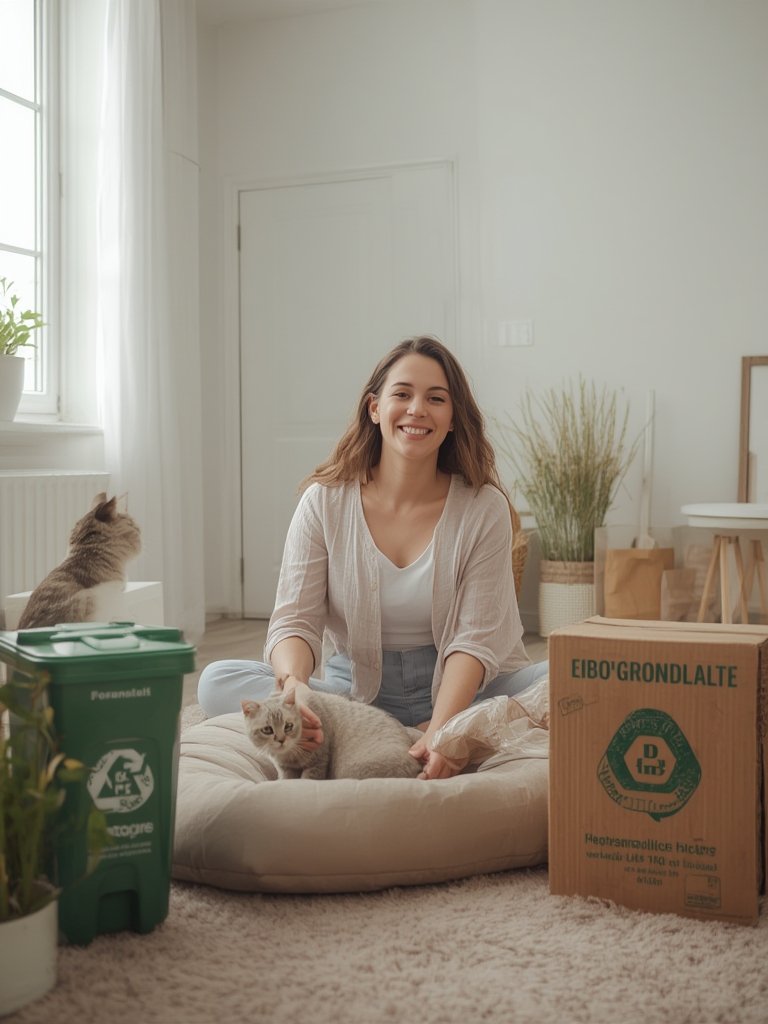
- End-of-life guidance—clear instructions for recycling, return, or composting, plus takeback offers.
- Social proof—credible reviews, visible certifications, lifecycle impact details, not just marketing claims.
Sustainable sub-segments such as eco-friendly hemp pet beds also benefit from premium pricing in markets where buyers link pet product choices to overall lifestyle values (source).
Brands need to market transparency as their advantage—not just new colors or fabrics. Platforms like pet enrichment tech and energy efficient upgrades already show that Gen Z consumer trust hinges on verified claims and product lifecycle data.
The top consumer pain points to address on product pages
No direct complaint data exists for Gen Z or Millennial buyers of recycled beds, but clear patterns emerge:
- Price: Upcycled Pet Bedding and rPET recycled dog beds often cost more than traditional options due to higher production costs. Address this by showing total value and long-term durability.
- Durability: Buyers worry eco materials won’t handle scratching or frequent washing—ensure specs highlight anti-rip fabrics, laboratory wear tests, and straightforward repair policies.
- Skepticism of Green Claims: Link every sustainability claim to third-party certification (or note if sourced directly from supplier).
- Unclear End-of-Life: Ambiguity around recycling, composting, or return options breeds distrust. Provide visible end-of-life icons and guidance on every product page.
For Biodegradable cat cushions or upcycled beds, add warranty details and batch-level sourcing. If any proof is missing, say so directly—honest gaps build more trust than empty marketing language.
Claims & certification — what to show and what to verify
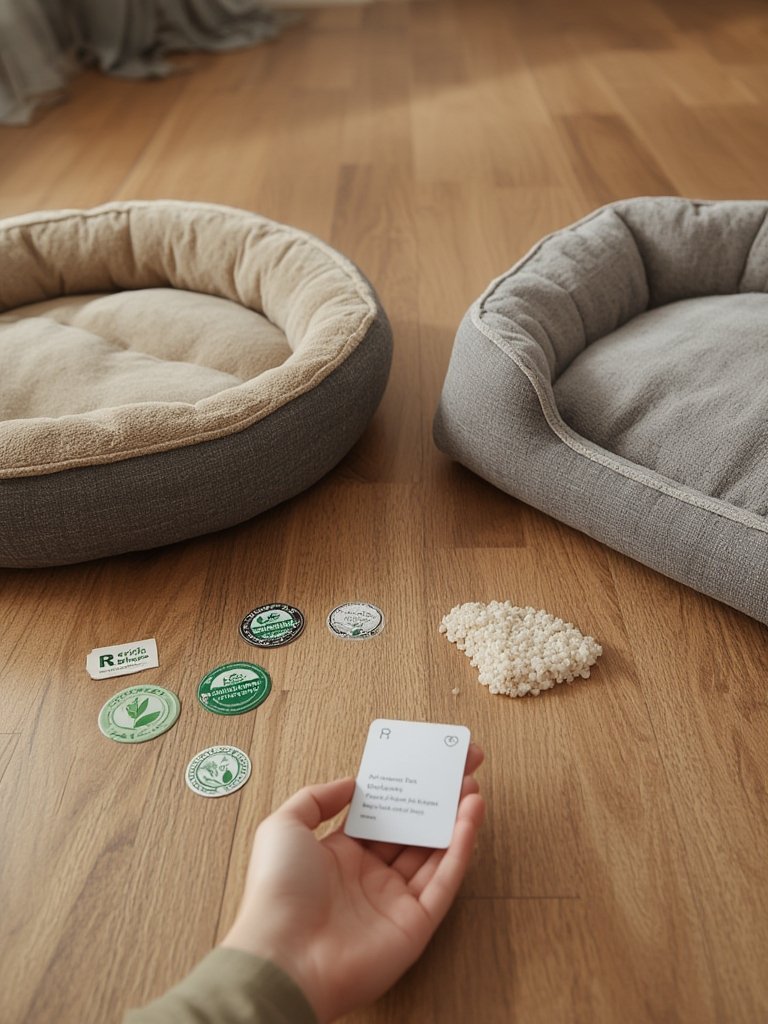
No definitive data exists on what percent of ocean plastic pet mats or Biodegradable cat cushions meet independent certification standards (source). Therefore, every claim on your product page needs to be backed by:
- Certification badge & number (e.g. GRS, OEKO-TEX) with clickable proof.
- Short LCA (Life Cycle Assessment) summary—ideally from a cut-and-paste supplier document.
- Traceable batch or lot number for recycled material claims.
- Links to independent verification bodies or the actual cert PDF.
Don’t rely on vendor language like “made with ocean plastic” unless you can show exactly how much, batch origin, and the certifying organization. If you can’t prove it, call it out (e.g., “Supplier-certified, awaiting independent verification”).
Review the importance of transparency in home products to see how this trust-based approach wins buyers in adjacent markets.
Environmental impact comparison — how to present an honest, side-by-side view
Ready to show buyers the real-world impact? Here’s how to honestly present 2024’s most-wanted sustainable pet bedding types—even where third-party data is missing:
| Bedding Type | Typical Carbon Footprint | Biodegradability | End-of-Life Scenario | Proof/Source Status |
|---|---|---|---|---|
| rPET Recycled Dog Beds | Lower than virgin polyester beds (exact gCO2 not published*) |
Non-biodegradable | Mechanically/economically recyclable if facilities exist | Supplier LCA required |
| Biodegradable Cat Cushions | Unknown – depends on source fiber/process | Biodegradable (if 100% natural or compostable blend) | Home/industrial compost, landfill as fallback | Third-party compostability cert needed |
| Ocean Plastic Pet Mats | Potentially high post-collection emissions | Non-biodegradable | Recyclable, downcycled, or landfill | Proven source & independent ocean plastic content cert needed |
| Eco-friendly Hemp Pet Beds | Generally low (requires LCA per product) | Biodegradable if 100% hemp; blends vary | Compost or recycling if cover removable | Organic/agricultural cert needed |
*Research found no direct environmental footprint comparisons for these products—request LCAs and supplier emission data for confirmation. See the latest research for data update releases.
Pricing, durability & lifespan — how to prove your higher price is worth it
Most suppliers acknowledge eco-friendly or Upcycled Pet Bedding costs more to make—hence premium price tags. Yet, no 2024 data exists for average price or lifespan versus traditional beds (source).
- Cost-per-year: Position product pricing using warranty length, test-based durability data, and repair/takeback offers—make it an ROI discussion, not just upfront sticker shock.
- Transparency on lifespan: Publish 3rd party or supplier durability test results (e.g., 1000+ washes, anti-rip ratings).
- Value-adds: Repairs, takeback, and end-of-life assistance boost perceived value—much like investment pieces in the home sector.
If you lack real-world data, launch quick-buyer surveys and post updates. Acknowledge what is missing and restate your research plan. See example chart requirements further below.
Competitor gaps and content opportunities (three high-impact topics to own)
Research reveals a surprising advantage: there is no published gap analysis or well-ranked content tackling these three pain-point topics in Upcycled Pet Bedding:
- Verification of “ocean plastic”/”biodegradable” claims: Build a template that features: badge, cert number, clickable cert PDF, supplier proof, and batch origin for every SKU.
- Honest environmental tradeoffs: Use compact, visual LCA summaries—even if interim or supplier-provided—and acknowledge any “data pending” spots.
- Practical end-of-life solutions: Add clear blocks on takeback, repair, and composting options. Be candid: “No composting for zipper/foam. Return for recycling instead.”
Page templates (sections to fill):
- “How is this bed made?”: short paragraph with a raw material chart and process icons
- Sustainability proof strip: badges, cert number, LCA link, social proof
- End-of-life action banner: what to do when your pet’s bed wears out
Use lessons from data-driven buying guides to structure and build trust.
Product page & ad messaging playbook — headlines, proof points, and CTAs
Headline formula: “Eco Pet Beds—Traceable Materials, Real Comfort, Zero Greenwashing”
Proof bullets (choose 3):
- GRS- or OEKO-TEX-certified: Certification number displayed above
- Supplier LCA available—carbon impact rating published online
- Built for 1000+ washes, anti-tear warranty and repair program
Trust line:
“Carbon-neutral shipment. Verified sustainable materials. Full support at end-of-life—recycle or repair.”
Direct CTAs:
- Buy now—see batch details and certificate numbers
- Request LCA summary via email
- Start a takeback/repair request
Visuals to use: Clean product cutaways (showing fill/cover), badge closeups, lifecycle icon timeline, batch number photo. For Gen Z/Millennial social ads: Use a quote overlay (“I know where this was made—and where it’s going when my pup’s done!”).
Messaging built on the fact that sustainable pet beds secure premium pricing based on proof, not hype (source).
Research & data tasks for the writer (must-complete before publishing)
- Request LCAs or at least emissions statements from every supplier for rPET recycled dog beds and Biodegradable cat cushions.
- Gather and publish current or pending certification numbers and badge images for each lineup.
- Source or independently commission durability test results or 3rd-party verification (e.g., number of machine washes, anti-rip testing).
- Collect 2024 price and lifespan data from manufacturers—report whether data is third-party or supplier-supplied.
- Quickly survey buyers for upcycled bedding pain points—then publish top 3 in each product FAQ.
- Perform a competitive audit: document any topics, proof points, or certification gaps missed by top search/marketplace rivals.
Transparency about what is (and isn’t) yet available is the fastest way to build trust in uncertain or new product categories.
Suggested assets, visuals and data tables to include
For every Upcycled Pet Bedding launch, require these data-driven, proof-rich assets:
- Market size and projection chart: Show global growth from USD 2.34B (2024), USD 2.52B (2025), to USD 3.15B (2028).
- Regional share bar chart: Europe (~30%), APAC (~23%), Latin America (~5%), MEA (~2%).
- Certification checklist table: Badge, cert number, scope, status (independent or not), expiration date.
- Environmental comparison table: (as previously detailed) with “data missing” tags where applicable.
- Price vs. lifespan graph: Visualize upfront cost vs expected use duration, highlighting repair/takeback programs.
- Product trust strip: Icons for warranty, verified materials, and explicit end-of-life or takeback support.
See how similar comparables are presented in data-focused guides for home products.
Frequently Asked Questions
How is upcycled pet bedding different from traditional beds?
Upcycled pet bedding uses recycled or repurposed materials like rPET (recycled polyester), ocean plastics, or hemp, reducing demand for new raw resources. Traditional beds typically use virgin polyester or foam, offering lower cost but less sustainability.
Are rPET recycled dog beds really safe and durable?
If made with certified rPET, these beds can match or exceed standard polyester in safety and durability. Always review warranties, look for lab-tested anti-rip features, and ask for certification details to ensure quality.
How do I recycle or dispose of my eco pet bed at end of life?
Follow the brand’s end-of-life instructions. Many offer takeback programs, recycling guidance, or composting info (for biodegradable beds). If instructions are missing, contact the supplier directly prior to disposal.
Why are upcycled or eco-friendly pet beds more expensive?
Eco pet beds use premium, traceable materials and often pay for certifications, audits, and tougher durability standards. These factors raise production costs compared to mass-market versions but contribute to longevity and lower environmental impact.
What certifications should I look for on eco pet beds?
The most credible include GRS (Global Recycled Standard), OEKO-TEX, and specific compostability certifications for biodegradable products. Always seek badge numbers and links to proof—avoid unsubstantiated claims.
—