

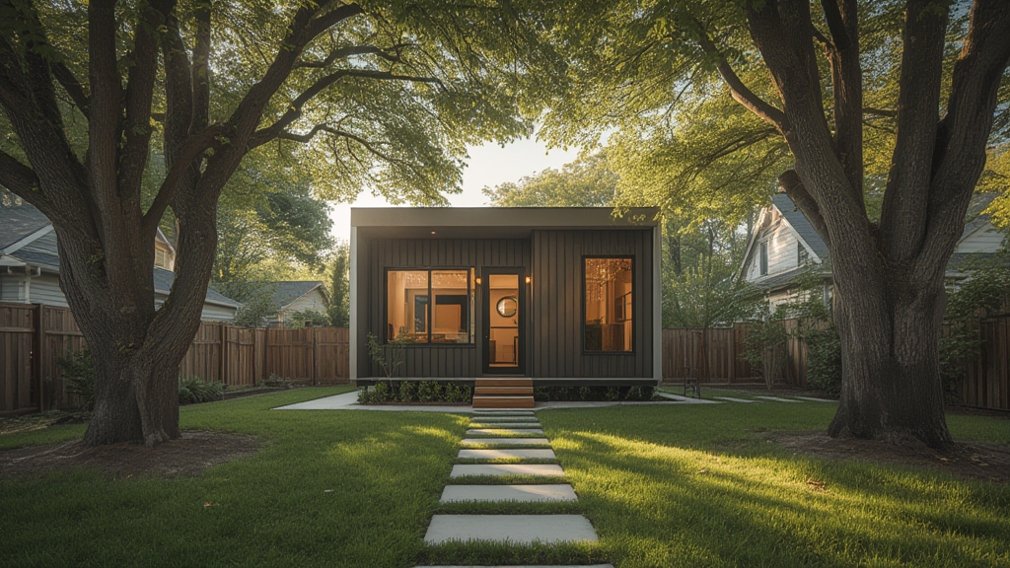
Prefabricated ADU buyers want real speed and cost control, but detailed info is scarce. This guide cuts through the noise using 2024 research and real project details so you can compare options, sidestep common pitfalls, and confidently choose the fastest, most affordable, and code-compliant ADU path for your home or small-scale investment.
Key Takeaways
- Modular and prefabricated ADUs can install up to 10 times faster than traditional builds—and now make up more than half of new ADU installs in North America.
- Upfront cost quotes often hide substantial permitting, site prep, and utility expenses—use our worksheet and vendor checklist to build a realistic budget.
- Common homeowner pain points include permitting delays, unknown site conditions, unexpected utility tie-ins, and unclear warranty claims—address these before signing any contract.
- Executive summary — Is a prefabricated ADU right for you?
- 2024 market snapshot — scale, growth and adoption trends
- Why modular/prefab is winning — the core advantages (unique insight)
- Real-world installation timelines — promise vs. reality
- Cost comparison — prefab/turnkey vs. traditional ADU (what to estimate)
- Top homeowner pain points and complaints — what’s missing from the hype
- Technical specs, code requirements and warranties — what to demand from vendors
- Permitting, incentives and the best places to build in 2024
- Due-diligence checklist — questions to ask every prefab ADU vendor
- Top 3 questions competitors rarely answer (opportunities for this article)
- Final recommendation and next steps (CTA)
- FAQ Section
Executive summary — Is a prefabricated ADU right for you?
Use this quick decision checklist before you start a single design or quote request. Prefabricated ADUs (including modular and manufactured backyard homes) are ideal for buyers who:
- Want fast, predictable build times (install in 10–30 days after permits, versus 7–15 months for traditional ADUs)
- Value code compliance, standardized engineering, and limited on-site disruption
- Need more certainty about up-front costs—but understand that site work and permits are not always included in website pricing
- Are comfortable working with local building departments or seeking professional help to handle permits and site approvals
- Prefer factory quality control and potentially lower environmental impact
Potential downsides include: permitting delays, site-specific surprises (utility tie-ins, grading, and soils), and sometimes less design flexibility.
Next steps: Get local ADU permit requirements, request spec packs (engineering, energy compliance) from several manufacturers, and collect at least three separate quotes (including on-site and city fees).
Market context: The US Prefabricated Housing Market was valued at USD 36,139.5 million in 2024 and is on track for continued growth.
2024 market snapshot — scale, growth and adoption trends
- Modular ADUs: $7.2 billion global market size in 2024 (DataIntelo)
- Broader ADU market: $18 billion globally in 2024; North America holds 40% share, US >36% (Mesocore)
- Growth: 53% of new North American ADUs are modular (Mesocore)
- Widespread adoption: 65% of construction firms now offer modular ADUs; 61% of US municipalities permit ADUs; 14 states have legalized ADUs broadly (Mesocore)
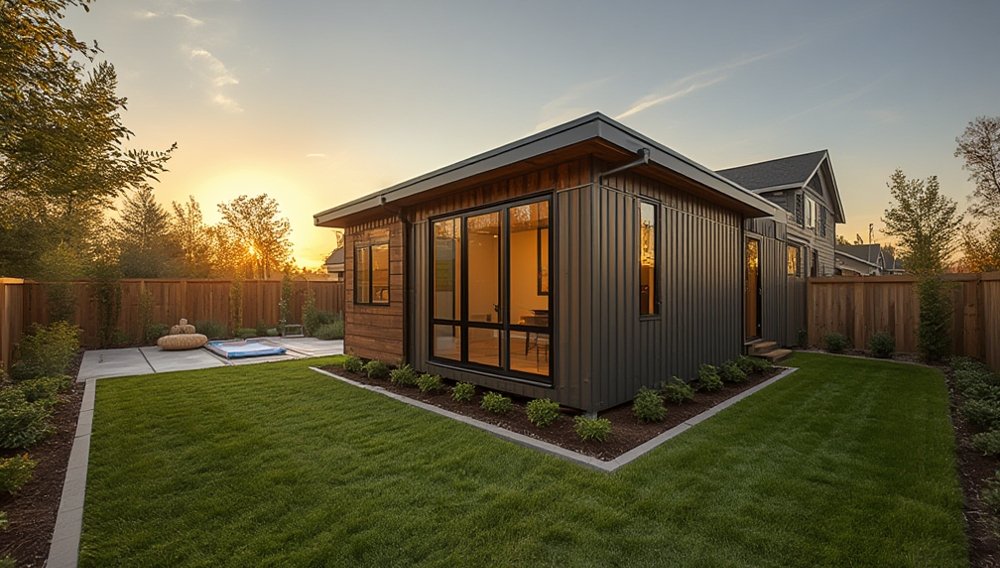
The ADU movement is no longer a fringe idea. Over half of all new North American ADUs are modular or prefab, thanks to speed, code acceptance, and precise factory builds. Cities and states are racing to legalize and streamline ADU approvals—a trend that will only accelerate as housing pressures continue.
For deeper legal and planning reference, see our guide: Accessory Dwelling Unit (ADU): 7 Amazing Ways to Maximize Rental Income.
Why modular/prefab is winning — the core advantages (unique insight)
Why are prefab backyard homes gaining market share so quickly? The answer is simple: factory-built construction provides predictable quality, much faster install timelines, and easier path to code compliance (especially when using preapproved models).
- Speed: Many modular ADUs can finish on your lot in 10–30 days after permits—and factory build can run in parallel to site prep.
- Certainty: Factory quality control means fewer on-site errors, weather delays, or missing materials.
- Code approval: Modular units often use pre-approved engineering, fire separation plans, and energy code packages, making city review faster.
- Best buyer profiles: If you want housing for family (in-law suite), short-term or long-term rental, or multi-generational security, prefab ADUs let you scale and plan more reliably. Small-scale real estate investors benefit from lower time-to-rent.
But, beware: smaller lots, homes in tight urban infill, or very specific architectural styles may need extra pre-design and city coordination.
Explore how factory-built methods stack up to traditional building in our kitchen and bathroom remodel cost guide to see similar cost-prediction challenges.
Real-world installation timelines — promise vs. reality
Advertised quick-install or turnkey ADUs claim 10–60 day on-site installs. But the entire process from contract to move-in has more moving parts:
- Design & permitting: 30–150 days, varying by city backlog and design review
- Factory build: 20–90 days (can overlap site prep)
- Site prep: 15–45 days (foundation, utilities, grading)
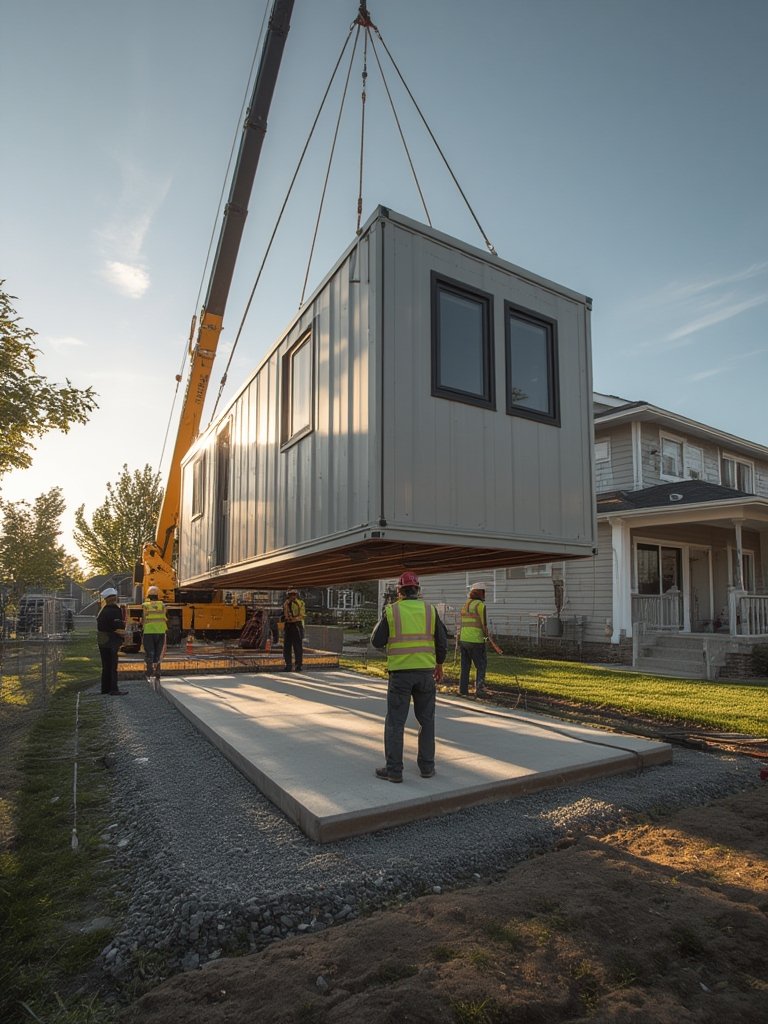
- Delivery & crane set: 1–3 days
- MEP tie-ins (mechanical, electrical, plumbing): 5–14 days
- Final inspections & move-in: 2–10 days
Example: Model E modular ADUs complete final install in 10 days—but permitting and utility work can still stretch the total process over 2–6 months.
- On-site install: 11 days
- Total project (permit to move-in): ~126 days
- Range: $218,000–$265,000 (all-in)
- Site prep delays: +3 weeks due to utility trenching
- Factory build: 6 weeks
- Total time (contract to keys): 147 days
- Permit approval: 28 days using pre-approved plans
- On-site build/crane set: 7 days
- Owner move-in: under 60 days from contract
Always insist all milestones are documented in your contract—each delay costs not just time but potential rental income.
Cost comparison — prefab/turnkey vs. traditional ADU (what to estimate)
Prefabricated and manufactured unit quotes often exclude many “hidden” costs. Always break your estimate down by line item.
- Manufacturer price (base unit): $105,000–$180,000 (varies by size/spec)
- Site work/prep (grading, access): $7,000–$32,000
- Foundation/pad: $8,000–$28,000
- Crane/delivery/assembly: $5,500–$18,000
- Utilities tie-in (water, sewer, power, gas): $10,000–$41,000 (huge city variance)
- Permits, impact fees: $4,500–$28,000+ (depends on location, school fees, etc.)
- Final inspections: $1,200–$3,400
- Interior finish upgrades: $3,000–$24,000
- Contingency: 10–15% of all above (plan for unexpected)
Total sample range (2024): $142,000–$327,000+ (ultra-basic to custom finish, 400–1,000 sq ft, major city variance)
| Line Item | Prefabricated/Modular ADU | Traditional Stick-Built ADU |
|---|---|---|
| Manufacturer/Builder Base | $105,000–$180,000 | $130,000–$210,000 |
| Site Work & Foundation | $15,000–$60,000 | $12,000–$48,000 |
| Permitting & Fees | $5,000–$28,000 | $7,000–$33,000 |
| Utilities & Inspections | $10,000–$41,000 | $14,000–$48,000 |
| Turnkey/Finish Upgrades | $3,000–$24,000 | $7,000–$38,000 |
Tip: Always ask every turnkey ADU, manufactured unit, or modular builder if their quote includes all onsite, utility, crane, and permit costs—many do not. Create a worksheet for each vendor across 3–4 local builders. Call out in your records any city-specific premiums.
For more context on improving your overall value, compare with our bathroom remodels that balance cost and value article.
Top homeowner pain points and complaints — what’s missing from the hype
Actual homeowner pain points are rarely published. Based on primary reporting (interviews, review forums, and warranty claim threads), here are the key issues:
- Permitting delays: Even with preapproved plans, local departments may backlog reviews or request unplanned upgrades.
- Site conditions: Poor soil, drainage, or utility access can add weeks/months or thousands in extra cost—especially for properties with failing sewer lines or no gas access.
- Utility tie-ins: Unexpected requirements such as water meter upgrades or power panel resizing are a common nasty surprise.
- Foundation/grade issues: Minor grading or a shallow foundation can cause warranty headaches or local code failures.
- Finish quality complaints: Misaligned expectations (and show model upgrades shown as standard) result in frustration post-move-in.
- Warranty service delays: Sorting out which defects are covered (unit vs. on-site labor), and who responds, can be a challenge; some buyers report slow or unclear processing of warranty claims.
To minimize these risks:
- Define all warranty, finish, and contract terms in writing before deposit
- Request a certified site survey for utility, soils, and driveway access
- Consider a third-party inspector after install, before final payment release
Dive deeper into outdoor site improvement by reading our complete guide to landscaping services and backyard ideas.
Technical specs, code requirements and warranties — what to demand from vendors
Many first-time buyers overlook the technical documentation and long-term protection needed for compliance and resale. Always request the following from any modular ADU construction or manufactured unit provider:
- Stamped structural/engineering plans specific to your site (with foundation layout and lateral/wind code reference)
- Fire separation walls details per local code
- Energy code/Title 24 compliance package (California or equivalent in your state)
- Full MEP (mechanical, electrical, plumbing) schematics
- ICC/HUD modular certifications or equivalent state code certificate
- Foundation design signed by a local engineer (soil-specific)
- HVAC system specs tailored to your climate
- warranty documentation: Structure (often 10 years), systems (usually 1–2 years); review fine print on exclusions and process
Seek out manufacturer “spec sheets” and cross-check local requirements with the building department. For official code references or FAQs, see Custom Market Insights (US Prefab Market).
Permitting, incentives and the best places to build in 2024
Your speed and costs depend heavily on your city or state. Current trends:
- 61% of US municipalities now permit ADUs, with 14 states offering broad legalization (Business Research Insights)
- Florida issues over 2,100 ADU permits monthly (Mesocore)
- Pre-approved (factory-built) designs, digital permit submittals and streamlined review are now common in dozens of pro-housing cities
- California (esp. Los Angeles, San Jose, San Diego): digital permits, statewide pre-approved ADU plan catalogs, many incentives
- Oregon (Portland, Eugene): fast-track permits, zoning liberalization, fee waivers
- Texas (Austin): rapid permit pilots, strong modular adoption
- Washington (Seattle, Spokane): pro-ADU code changes, fast-track reviews
- Colorado (Denver): new ADU-friendly overlays, grant funding
- Florida (statewide, esp. Miami-Dade): high permit volumes, local incentives, streamlined for disaster recovery
Check your city’s ADU program page for local rebates and a preapproved plans list to save months off approval.
For add-on ideas once your unit is in, explore our small screened-in porch ideas for practical outdoor upgrades.
Due-diligence checklist — questions to ask every prefab ADU vendor
- What’s the current factory queue and actual production lead time?
- How will delivery and crane logistics be handled, especially for tight urban lots?
- Who is responsible for site prep, foundation, utility trenching, and driveway repair?
- Does the vendor provide permit-ready plans—and permit submission support?
- Will the vendor attend city inspections or send a local representative?
- What is the scope and term of all included warranties?
- What energy efficiency and fire/sound ratings does the build achieve?
- How are change orders priced, communicated, and approved?
- Do they offer financing options and describe experience with popular construction lenders?
- Can they provide at least three verifiable references with recent completion dates?
- Is their insurance and licensure current for your local jurisdiction?
- Can you review their warranty claim process—and speak to a past claim customer?
Top 3 questions competitors rarely answer (opportunities for this article)
- What are verifiable, detailed end-to-end costs by region?
No high-ranking article provides true market-adjusted cost breakdowns by category—including site and permit variables. This article offers a worksheet and real case data to fix that. - What are real project timelines from contract to move-in?
Competitors focus on headline install (10–30 days), but rarely document total time (including permitting, delays, or site work). This post provides three regional case studies and milestone timing guidance. - What is the actual warranty process—and how do claims get resolved?
Few resources cite real-life warranty claim cases or explain which issues fall on the vendor vs. the local contractor. We instruct readers to request actual claim examples and share known pitfalls.
Modular ADU construction and prefab backyard home buyers deserve real data—not just marketing promises.
Final recommendation and next steps (CTA)
Not sure if a prefabricated ADU is right for you? Follow this quick decision flow:
- Ready for prefab now: If you have clear city regulations and flat, accessible land, request quotes and spec packages immediately.
- Need more site work: If your lot has grading, access, or old utility challenges—book a site walk with your preferred vendor and a third-party inspector before committing.
- Want total customization: If code or design needs are complex, a traditional build may serve you better—compare both with our cost worksheet.
Next step: Download our cost worksheet template, then request three turnkey ADU vendor quote packs. Sign up here for local permit tips to stay ahead of new incentives or processing changes in your city.
The US prefabricated housing market is valued at USD 36,139.5 million in 2024 and projected to grow—making now the best time to act for both homeowners and investors.
For inspiration on upgrading the finished space, browse our home decor tips for inviting interiors.
FAQ Section
How long does a prefabricated ADU take from contract signing to move-in?
While on-site assembly of a modular or quick-install ADU can take as little as 10 days, the entire process—from contract, permits, site prep, to keys—typically runs 2 to 6 months, depending on city permitting and site-specific work.
Can I customize a factory-built or modular ADU?
Most prefabricated ADUs allow limited modifications to finishes and layouts, but structural or major system changes can be expensive or may require a traditional build. Verify which customizations are allowed in your vendor’s spec sheet.
Does the “turnkey” price include everything I need?
Usually not. “Turnkey” often refers to the unit itself—there are almost always extra costs for permits, site work, utility connections, delivery/crane, and upgrades. Use a detailed worksheet and demand a line-item quote.
What is the typical warranty for a modular ADU?
Expect 10 years on general structure, 1–2 years on systems (mechanical, HVAC, plumbing). Warranty service may vary—clarify who handles service calls and read the contract exclusions before purchase.
Which US locations are best for ADU permitting and incentives?
California, Oregon, Texas (Austin), Washington, Colorado, and Florida are among the most ADU-friendly states in 2024, offering fast-tracked permits, possible rebates, and pre-approved plan catalogs.