

Outdoor kitchen planning in 2024–2025 isn’t just about picking appliances or dreaming up barbecue nights—it’s a serious investment with costs and code implications that can surprise even savvy homeowners.
If you’re considering a major backyard cooking space for alfresco dining, this guide breaks down realistic costs, critical research gaps, and actionable steps—so you get true performance and value without regret.
Key Takeaways
- 2024–2025 outdoor kitchen costs range nationally from $6,310 to $26,925 (midpoint ~$16,473), but local pricing, materials, and labor can vary by 60% or more.
- Most homeowners underestimate permit/HOA hurdles, long-term durability, and real ROI—these are critical research gaps not addressed in most current guides.
- Budget for labor (30–50% of cost), prioritize investing in quality grills and sturdy frameworks, and secure clear written quotes—never guess at codes or insurance.
- Executive snapshot — 2024–2025 market trends and what to expect
- Cost breakdown & budgeting — how to plan line-item costs
- Typical features and priority spending (what to splurge on vs. save)
- Common homeowner pain points & complaints (and how to avoid them)
- Critical missing topics (the three undercovered subjects every buyer needs)
- Materials, appliances, and layout recommendations
- Climate-based design and maintenance
- Permits, zoning, HOA, gas/electrical/plumbing and insurance considerations
- Resale value and ROI — what the data (and its gaps) say
- Decision framework & timeline — from planning to finished alfresco dining space
- Recommended next research actions & sources to fill the gaps
- Quick checklist for homeowners ready to move forward
- FAQ
Executive snapshot — 2024–2025 market trends and what to expect
The outdoor kitchen market is surging among suburban homeowners prioritizing backyard cooking spaces for family and social gatherings. But price points vary dramatically by location, layout, and finish choices.
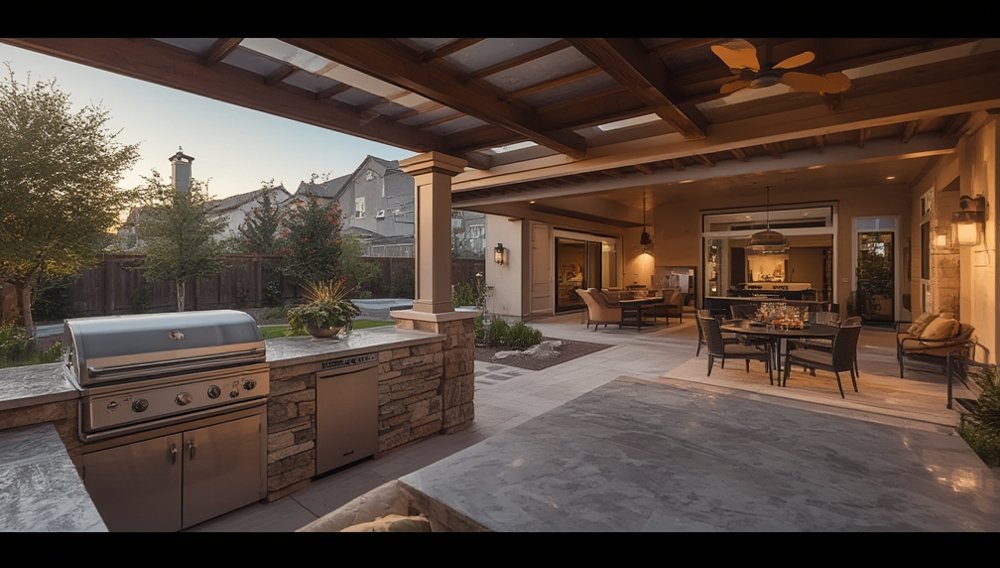
- National cost average: $6,310 to $26,925, with a midpoint near $16,473 (source).
- 2025 standard installs: $13,180–$16,480 (source).
- Project size: Most complete outdoor kitchens range from 100–400 sq ft.
- Regional cost variation: Los Angeles projects average $19,605; Texas averages $11,737 (source).
- Labor share: Installation/labor is typically 30–50% of the total bill.
For a deeper background on renovation and outdoor upgrades, see our Landscaping Services and Backyard Ideas Guide.
Cost breakdown & budgeting — how to plan line-item costs
Start by getting realistic about the entry points and selecting the level of customization. Here’s how the main outdoor kitchen build categories compare:
| Build Type | Cost Range | Typical Features |
|---|---|---|
| Basic/DIY | $950–$4,000 | Minimal counters, portable/built-in grill |
| Modular/Prefab | $7,000–$16,000 | Pre-built cabinets, basic kitchen island |
| Mid-Range Custom | $10,000–$40,000 | Custom masonry, built-in appliances |
| Luxury Custom | $40,000–$80,000+ | Stone, full appliance suite, entertainment zones |
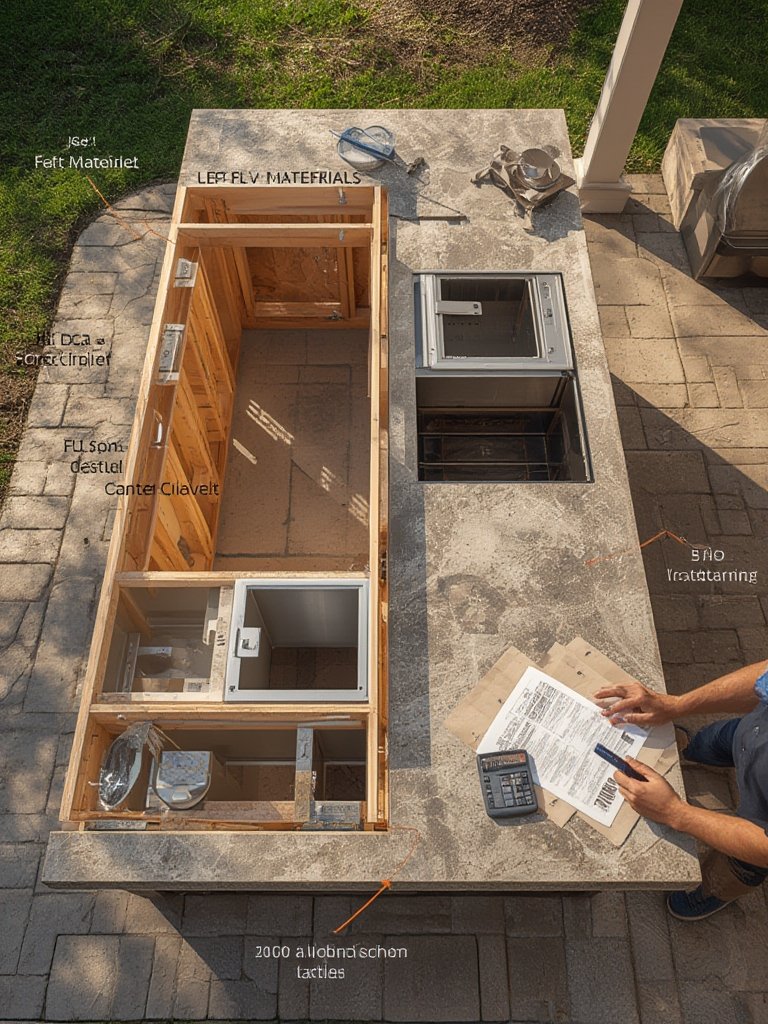
- Per linear foot: Average $495 (prefab: $250–$475/ft); framework itself $200–$800/ft.
- Per square foot: $33–$130, with luxury projects referenced at $200–$600/ft (choose your specs carefully).
- Labor cost: $650–$1,500+ (standard) up to $2,000+ (complex/with vent).
Learn more about realistic home renovation planning in the Ultimate Complete Guide to Kitchen and Bathroom Remodel Costs and Planning.
Typical features and priority spending (what to splurge on vs. save)
Not every dollar is equal in an outdoor kitchen—overspending on features with little real usage or underinvesting in core headaches (grill, weatherproof counters, structure) is a top regret.
- SPLURGE: High-quality built-in grill, weatherproof counters (stone, porcelain), and solid framework (masonry, steel, or aluminum). These carry the function and value.
- SAVE: Secondary appliances like beverage fridges, ice makers, and pizza ovens—unless you frequently entertain large groups. These items often increase maintenance.
- Installation labor: Ranges $650–$1,500 (standard layout) and can exceed $2,000 with vent hood or specialty appliances.
Typical “feature stacks” by budget:
- Entry/DIY: Portable grill, basic prep counter, weatherproof storage.
- Modular: L-shaped or linear kitchen island with built-in grill plus sink or mini fridge.
- Mid-range: Counter seating, premium built-in grill, prep sink, some covered station features.
- Luxury: Multiple cooking stations, full cabinetry, full-size fridge, high-end counters, bar, TV/media.
See related outdoor living design tips in the Outdoor Lounge Area Proven Guide.
Common homeowner pain points & complaints (and how to avoid them)
Unfortunately, the current research provides no specific data on maintenance complaints, durability problems, or post-installation user experiences with backyard cooking space or covered station investments.
Here’s where you will want to supplement with primary research from local contractors and user forums. Still, based on general trends and expert interviews from the HomeAdvisor outdoor kitchen guide, here are the most common (unofficially reported) pain points:
| Pain Point | What To Watch | Research Gap |
|---|---|---|
| Weather & Maintenance | Material wear, freeze-thaw cracking, rust, storm/flood risk | No stored complaint data; seek local user feedback |
| Contractor/Installer Issues | Incomplete prep, design errors, slow warranty help | No public installation complaint registry |
| Permits and Codes | Permit denials, gas/electric setbacks, HOA rejections | No details in most cost guides |
| Long-Term Costs | Annual repairs, power/water use, insurance rate jumps | No homeowner survey data |
Tip: Always confirm product warranties and ask your builder for the last three completed project references.
Critical missing topics (the three undercovered subjects every buyer needs)
Most online outdoor kitchen guides neglect three make-or-break research areas:
- Long-term durability & lifespan: No reliable guides specify how long materials (metal, stone, composite, masonry) last in your climate, or the likelihood of repairs past year five. Ask contractors for their average call-back rates on past builds, and request brand/longevity breakdowns.
- Return on investment & resale: Data on actual ROI or resale impact is virtually absent. General claims like “strong return” lack support. Contact a local real estate agent or appraiser for comps and buyer response in your area.
- Code and permit compliance: There is no coverage of local permitting, zoning, HOA, or insurance in mainstream guides. Always check with your municipality and HOA before breaking ground—requirements change by block, not just by city.
For another example of missing-but-critical topics in home improvements, see our bathroom/kitchen remodel planning guide.
Materials, appliances, and layout recommendations (practical choices for best performance/value)
While no independent comparative tests exist, the following options are most commonly recommended by pros (and present in real estate comps). Material choice directly impacts durability, resale, maintenance, and price tier.
- Framework: Steel, masonry (concrete block, brick), or aluminum provide best weather resistance. Framework cost runs $200–$800/linear foot.
- Counters: Natural stone (granite, soapstone), porcelain (highest durability), or composite—balance with climate (avoid porous stone in freeze zones).
- Appliances: Prioritize a built-in grill of known brand with local parts support. Add fridge, sink, or side burners only if you’ll truly use them.
- Kitchen island: Linear layouts are easiest and cheapest; L-shape (with a kitchen island peninsula) offers more prep/social zone; island-centered designs are premium, set for group entertaining but require more space and budget.
Tip: Avoid indoor-rated appliances or MDF wood outdoors—these will rapidly fail.
Related: Fluted Wood Cabinets: Modern Materials and Trends Guide covers why material grade matters in kitchen investments.
Climate-based design and maintenance (how region shapes your choices)
Surprisingly, the research provides no region-specific climate advice, even though climate is a prime driver of performance and maintenance risk in any backyard cooking space.
- Hot/Dry zones: Metals and stone hold up, but avoid dark surfaces (hot to the touch). Covered station with UV protection extends life of appliances and surfaces.
- Coastal: 316-grade stainless steel, weatherproof stone, sealed cabinetry required to survive salt air. Frequent cleaning and full covers needed.
- Freeze/Thaw: Non-porous stone or porcelain—avoid tile/grout and unsealed stone, which crack. Require closed-cell insulation for plumbing.
- Humid zones: Mold-resistant materials, vented storage, and frequent sealant inspection. Never use exterior plywood sheathing, as it absorbs moisture.
Take inspiration on climate-adapted backyards from Small Screened-In Porch Ideas: Transform Your Outdoor Space.
Permits, zoning, HOA, gas/electrical/plumbing and insurance considerations
Most articles leave you flying blind on pre-installation requirements. The available research contains no details on permits, zoning, HOA, or utility codes—yet these factors can stall or spike project costs.
- Municipal permits: Required for gas, electrical, and plumbing work. Inspections may add weeks—budget accordingly.
- Zoning/Setbacks: Many towns restrict outdoor kitchen builds within property line setbacks or near power/water lines.
- HOA approvals: Often needed for permanent structures, height limits, or “visible from street” locations.
- Insurance: Confirm policy covers additions and any open-flame cook stations. Some insurers require specific fire protection elements or code-compliant installations.
Step 1: Visit your city’s building department or online permit portal.
Step 2: Print requirements and bring them to your contractor to ensure written compliance.
Step 3: Get HOA approval before deposits are paid.
For fast municipal code lookups and permit FAQ, check with your local authority or experienced landscape contractors (references from prior projects are a must).
Want to avoid surprise code delays on other home projects? See our Accessory Dwelling Unit (ADU) Planning Guide for step-by-step compliance tips.
Resale value and ROI — what the data (and its gaps) say
Data on actual outdoor kitchen ROI remains scarce and highly localized. One source’s headline references resale value, but no support was found. Claimed “strong ROI” is common, but percentages or resale case studies are not.
- ROI claims lack supporting numbers—prepare to do local cost/comparable sales analysis (ask a real estate agent for recent sales with/without kitchens).
- No published data on buyer preference by region or demographic.
- Resale boost is highly tied to climate and local “outdoor living” expectations. In many cooler states, value may be modest or even nil.
Build cost can be recouped in the right market, but only if installed to code, well maintained, and with upgraded core appliances.
For a related deep-dive on maximizing ROI for bathroom and kitchen projects, read Bathroom Remodels That Balance Cost and Value.
Decision framework & timeline — from planning to finished alfresco dining space
Avoid decision paralysis and costly delays by following this pragmatic outdoor kitchen roadmap. Use this as a quick project timeline:
- Set needs & initial budget: Pick your build tier and realistic contingency (15–20%).
- Research codes/permits: Check local agency, HOA, and insurance requirements.
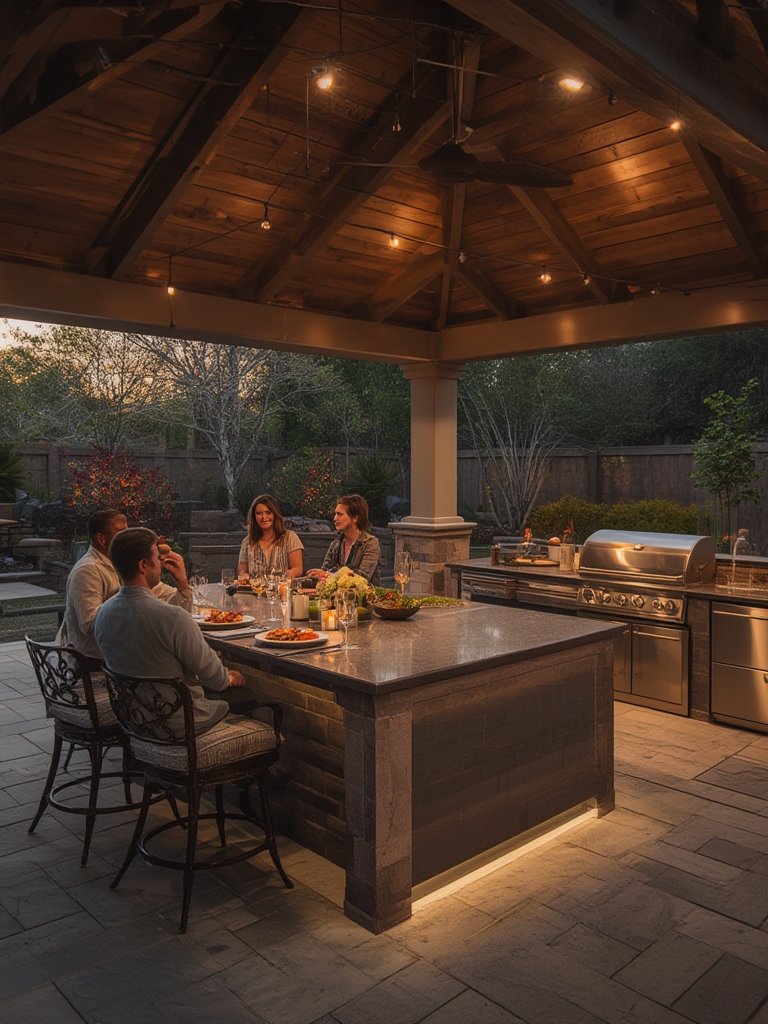
- Site selection & layout: Decide on backyard cooking space (linear, L-shape, island), evaluate sun, wind, drainage, and covered station potential.
- Hire contractor & secure quotes: Get 2–3 written proposals from licensed pros with project references.
- Order appliances/materials: Factor 4–8 weeks for custom features or delivered appliances.
- Install utilities & framework: Complete all rough gas/electric/plumbing, schedule inspections.
- Finish work: Install counters, appliances, and covers. Pass all final inspections.
- Weatherproof & maintain: Apply sealants and schedule annual checks for weather and use.
Throughout, expect 30–50% of costs for installation/labor. Modular or prefab installs run fastest (4–6 weeks); custom work may require 3+ months.
Recommended next research actions & sources to fill the gaps
To turn the above research gaps into actionable insights, commission or consult the following:
- Homeowner surveys on satisfaction, maintenance, and regret points (ask neighbors, community Facebook groups, or Nextdoor forums).
- Interviews with local contractors who specialize in outdoor kitchen or covered station builds—request actual cost breakdowns and post-project follow-ups.
- Contact regional building/code officers for printed permit requirements and inspection checklists.
- Mail or phone your insurance provider to confirm coverage specifics for backyard cooking space/fire features.
- Partner with real estate agents for local MLS analysis on outdoor kitchen value at resale; request before/after comps when possible.
- Seek appliance testing data (CSU labs, Consumer Reports) for comparative durability and weather performance.
According to the research, seven in nine key planning factors lack public data, so only primary/local sources will provide the authority your investment deserves.
For more actionable advice on maximizing outdoor living ROI and avoiding local pitfalls, visit our Complete Guide to Landscaping Services and Backyard Ideas.
Quick checklist for homeowners ready to move forward
- Realistic project budget: anchor between $6,310–$26,925 (national) with clear tier goals (DIY/modular/midrange/luxury).
- Must-check permits: city/county building & utility, HOA review, and insurance additions. Budget time and cash.
- Climate and material picks: select proven framework/countertop types for your climate; prioritize a weather-resistant grill over add-ons.
- Contractor vetting: demand written references, fixed-bid contracts, and installation warranty in writing.
- ROI check: ask a real estate agent for comps with/without outdoor kitchen; never assume full payback.
For more on optimizing value via phased build and weatherproof layouts, consider our selected guides like Outdoor Lounge Area: Maximize Backyard Comfort.
FAQ
How much does an outdoor kitchen cost in 2024–2025?
The national average cost runs $6,310 to $26,925, with typical standard outdoor kitchen installs falling between $13,180 and $16,480. Factors such as location, materials, and labor rates cause costs to vary up to 60% across regions.
What is the best layout for an outdoor kitchen?
Linear layouts fit smaller yards and control costs. L-shape layouts with a kitchen island offer more prep and social space. Island-centered layouts excel for entertaining but require more space and budget. Base your layout on entertaining style and available backyard space.
Do I need a permit or HOA approval for an outdoor kitchen?
Almost always. Most cities require permits if you add plumbing, electrical, or gas lines. HOAs may impose design or location restrictions. Always confirm requirements in writing before you begin—failure risks fines or forced removal.
Which materials last best for my climate?
Stainless steel, masonry, and porcelain counters perform best for all-weather durability. Avoid untreated woods, MDF, or porous stone in freeze/thaw climates or humid zones. For coastal areas, use 316-grade stainless and always install full covers.
Will an outdoor kitchen improve my home’s resale value?
It can, especially in warm-climate regions where outdoor living is prized. That said, there’s no reliable ROI percentage data—always ask a local agent how buyers view outdoor kitchens in your neighborhood before investing heavily.