

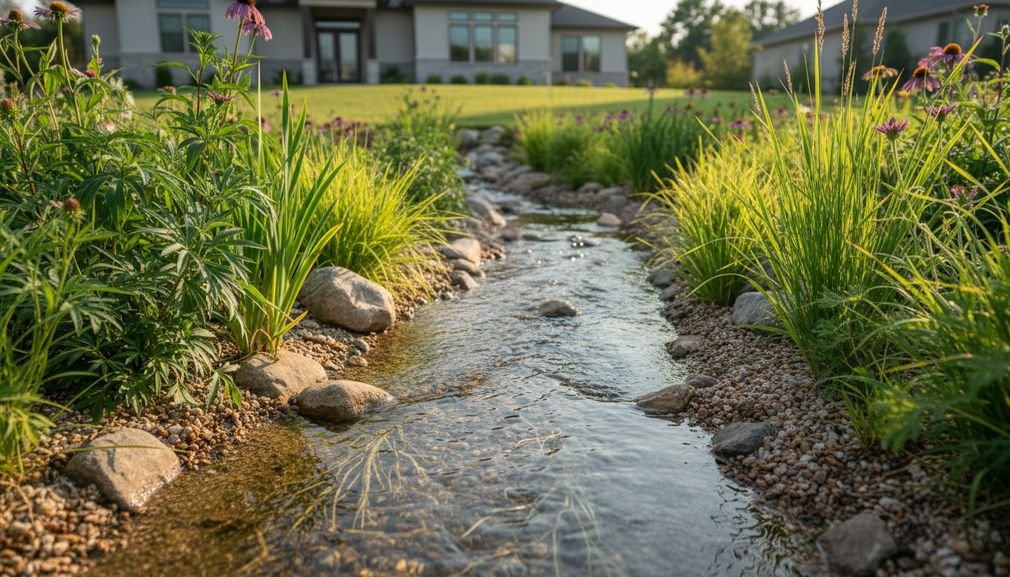
Dealing with a soggy yard after every storm is frustrating. A well-planned Bioswale Garden Kits approach offers a powerful, natural solution to manage excess water, turning a drainage problem into a beautiful landscape feature. Instead of letting rainwater pool or overwhelm storm drains, a bioswale captures, slows, and filters it, allowing it to soak back into the ground safely.
Key Takeaways
- Superior Water Absorption: Bioswales are engineered to absorb significantly more water than a standard lawn. Studies show they allow up to 30% more water to soak into the ground, directly reducing runoff and localized flooding.
- Advanced Planning is Crucial: Standard guides often overlook critical factors for long-term success. For a resilient system, you must plan for extreme weather, integrate with existing drainage like downspouts, and select plants based on specific soil pH and root structure, not just “native” status.
- Key Technical Specs Matter: For effective residential flood control, a bioswale should be sized to handle the runoff from its contributing area (roughly one-third of the roof or paved surface area) and be sited in a low point of your yard to capture water effectively.
- Is a Bioswale Garden Kit the Right Rainwater Runoff Solution for Your Home?
- Unpacking the Power of Bioswales: How They Protect Your Property and the Environment
- Beyond the Basics: Advanced Bioswale Planning for Long-Term Efficacy
- Essential Technical Specifications for an Effective DIY Bioswale Garden Kit
- Planning Your Project: Cost, Maintenance, and Avoiding DIY Pitfalls
- Conclusion: Take Control of Your Yard’s Drainage
- Frequently Asked Questions
Is a Bioswale Garden Kit the Right Rainwater Runoff Solution for Your Home?
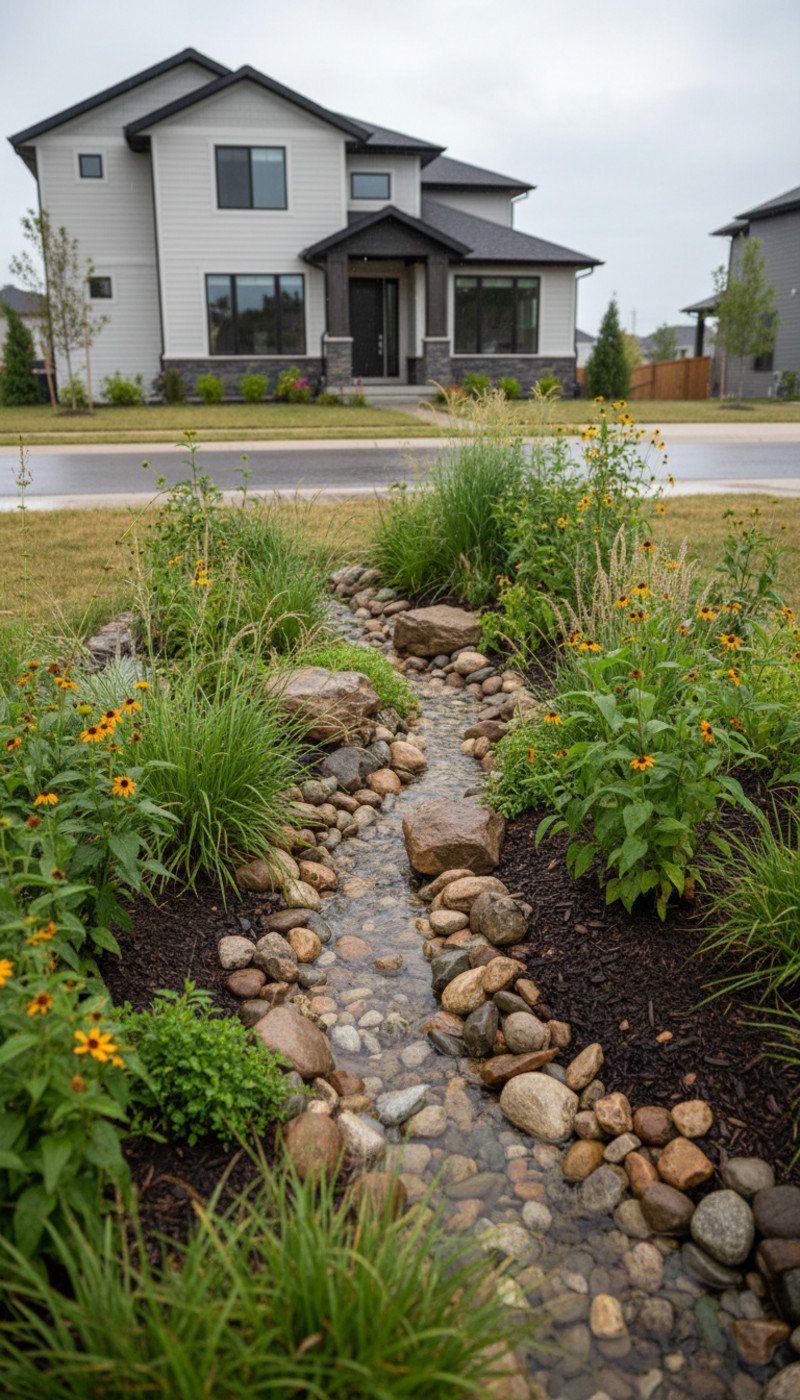
If you’re tired of standing water, erosion, or a perpetually damp basement, a bioswale garden kit is one of the most effective rainwater runoff solutions available to homeowners. Unlike a simple ditch, a bioswale is a carefully designed shallow channel filled with specific soil layers and deep-rooted plants. It acts like a natural sponge and filter. When rain falls on your roof, driveway, or patio, the runoff is directed into the bioswale, where it pools temporarily, slows down, and is cleaned by plants and soil before it can cause damage. This approach is not just functional; it creates a vibrant, low-maintenance garden that adds beauty to your property while solving a critical drainage issue. As a key component of effective rainscaping systems, it mimics nature’s own processes for managing water.
Unpacking the Power of Bioswales: How They Protect Your Property and the Environment
The benefits of a bioswale extend far beyond simply moving water. This permeable garden channel is a workhorse of green infrastructure, providing powerful property protection and environmental services. By capturing and infiltrating stormwater, it acts as a form of flood-control landscaping, reducing the stress on municipal sewer systems and preventing soil erosion in your yard. The real power, however, lies in its ability to purify water. As runoff flows over lawns and driveways, it picks up pollutants like fertilizers, pesticides, and vehicle fluids. A bioswale’s layers of soil, mulch, and plant roots trap and break down these contaminants. A study from UC Davis revealed that bioswales can reduce nitrogen, phosphate, and total organic carbon by an astonishing 99.1%, 99.5%, and 99.4%, respectively. By installing one, you are actively reducing surface water pollution from urban runoff by as much as 70%.
Beyond the Basics: Advanced Bioswale Planning for Long-Term Efficacy
While many resources cover the basics, they consistently overlook the advanced planning needed to create a truly resilient and effective system. Top-ranking articles on Bioswale Garden Kits fail to address adaptation for extreme weather, integration with existing home drainage, and specialized plant selection beyond generic advice. To build a bioswale that performs reliably for years, you need to think like an engineer and a biologist, ensuring your flood-control landscaping is ready for anything.
Adapting Your Bioswale for Extreme Weather Events
Today’s weather is unpredictable, with intense downpours followed by long dry spells. Your bioswale must be designed to handle both. For heavy rainfall, incorporate a designated “overflow” area—a stabilized outlet (often a small rock channel or a connection to a storm drain) that allows excess water to exit safely once the bioswale reaches capacity, preventing it from flooding adjacent areas. For drought resilience, select deep-rooted, drought-tolerant native plants that can survive periods with little water once established. This dual-purpose design ensures your bioswale provides consistent flood-control landscaping benefits without becoming a high-maintenance problem.
Integrating Your Bioswale with Existing Home Drainage Systems
A standalone bioswale is good; an integrated one is great. To maximize efficiency, your bioswale should be the final destination for your home’s other rainwater runoff solutions. Directing a downspout into the bioswale via a simple extension or a decorative rock-lined channel is a common and highly effective strategy. If you have a French drain system, it can be designed to terminate in the bioswale, allowing the collected groundwater to be naturally filtered and absorbed. This integrated approach creates a comprehensive water management system that protects your foundation and your landscape simultaneously. For a wider view on this topic, exploring various landscaping services and backyard ideas can provide additional context.
Specialized Plant Selection: Going Beyond “Native” for Optimal Results
Simply choosing “native” plants is not enough. The key to a high-performing bioswale is selecting specific plants for specific jobs within the system. The bottom of the bioswale, which stays wettest the longest, requires species that tolerate “wet feet,” like sedges or rushes. The sloped sides, which drain faster, are better suited for plants that prefer moist but not saturated soil, such as Joe Pye weed or switchgrass. Most importantly, focus on plants with dense, fibrous root systems that anchor the soil and are excellent at filtration. Consider your soil’s pH and choose species that will thrive in your specific conditions. A well-designed native plant drainage kit is less a random assortment and more a curated team of plants working together.
Essential Technical Specifications for an Effective DIY Bioswale Garden Kit
To ensure your DIY project is a success, you must adhere to several critical technical specifications. A bioswale is more than just a garden in a trench; it is an engineered system. The size is paramount: for a residential bioswale to be effective, it should cover approximately one-third of the area of the contributing impervious surface (like the section of roof or driveway draining to it). For proper water capture, it must be located at a lower elevation than the surrounding area. A slight slope of 1-2% leading into the bioswale is ideal to encourage water flow without causing erosion. The depth should be between 18 and 36 inches, allowing for distinct layers of drainage rock, amended soil, and mulch. These specifications ensure your permeable garden channel has the capacity and structure to handle significant stormwater events.
The success of your Bioswale Garden Kits project also hinges on the soil mix. A typical bioretention soil mix is roughly 50-60% sand (for drainage), 20-30% compost (for nutrients and water retention), and 10-20% native topsoil. This blend provides the perfect balance, allowing water to filter through while supporting healthy plant growth. A proper soil foundation is a non-negotiable part of any plan for flood-proof landscaping.
Planning Your Project: Cost, Maintenance, and Avoiding DIY Pitfalls
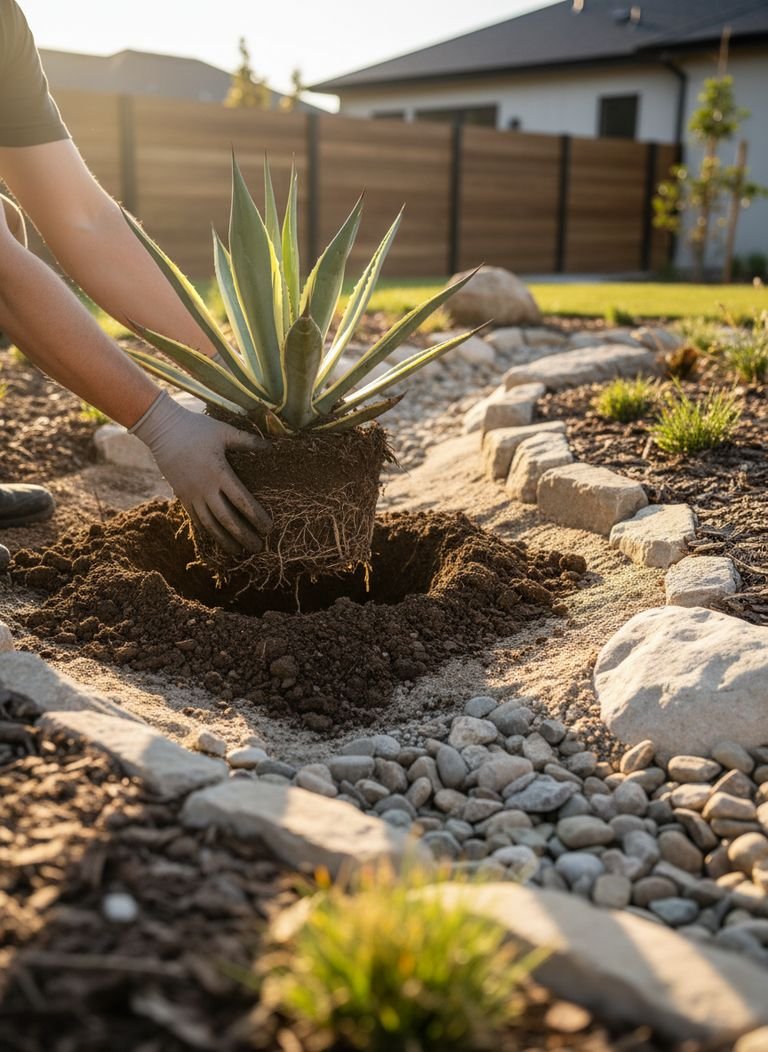
Embarking on a DIY bioswale project requires realistic expectations about cost, long-term care, and potential challenges. While specific cost data for complete DIY kits is sparse, general guidance suggests bioswales are a “relatively easy and inexpensive” landscape feature compared to professionally installed hardscaping or drainage systems. Your primary costs will be plant plugs, soil amendments (sand and compost), and any optional edging or rock.
Unfortunately, there is a significant data gap in user-reported complaints or common DIY installation pitfalls. To avoid becoming a cautionary tale, focus on meticulous planning. The most common failures stem from three areas: incorrect siting (placing it too close to a foundation or in an area that doesn’t actually collect water), improper soil preparation (skipping the engineered soil mix and using heavy clay), and poor plant selection (choosing plants not suited for the site’s sun exposure or moisture levels). To mitigate these risks, create a detailed plan before you dig. Observe how water flows across your property during a storm and mark the natural low spots. Test your soil and commit to creating the right bioretention mix. Finally, create a detailed planting map based on light conditions and the specific moisture zones within your bioswale. Similar planning principles apply to creating regenerative soil kits for other garden projects.
Conclusion: Take Control of Your Yard’s Drainage
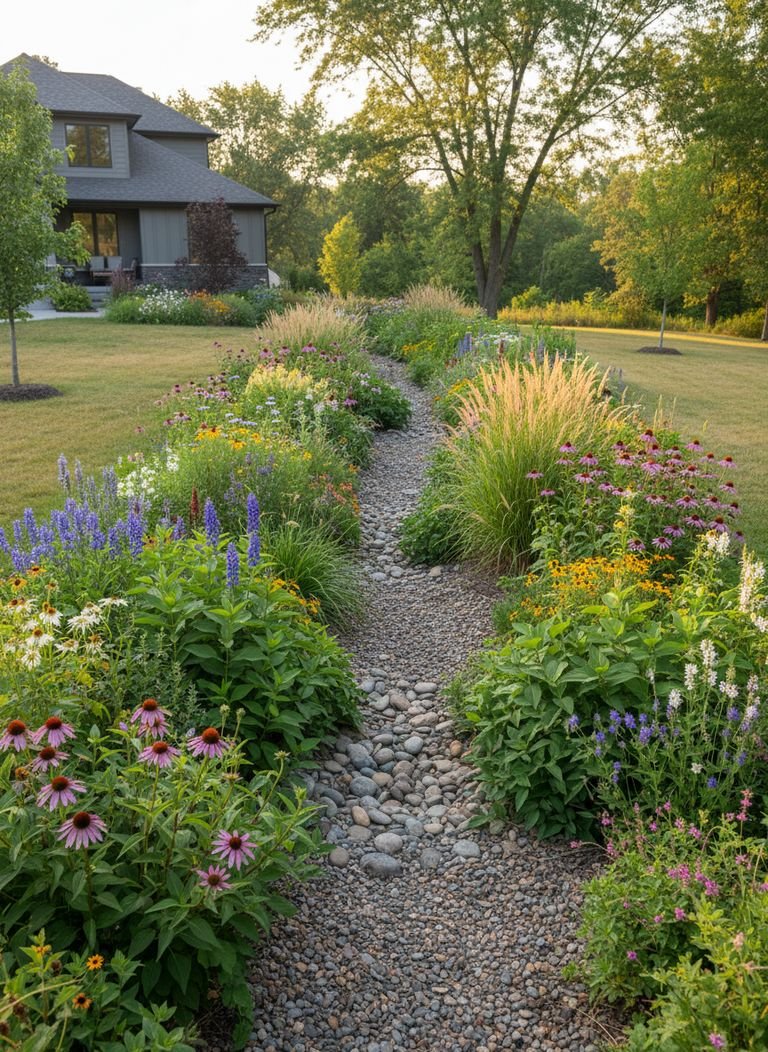
Implementing a bioswale is a proactive, powerful step toward managing stormwater on your property. It’s an investment that pays dividends in flood protection, environmental health, and aesthetic appeal. By moving beyond basic guides and embracing advanced planning—considering extreme weather, integrating with existing systems, and making strategic plant choices—you can build a highly effective and resilient feature. A thoughtfully designed project using Bioswale Garden Kits principles will transform a soggy problem area into a functional, beautiful, and sustainable part of your home landscape.
Frequently Asked Questions
Do bioswales attract mosquitoes?
No. A properly designed bioswale should drain completely within 24 to 48 hours, which is faster than the mosquito life cycle. Standing water is the issue, and a functional bioswale is designed specifically to eliminate it, not create it.
How long does a bioswale take to become fully effective?
The bioswale begins managing water immediately after installation. However, its full pollutant-filtering and water-absorbing capacity is realized as the plants mature and their root systems become established, which typically takes one to two growing seasons.
What if my yard is completely flat?
Even in a flat yard, you can create the necessary elevation changes. This involves excavating the bioswale area to be lower than the surrounding grade and using the excavated soil to create a gentle berm on the downslope side to help contain the water temporarily.
Can I just use plants I already have in my garden?
It depends. Standard garden perennials like peonies or roses are not suited for the extreme wet-then-dry conditions of a bioswale. You must use plants specifically chosen for their deep, fibrous root systems and their tolerance for both inundation and dry spells. Using the wrong plants is a primary cause of bioswale failure.
What kind of maintenance does a bioswale require?
Maintenance is highest in the first one to two years and includes regular weeding and watering to help plants get established. Once mature, a bioswale is very low-maintenance, typically requiring only annual mulching, removal of dead plant material, and occasional thinning of aggressive plants.