

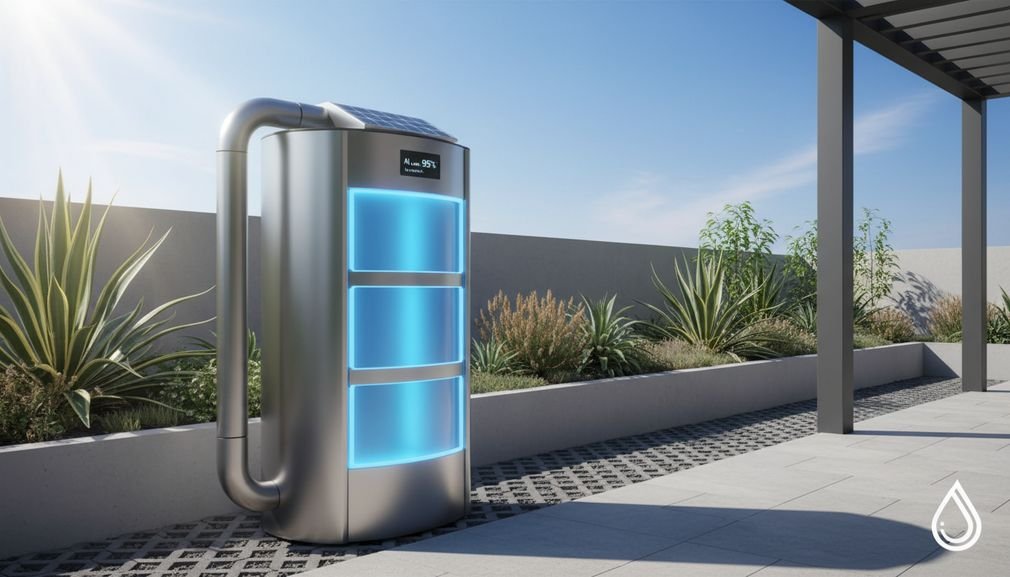
The concept of AI Water Butts is rapidly moving from science fiction to a tangible goal for tech-savvy gardeners and eco-conscious homeowners. While the dream of a fully automated, weather-predictive rain harvesting system is on the horizon, understanding the technology available today is the key to building an efficient, sustainable water management solution for your home and garden.
Key Takeaways
- A true AI Water Butt with predictive emptying based on weather forecasts is still a nascent, conceptual technology not yet widely available commercially.
- Current “smart rain harvesting” systems focus on IoT-enabled monitoring of water levels, flow, and controlled discharge, representing the foundational step towards future AI integration.
- Homeowners can start building an advanced water management system today by retrofitting existing water butts with available IoT sensors or investing in current smart monitoring components.
- What Exactly is an AI Water Butt (and What it Isn’t… Yet)?
- The Promise of Predictive Emptying: How it Would Work (Conceptually)
- Comparing Costs: AI Water Butts vs. Traditional & Smart Options
- The Tech Behind Smart Water Collection: Sensors, Monitoring, and Current Capabilities
- What’s Next? Desired Features for the Ultimate AI Water Butt
- Powering Your Smart System & Protecting Your Data: Future Considerations
- Investing in Smart Water Management: Market Potential & Real-World Savings
- Your Next Steps in Smart Water Harvesting
- Frequently Asked Questions About AI Water Butts
What Exactly is an AI Water Butt (and What it Isn’t… Yet)?
Let’s clarify the terminology. The ultimate vision for AI Water Butts involves a system that doesn’t just store water; it actively manages it. This ideal system would connect to hyper-local weather forecasts and, upon detecting an impending heavy storm, automatically empty itself just enough to capture the maximum amount of new rainfall without overflowing. This prevents water waste, maximizes collection, and helps mitigate local flood risks.
However, what is commercially available today falls into the category of “smart rain harvesting.” These systems are a crucial stepping stone. They use IoT sensors to provide real-time data on water levels and can control discharge valves. For instance, systems like those from AQUAIOT are designed to monitor tank levels and release water at controlled rates, primarily for flood prevention. They provide the hardware foundation—the sensors and controls—upon which a future predictive AI layer could be built. For now, the “intelligence” is about monitoring and remote control, not autonomous prediction.
The Promise of Predictive Emptying: How it Would Work (Conceptually)
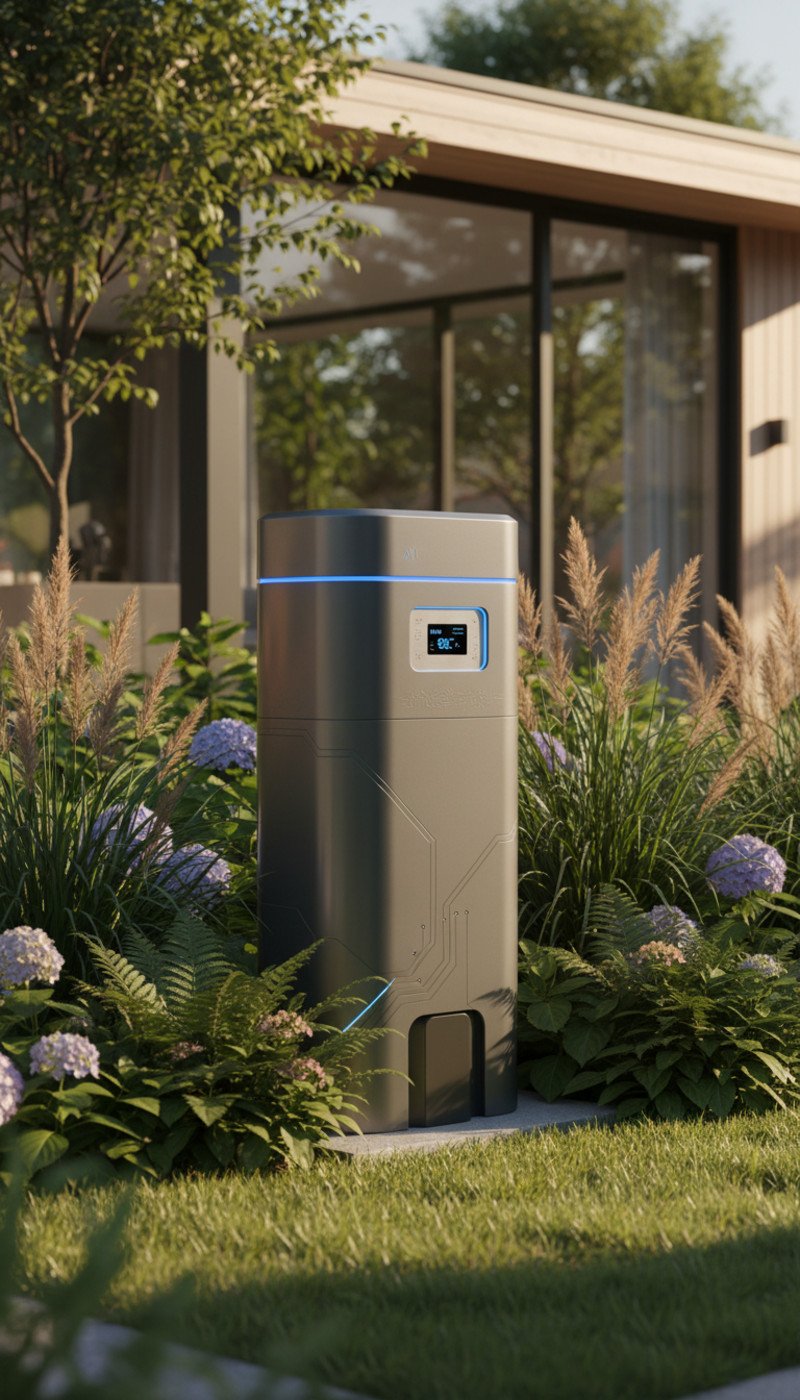
The concept behind predictive irrigation barrels is elegantly simple but technologically complex. The system would operate in a continuous cycle of data analysis and physical action. First, IoT sensors within the water butt would constantly report the current water level. Simultaneously, a software component would pull real-time, localized weather forecast data, specifically looking for predicted rainfall intensity and duration.
An algorithm would then calculate if the incoming rainfall is likely to exceed the butt’s remaining capacity. If so, it would trigger a motorized valve to release a precise amount of water, ensuring there’s enough space for the predicted downpour. This proactive approach to IoT garden drainage transforms a passive storage container into an active flood mitigation and water optimization tool. Currently, specific machine learning models for this purpose are not publicly documented, highlighting that we are still in the conceptual phase of this exciting technology.
Comparing Costs: AI Water Butts vs. Traditional & Smart Options
Since fully predictive AI Water Butts are not yet on the consumer market, a direct price comparison isn’t possible. However, we can analyze the costs of current options to understand the potential investment. The journey into smart water management is an incremental one, and understanding the costs at each stage is vital for anyone planning a home project, similar to budgeting for a kitchen and bathroom remodel.
Traditional water butts offer a wide price range. According to a 2023 market review from Gardeners’ World, you can find basic 100L slimline models for around £64.99, while larger or more decorative 350L units can cost upwards of £449.99. The current “smart” layer consists of retrofittable IoT sensor kits, whose prices are not widely published but represent an additional investment on top of the container itself. A fully integrated AI system would likely be a premium product, commanding a significantly higher price than the combined cost of a traditional butt and a separate sensor.
| System Type | Estimated Cost Range | Key Feature |
|---|---|---|
| Traditional Water Butt | £65 – £600+ | Passive water storage |
| Smart Rain Harvesting (Retrofit) | Cost of Butt + IoT Kit (Varies) | Real-time level monitoring, remote alerts, controlled discharge |
| AI Water Butt (Conceptual) | Not Commercially Available | Autonomous predictive emptying based on weather forecasts |
The Tech Behind Smart Water Collection: Sensors, Monitoring, and Current Capabilities
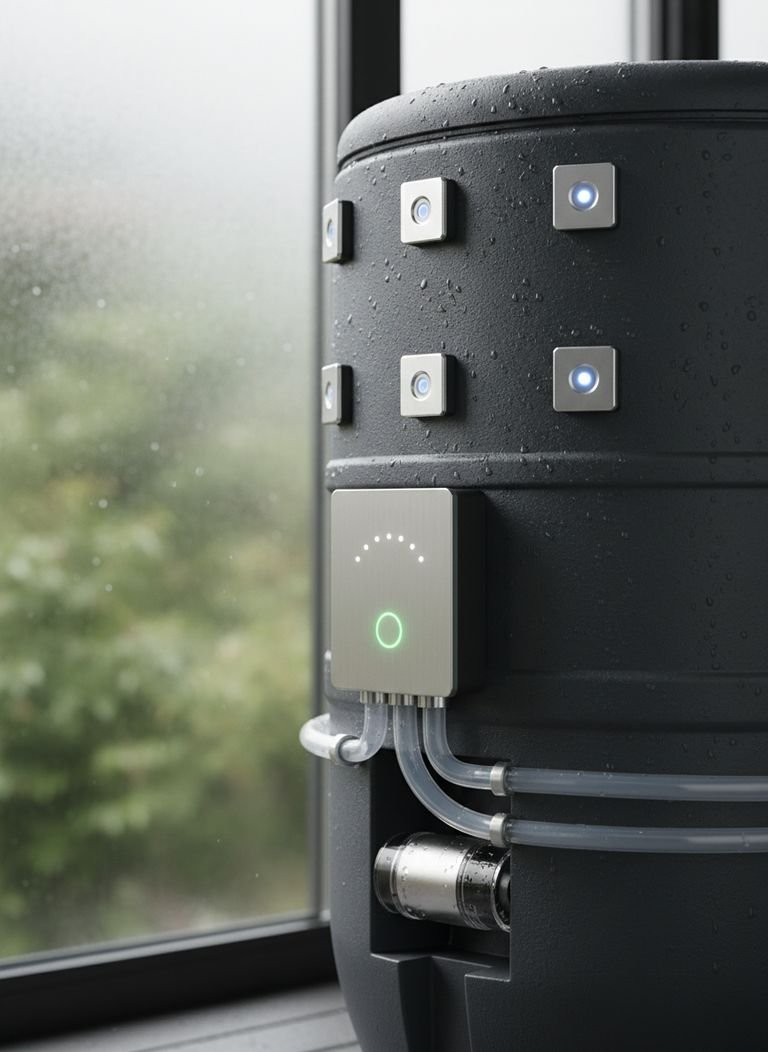
The technology powering today’s smart water systems is grounded in reliable IoT components. The core of these systems are sensors. Companies like AQUAIOT utilize IoT sensors to provide real-time water level and flow monitoring. Some advanced systems also incorporate pressure sensors, which are highly effective for immediate leak detection—a critical feature for preventing water damage and waste.
Because true predictive irrigation barrels are not yet in the hands of early adopters, there are no documented reports of technical glitches or accuracy issues related to their predictive capabilities. The current focus is on the reliability of the monitoring hardware. Connectivity is typically handled via home Wi-Fi, sending data to a smartphone app. This level of integration is a stepping stone towards more sophisticated smart home voice control, where you could simply ask a digital assistant for the status of your water butt.
What’s Next? Desired Features for the Ultimate AI Water Butt
As the market for IoT garden drainage evolves, several key features are emerging as desirable next steps. Based on current market gaps, the ultimate AI water butt will need to move beyond a standalone app and offer seamless integration with major smart home ecosystems like Alexa, Google Home, and Apple HomeKit.
Another significant advancement would be integrated, advanced filtration systems. This could purify collected rainwater to a standard suitable for washing cars or even, with further treatment, for non-potable household uses. Finally, modular scalability is a crucial feature currently seen only in non-smart solutions. For instance, utility tanks can be linked for up to 1500L of storage but lack any smart functionality. A future-forward system should allow users to easily connect multiple smart units that work in concert, a necessary feature for larger properties with complex landscaping services and backyard ideas.
Powering Your Smart System & Protecting Your Data: Future Considerations
Two critical but currently undocumented aspects of AI Water Butts are power and data privacy. For a device installed outdoors, a reliable power source is non-negotiable. Solar-powered water storage is the most logical solution, but manufacturers will need to specify performance metrics, such as the required solar panel wattage and the battery’s lifespan in days without direct sunlight. These details are essential for ensuring the system remains operational during prolonged overcast weather.
Furthermore, as these devices connect to the internet and collect data, data privacy standards become paramount. Users will need clear information on how their data (such as water usage patterns) is stored, encrypted, and used. Establishing trust is just as important as the technology itself, a lesson learned from the adoption of other smart devices like smart deadbolt locks, where security is a primary consumer concern.
Investing in Smart Water Management: Market Potential & Real-World Savings
While specific market data for AI-powered water management is still emerging, the broader context is promising. The global market for lawn and garden watering equipment, which includes water butts, is projected to grow from US$6.7 billion in 2026 to US$9.6 billion by 2033, according to Persistence Market Research. This indicates a strong and growing consumer interest in garden maintenance and water management.
Currently, there is no specific ROI data on water bill savings directly from smart rain harvesting systems. However, the value can be inferred. By maximizing the collection and use of free rainwater, homeowners can significantly reduce their reliance on municipal water for gardening, which can account for a substantial portion of summer water bills. Much like investing in an energy-efficient bathroom, the goal is long term savings and sustainability. The efficiency gains from smart and future AI systems will only amplify these benefits.

Your Next Steps in Smart Water Harvesting
The journey toward truly intelligent water management is an incremental process. While the fully autonomous, predictive AI Water Butt remains a future concept, the path forward is clear. The technologies available today—reliable IoT sensors, remote monitoring apps, and controlled discharge valves—are not just placeholders; they are the essential building blocks of the future.
For the tech-curious homeowner, the time to act is now. By investing in current smart rain harvesting components, you can gain immediate benefits in water conservation and efficiency. You are not just buying a product; you are adopting a platform that will evolve as AI capabilities become more refined. Embracing today’s smart systems is the most practical and actionable way to prepare for the future of AI Water Butts.
Frequently Asked Questions About AI Water Butts
Can I buy a true AI water butt with predictive emptying today?
No, a fully autonomous water butt that uses AI to predictively empty itself based on weather forecasts is not widely available on the consumer market yet. The concept is still in a nascent or developmental stage.
What is the main difference between a “smart” and an “AI” water butt?
A “smart” water butt typically uses IoT sensors to allow you to monitor water levels and remotely control a discharge valve via a smartphone app. An “AI” water butt is the conceptual next step, where the system itself would make autonomous decisions, such as emptying the tank before a storm without any user input.
How much do traditional water butts cost?
The price of traditional water butts varies widely based on size, material, and design. You can find basic 100-litre models for around £65, while larger or more stylish premium models can cost over £500.
What are the first steps to making my current water butt smarter?
The best first step is to research retrofittable IoT sensor kits. These kits can be installed in your existing water butt to provide real-time water level monitoring and send alerts to your phone, giving you the core functionality of a modern smart system.
Is investing in smart rain harvesting worth it without proven ROI?
While specific ROI data on water bill savings is not yet available, the investment can be justified by the benefits of water conservation, flood mitigation, and convenience. By maximizing the use of free rainwater for your garden, you will reduce your reliance on metered water, leading to tangible savings over time.