


Modern acoustic slatted panelling is transforming home offices and listening rooms by merging sophisticated design with superior sound control, creating spaces that are both beautiful and functional.
Key Takeaways
- Acoustic slatted panelling has seen significant growth in residential use, with homeowners installing 45 million square meters in 2024 for both aesthetic and acoustic benefits.
- These panels are highly effective for dedicated spaces like home offices, where they reduce echo for clearer calls, and in listening rooms, where they manage sound reflections for a purer audio experience.
- Choosing the right panel involves understanding the trade-offs between materials like MDF (cost effective), solid wood (premium aesthetics), and PET felt (eco-friendly and highly absorbent), as performance and cost vary significantly.
- The Ascent of Acoustic Slatted Panelling in Residential Spaces
- Why Slatted Panels Are Dominating the Decorative Acoustic Market
- Enhancing Home Offices and Analog Listening Rooms with Modern Slatted Solutions
- How to Select and Install Acoustic Slatted Panelling: A Practical Guide
- Advanced Analysis & Common Pitfalls: What Manufacturers Don’t Tell You
- Conclusion: The Final Verdict on Slatted Acoustic Panels
- Frequently Asked Questions
The Ascent of Acoustic Slatted Panelling in Residential Spaces
The use of acoustic slatted panelling within homes has grown remarkably, shifting from a niche commercial product to a mainstream feature in sophisticated interior design. Homeowners now prioritize creating environments that are not only visually appealing but also acoustically comfortable. This trend marks a significant turn towards integrated solutions where functionality does not compromise style. As an aesthetic acoustic treatment, slatted panels offer a warm, textured look that complements modern, minimalist, and Scandinavian designs, making them a preferred choice for feature walls in living rooms, bedrooms, and media spaces.
This rise is quantified by significant market data. In 2024, residential applications accounted for a notable 11% of the global acoustic panel market. This translates to an impressive 45 million square meters of acoustic panels installed in homes worldwide, according to a report from Market Growth Reports. This adoption highlights a clear demand for products that solve common domestic acoustic problems like echo and reverberation, which have become more pronounced with the popularity of open plan living and hard surfaces.
Why Slatted Panels Are Dominating the Decorative Acoustic Market
Slatted wall panels have captured the decorative acoustic market due to their unique combination of high performance acoustics and compelling visual design. Unlike traditional fabric wrapped panels that can look clinical, slatted panels introduce the natural texture and warmth of wood, elevating a room’s ambiance while taming unruly sound waves. Their linear pattern creates a sense of height and space, adding architectural interest to otherwise plain walls. This versatility makes them suitable for a wide range of applications, from a single accent wall behind a desk to a full room treatment in a dedicated home theater.
The broader decorative acoustic panel market, valued at $4.2 billion in 2024, shows a strong preference for wall panels in residential settings precisely for this adaptability, as noted by Market Intelo. Products marketed as soundproof wood wall panels appeal directly to consumers seeking a dual purpose solution. They want to reduce noise bleed between rooms and improve the sound quality within a space without resorting to solutions that clash with their home decor. The slatted design cleverly conceals a high-density, sound absorbing felt backing, delivering effective acoustic treatment in a discreet, elegant package.
Enhancing Home Offices and Analog Listening Rooms with Modern Slatted Solutions
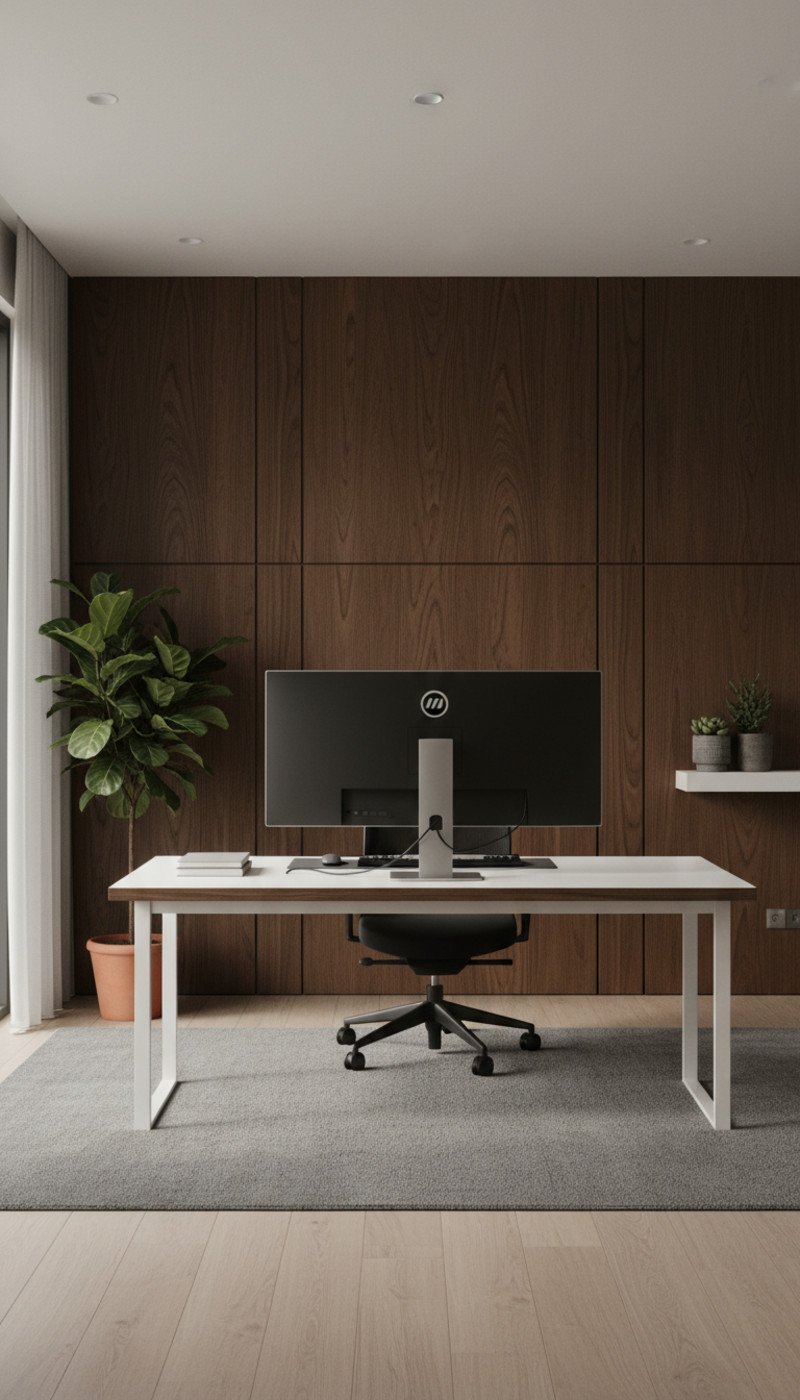
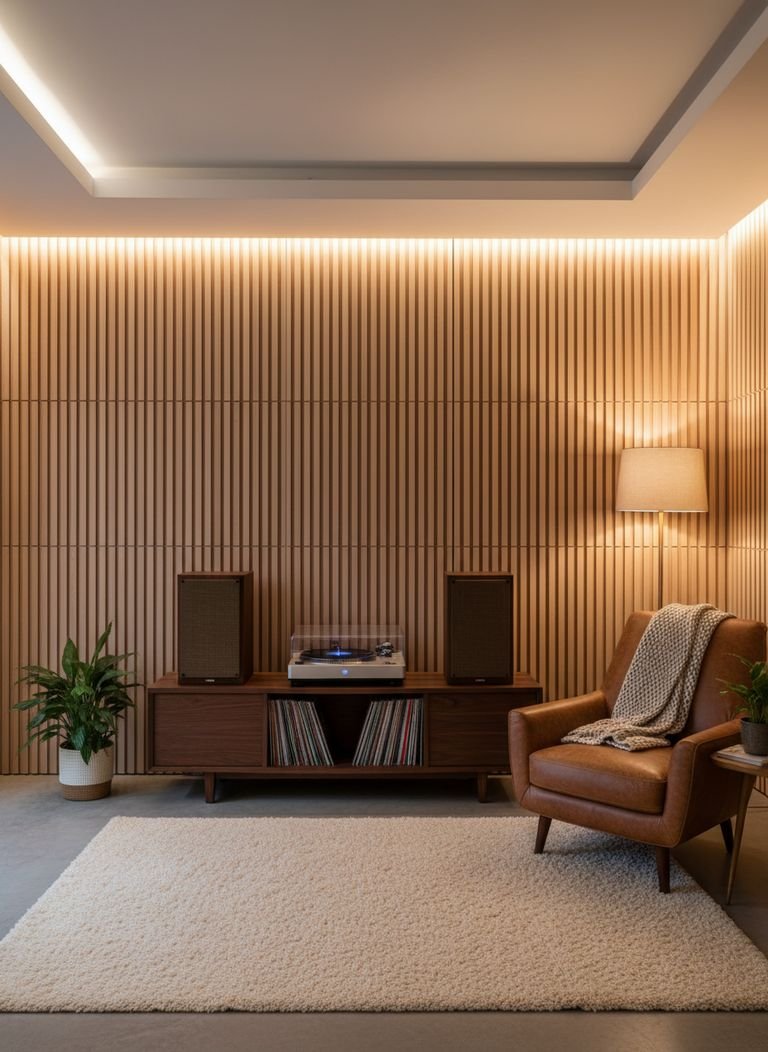
The demand for effective acoustic solutions is particularly acute in specialized home environments. For remote workers, a home office with poor acoustics can lead to distracting echo and reverberation on video calls, reducing speech clarity and creating an unprofessional impression. Likewise, for audiophiles, an untreated room can ruin the experience of a high fidelity sound system, with reflections and standing waves coloring the sound and obscuring detail. Acoustic slatted panelling directly addresses these challenges.
In a home office, installing panels on the wall behind the monitor can absorb sound reflections before they reach the microphone, leading to significant home office noise reduction and clearer communication. In analog listening rooms, placing panels at first reflection points—the side walls and the wall behind the speakers—helps to create a more controlled and accurate soundstage. The use of sustainable materials like a PET felt slat wall, often made from recycled plastic bottles, also appeals to environmentally conscious consumers. The global Acoustic Slat-Wall Panel market’s expansion to USD 2.41 billion in 2024, reported by Growth Market Reports, is a testament to their proven effectiveness in these critical applications.
How to Select and Install Acoustic Slatted Panelling: A Practical Guide
Implementing acoustic slatted panelling effectively requires careful planning and selection. Following a structured approach ensures you achieve both your aesthetic and acoustic goals without costly mistakes. Here is a step by step guide to help you navigate the process from concept to completion.
Step 1: Define Your Acoustic and Aesthetic Goals
Before you buy, clarify what you want to achieve. Are you primarily aiming for a visual upgrade with moderate sound absorption, or do you need high performance acoustics for a critical listening environment? For general echo reduction in a living area or home office, standard panels with a 9mm PET felt backing are often sufficient. For a dedicated listening room or home theater, you may need panels with a thicker backing or consider mounting them on battens with mineral wool insulation behind for enhanced low frequency absorption.
Step 2: Choose the Right Materials and Finish
The materials dictate the look, durability, and acoustic performance of your panels.
- MDF with Wood Veneer: This is the most common and cost effective option. It provides a consistent, stable base with a realistic wood finish. It’s an excellent all rounder for most residential applications. The look is often similar to modern fluted wood cabinets, creating a cohesive design language.
- Solid Wood: Offers a premium, authentic look with natural variations in grain and color. It is typically more expensive and can be susceptible to changes in humidity, but its aesthetic appeal is unmatched.
- PET Felt Slats: Some panels use slats made entirely of compressed felt. This option provides maximum sound absorption but offers a softer, more contemporary textile look rather than a wood finish.
Consider the existing elements in your room to ensure the finish complements your style.
Step 3: Measure Your Space and Plan the Layout
Accurately measure the height and width of the wall or walls you plan to cover. Most slatted panels come in standard sizes, such as 2400mm x 600mm. Planning your layout on paper first helps you determine how many panels you need and where cuts will be necessary. For a feature wall, centering the first panel is often the best approach. For full room coverage, start in one corner and work your way across. This planning is crucial, whether you are outfitting a dedicated modular backyard office or a room within your home.
Step 4: Installation – Direct Fix vs. Batten Mount
You have two primary installation methods:
Direct Fixing: This is the simplest method. Apply a strong construction adhesive to the back of the panel and use black screws to fix it through the felt backing directly into the wall. The black screw heads are virtually invisible against the dark felt. This is fast and requires minimal tools.
Mounting on Battens: For superior acoustic performance, screw wooden battens to the wall first, then attach the panels to the battens. This creates an air gap behind the panel, which significantly improves sound absorption, especially at lower frequencies. You can also fill the cavity with mineral wool insulation for Class A absorption. This method is more complex but delivers professional grade results.
Advanced Analysis & Common Pitfalls: What Manufacturers Don’t Tell You
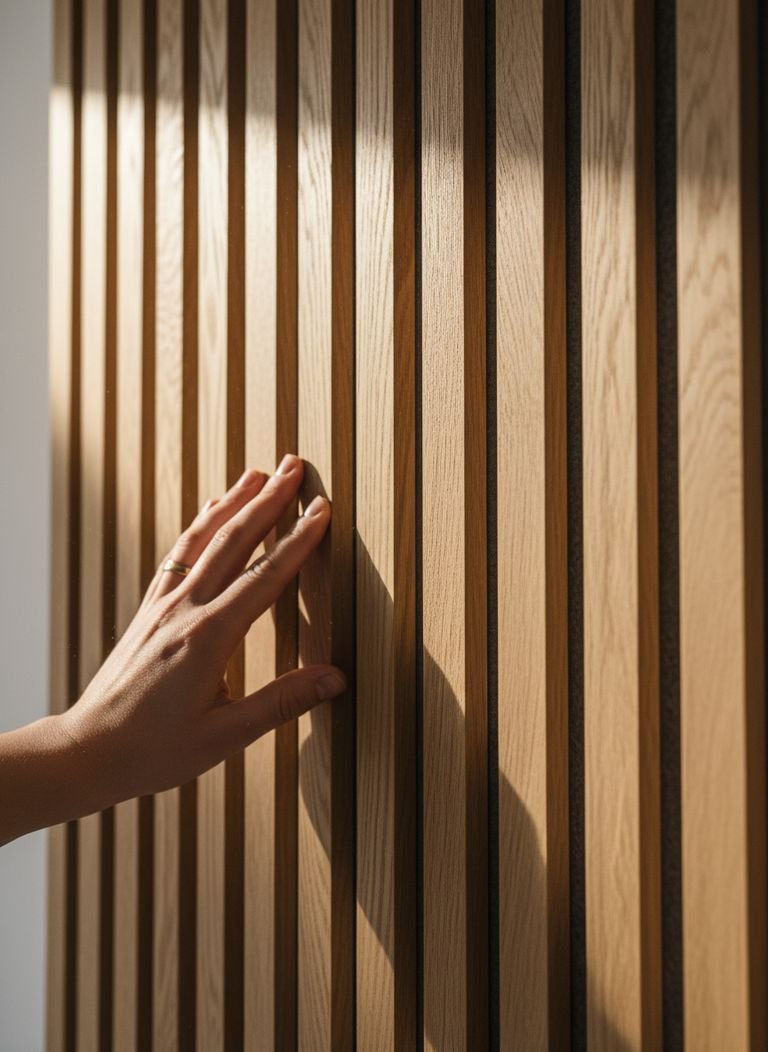
While acoustic slatted panelling is an excellent product, the market is crowded with brands making bold claims that are not always backed by transparent data. The lack of standardized testing and reporting can make it difficult for consumers to make truly informed decisions. This is a critical consideration, much like understanding the real costs of a kitchen and bathroom remodel before you begin.
The Vague Performance Metrics
A major pitfall is the absence of precise acoustic performance data. Many suppliers describe their products as “sound absorbing” without providing a Noise Reduction Coefficient (NRC) rating. An NRC rating is a standard measure of how much sound a material absorbs, ranging from 0 (perfectly reflective) to 1 (perfectly absorptive).
Furthermore, sound absorption is not linear across all frequencies. A panel might be excellent at absorbing mid to high frequencies (like human speech) but poor at absorbing low frequencies (like bass from a sound system). Professional acoustic products are tested and rated in different frequency bands, but this data is rarely available for consumer grade slatted panels. You are often left guessing about the actual performance you will get.
What to Ask Your Supplier
To cut through the marketing fluff, you must become an informed buyer. Before purchasing, ask potential suppliers these specific questions:
- What is the NRC rating of the panel when mounted directly to a wall?
- What is the NRC rating when mounted on battens with an air gap?
- Do you have independent lab test data showing the panel’s absorption coefficients across different frequencies (e.g., 125 Hz, 250 Hz, 500 Hz, 1000 Hz, 2000 Hz, 4000 Hz)?
- What is the density and composition of the felt backing? (Higher density generally means better absorption).
- What are the VOC (Volatile Organic Compound) emissions of the product? (Important for indoor air quality).
A reputable manufacturer should be able to provide this information. If they cannot, it may be a red flag about the quality and performance of their product.
| Consideration | Common Pitfall | Actionable Solution |
|---|---|---|
| Acoustic Performance | Vague claims with no NRC rating or frequency specific data. | Demand third party lab test results. If unavailable, prioritize panels with thicker, denser felt backing. |
| Material Quality | Low quality, paper thin veneer that damages easily or peels at the edges. | Order a sample first to inspect the veneer quality, slat construction, and felt backing. |
| Installation Complexity | Underestimating the precision needed for cuts and alignment, resulting in a poor finish. | Use a high quality track saw for straight cuts. Plan the layout carefully and measure twice. |
| Long Term Durability | MDF slats may warp in high humidity environments; veneer can fade with direct sun exposure. | Avoid installation in damp areas like basements. Use UV protective film on windows if panels are in direct sunlight. |
Conclusion: The Final Verdict on Slatted Acoustic Panels
Acoustic slatted panelling has rightfully earned its place as a premium solution for homeowners who refuse to choose between style and sound. It offers a powerful, visually integrated way to manage the acoustics of a space, turning distracting home offices into focused workstations and good listening rooms into great ones. The market growth reflects a genuine need and appreciation for products that enhance our home environments in multiple ways.
However, the lack of transparent, standardized data in the consumer market remains a significant challenge. To get the best results, you must look beyond the beautiful product photos and ask critical questions about performance. By understanding the materials, planning your installation carefully, and demanding clear data from suppliers, you can confidently invest in acoustic slatted panelling and create a space that looks and sounds exactly as you envisioned.
Ready to transform your space? Explore our guides and find the perfect solution for your home today.
Frequently Asked Questions
Do acoustic slatted panels actually soundproof a room?
No, acoustic panels are designed for sound absorption, not soundproofing. They improve sound quality within a room by reducing echo and reverberation. Soundproofing involves blocking sound from entering or leaving a room, which requires adding mass and decoupling structures, a much more complex and expensive process.
Can I install acoustic slatted panelling on the ceiling?
Yes, slatted panels can be installed on ceilings and are very effective at absorbing sound reflections, especially in rooms with high ceilings. The installation process is similar to a wall installation but requires extra care and usually a second person to help hold the panels in place while they are being fixed.
How do I clean and maintain acoustic slatted panelling?
Maintenance is minimal. For the wood or veneer slats, you can use a soft, dry cloth or a duster. The felt backing can be cleaned with a vacuum cleaner using a brush attachment. For any stains on the wood, use a slightly damp cloth and a mild wood cleaner, being careful not to oversaturate the material.
What is the difference between MDF and solid wood slats?
MDF (Medium Density Fiberboard) is an engineered wood product that is very stable and less prone to warping than solid wood. It is typically covered with a wood veneer. Solid wood is a natural material with unique grain patterns but is more expensive and can react to changes in temperature and humidity. The acoustic performance difference is generally negligible; the choice is primarily about aesthetics and budget.
Is DIY installation difficult for a beginner?
For a handy individual, a direct fix installation is a manageable DIY project. The panels are designed to be easy to cut and handle. However, achieving a professional finish requires precise measurements and clean cuts, especially around outlets or in corners. If you are not confident in your DIY skills, hiring a professional carpenter or joiner is recommended, especially for more complex installations using battens.