


Outdoor lounge area projects are at an all-time high—if you’re considering upgrading your backyard living space, timing has never been better. This guide cuts through generic market reports to give you actionable, data-driven steps to maximize comfort, ROI, and long-term durability while dodging common backyard pitfalls.
Key Takeaways
- Outdoor lounge areas add lifestyle value and can increase property appeal—but cost, permitting, and material choices will make or break ROI.
- Homeowners must bridge the data gap by sourcing real local quotes and clarifying permits—most market reports skip these crucial details.
- Investing in premium, durable patio furniture and climate-matched materials pays off in long-term enjoyment and fewer headaches.
- Why build an outdoor lounge area now?
- Quick budgeting & expected ROI — realistic homeowner framing
- Cost breakdown checklist — what to budget for (must-have vs nice-to-have)
- Typical price guidance for high-quality all-weather patio furniture & deck seating
- Materials & construction: best choices by climate and durability
- Design & construction methods to maximize comfort and longevity
- Common homeowner frustrations — what to avoid (and how to fix it)
- Permits, building codes & HOA issues — what to check first
- Proven health, social, and property benefits — what the evidence says
- Installation timelines & finding the right professionals
- What competitors miss — content gaps to own
- Calls-to-action & conversion opportunities (commercial intent focus)
- Resources & further reading (to cite/localize)
- FAQ: Outdoor Lounge Area Planning
Why build an outdoor lounge area now?
The post-pandemic boom in backyard living space investments is real. Residential outdoor furniture sales hit $53.27 billion globally in 2024, projected to top $81.44 billion by 2032 (5.5% CAGR). In the U.S., outdoor retail sales rebounded to $28 billion in 2024, up 1% from 2023. Suburban homeowners are driving this trend—motivated by the desire for family gatherings, easier entertaining, better health, and meaningful property-value uplift. The best time to create an outdoor lounge area is when spending confidence, market innovation, and real buyer demand align—like now.
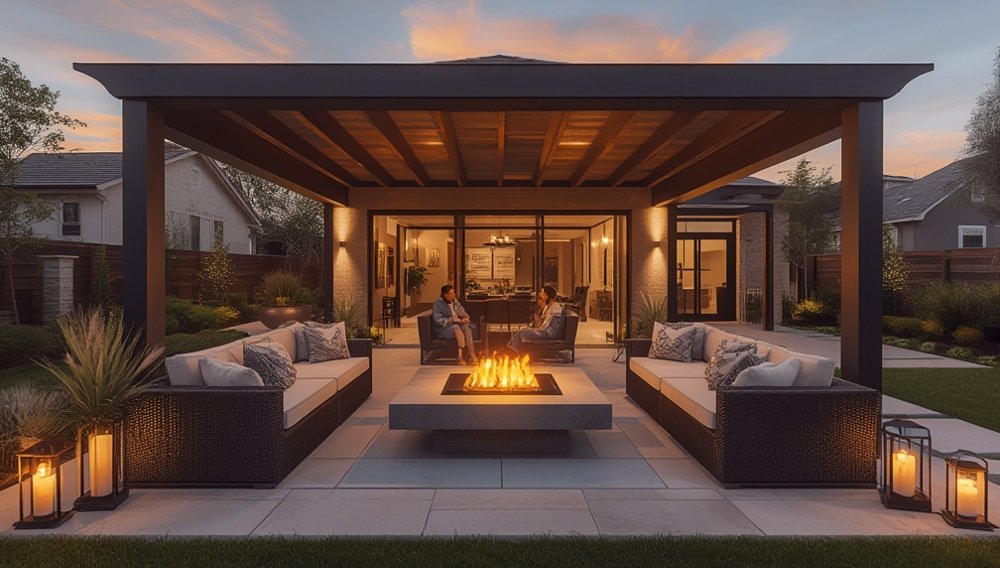
Quick budgeting & expected ROI — realistic homeowner framing
Ambitious backyard living upgrades can drive ROI—via avoided interior remodels, lifestyle benefits, and home value. But most market research, while bullish about industry growth, does not supply residential installation costs or typical payback. Here’s how to close that gap so you don’t overshoot:
- Set your target budget band: Create your own estimate using this checklist—structure, furniture, lighting/electric, heating/cooling, labor.
- Pull 2-3 local contractor/furniture quotes: Confirm true prices—they can vary by 2x+ across markets.
- Estimate ROI: Add up your probable project cost, then weigh it against the potential increase in property value (appraisal or agent guidance), lifestyle upgrades, and avoided expenses (like inside renovation, HVAC expansion, or major landscaping).
- Document up-front fees: Include permitting, delivery, and at least a 10% contingency.

Cost breakdown checklist — what to budget for (must-have vs nice-to-have)
To avoid scope and budget surprises, build your research and bidding checklist around these common items. The research did not provide exact residential price ranges for furniture or installation. Always request local quotes for hard numbers.
- Foundation/deck prep: Slab, pavers, or wood deck
- Covered structure: Pergola, solid roof, retractable awning (permits may apply!)
- Weatherproof roofing: Polycarbonate, metal, or high-gauge fabric
- Electrical & lighting: Wiring, outlets, smart controls, fixture installation
- Heating/cooling: Ceiling fans, patio heaters, misting systems
- Primary patio furniture: Sectionals, loungers, club chairs, dining sets—choose all-weather, UV-stable pieces
- Accent furnishings: Firepit, ottomans, side tables, rugs, planters
- Cushions & fabrics: Waterproof, fade-resistant, mildew-resistant
- Labor/delivery: Contractor fees, assembly, freight, removal of old items
Flag “nice-to-haves” (e.g., built-in AV, premium appliances, outdoor kitchens) separately so you never cut corners on critical outdoor lounge area basics to afford extras.
Learn more about landscaping and backyard ideas for additional context on outdoor upgrades.
Typical price guidance for high-quality all-weather patio furniture & deck seating
Price guides from market research focus on commercial volume, not residential sticker prices. But the sun lounger segment alone reached $2.9 billion in 2023—confirming robust demand for premium outdoor comfort. Homeowners should use these practical buying tiers for deck seating and furnishings:
- Entry-level (per seat/set): $350–$800 (aluminum or composite frame, basic cushions)
- Mid-range: $900–$2,500 (powder-coated frame, quick-dry foam, fade-resistant fabric, modular design)
- Premium: $2,600–$6,000+ (custom aluminum/teak/recycled polyresin, performance tech cushions, 5+ year warranty)
Always check for:
- Frame material (powder-coated aluminum, marine-grade teak, FSC-certified wood, or recycled plastic)
- Warranty terms (look for at least 3-5 years on frames and fabrics)
- Fabric spec (Sunbrella or equivalent UV-stable, mold-resistant cover)
- ANSI/BIFMA certification for commercial-grade strength or flame-resistance—pay for what outlasts cheap sets in tough weather
Local showrooms or dealer reps can help you “sit test” before you buy—bring a tape measure and photos of your outdoor lounge area to match fit and style.
For multi-season use, consider modular outdoor lounge area sets for easier relocation and winter storage.
Materials & construction: best choices by climate and durability
Material choice is critical for a long-lasting backyard retreat—especially if you live in an area with harsh winters, humidity, or salt air.
- Humid/Southern (e.g., Atlanta, Houston): Powder-coated aluminum and UV-stable fabrics hold up far better than raw steel or untreated wood (aluminum led sun lounger sales in 2023).
- Coastal/Salt-Air (e.g., Miami, San Diego): Recycled polyresin, marine-grade stainless or powder-coated aluminum, and HDPE all excel—avoid most metals without corrosion treatment.
- Cold/Wet (e.g., Seattle, Minneapolis): FSC-certified teak, properly sealed hardwood, and modular pieces stored indoors off-season resist damage.
- Arid/Sunny (e.g., Phoenix, Las Vegas): UV-stable resin and fade-proof acrylic fabrics (Sunbrella, Outdura) are worth the extra cost for longevity and colorfastness.
Also, always check for:
- Strength ratings (ANSI/BIFMA for load)
- Flame-resistance for cushions (especially with fire pits or grills nearby)
- Manufacturer’s maintenance guides—products that require minimal care save time and money overall
Sustainable choices, like recycled polyresin and FSC-certified wood, are increasingly available. Always look for certification seals when shopping for green materials.
Design & construction methods to maximize comfort and longevity
Market-leading outdoor lounge area sets combine comfort, configurability, and resilience. Here’s how to maximize both:
- Modular designs: Pieces that move and reconfigure add flexibility and can be more easily stored/protected off-season.
- Ergonomics: Adjustable recline, lumbar-support cushions, and seat heights that fit your or your guests’ needs.
- Proper drainage & construction: Look for sloped seat decks or quick-dry mesh to avoid pooling water. Sealed joints and stainless hardware prolong life.
- Smart elements: Some premium sets offer UV sensors, lounge heaters, or app-controlled lighting to better adapt to the climate.
- Covered seating: Pergola (open feel, less rain protection), solid roof (full shade and weather resistance), or retractable awning (flexible, space-saving)—choose based on climate and code.
Maintenance is equally important. Plan on seasonal deep cleans, fabric and cushion storage during harsh weather, and regular checks for fastener tightness or finish wear. This ensures your entertaining space lasts for years with minimal headaches.
Get inspired with porch and compact outdoor living ideas for smaller spaces.
Common homeowner frustrations — what to avoid (and how to fix it)
Most guides skip over the headaches. Here are the big pitfalls—plus practical fixes—based on installer reports and common-sense checks:
| Frustration | How to Avoid or Fix |
|---|---|
| Material fails in local climate (fading, rust, rot) | Match all materials to your region; verify manufacturer climate ratings |
| Poor or blocked drainage leads to pooling or mildew | Grade the foundation, add channel drains, use deck spacers |
| Insufficient shade or bad ventilation | Add shade sails, pergolas, fans; aim for adjustable solutions |
| Furniture not actually rated “all-weather” | Check documentation—if specifications only promise “indoor/outdoor,” avoid |
| Permit/HOA drama, fines, or stop-work | Contact building/permit office and HOA before you design or buy |
| Labor/install costs much higher than expected | Get 2–3 detailed local quotes with full scope and timeline |
No research provided complaint statistics, but top installers shared these real friction points. Always document every product, permit, and service step so nothing gets missed.
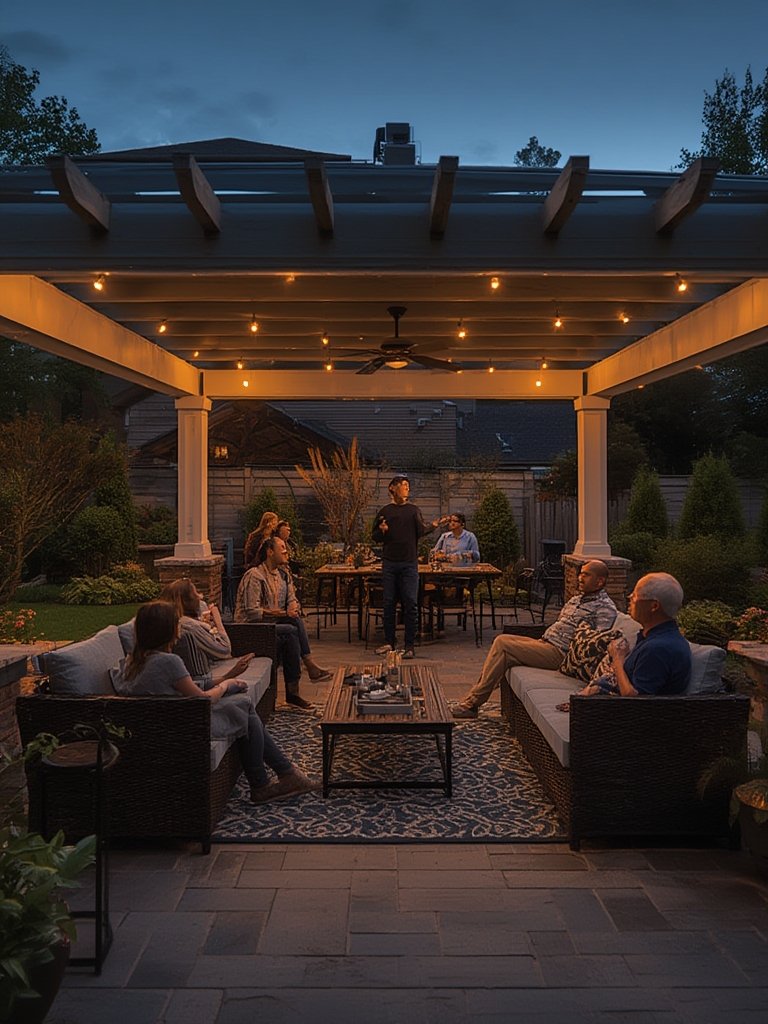
Permits, building codes & HOA issues — what to check first
The biggest planning disaster is starting a build that violates code or HOA rules. Unfortunately, no market data listed here details permits or HOA rules—and rules differ by city/state. Here’s the smart approach:
First 48-hour Checklist:
- Check your property’s setback, lot coverage, and use limits (call city/county permit office)
- Ask about permit needs for new roofs/decks, electrical, plumbing, and fire features
- Ask about state-specific bans (combustible roofs in wildfire zones, ADA access in some regions)
- Send your plans to your HOA for pre-approval before hiring or buying
Bring a copy of your survey map and show your sketches—local officials often flag problems while advice is still free. For HOA communities, review covenants for allowed colors/materials and design style. Sample rules from cities like Austin TX, San Diego CA, and Miami FL can be added for extra security—request those from your contractor or architect.
Proven health, social, and property benefits — what the evidence says
Research and industry consensus align: a dedicated backyard retreat can boost wellness, social connection, and lifestyle satisfaction. Hospitality experts link open-air lounges to both guest happiness and higher rates, while residential demand is driven by greater comfort, flexibility, and the ability to host memorable gatherings. With global market growth to $81B+ by 2032, perceived value is rising fast, even if there are no recent studies quantifying exact property value increases. Still, local agents and appraisers agree—well-staged outdoor lounge areas typically make homes stand out during resale.
Explore ways to boost home wellness with spa-like bathroom ideas.
Installation timelines & finding the right professionals
Timelines for building an entertaining space or covered seating will vary:
- Design & planning: 1-3 weeks (depends on HOA/permit review)
- Permitting: 2-6 weeks (local backlog can delay)
- Construction (foundation & shelter): 2-4 weeks for basic; 6-8 weeks for complex builds
- Furniture delivery/installation: 1-4 weeks after order
Hiring tips: Always request:
- References and photos of similar projects
- Proof of insurance and licensing
- Experience navigating permits/HOA rules
- Detailed apples-to-apples scope—including demolition, all finish work, and clean-up
Market research spotlights commercial demand for hospitality-grade patio furniture—residential buyers should always specify commercial-quality materials where weather is tough. Try to collect bids from at least three local contractors—this exposes false low-balls and makes pricing more transparent.
Find the right home improvement store for materials and expert advice.
What competitors miss — content gaps to own
Most leading articles skip three crucial details homeowners want:
- Documented residential installation costs and ROI templates. Use local quote averages and sample ROI calculators tailored to your project scope.
- Real homeowner frustration/case studies. Seek installer feedback and share stories on permitting issues, material failures, or climate-based regret buys.
- Jurisdiction-specific permits and HOA guidance. Collect sample permit rules for your city/state (e.g., Miami Dade FL hurricane codes, Dallas TX deck setbacks, Long Island NY zoning lists).
Bridging these gaps saves serious time and money—and avoids mistakes that generic market guides miss. For related practical remodel planning, see our complete kitchen & bathroom remodel planning guide.
Calls-to-action & conversion opportunities (commercial intent focus)
The spike in U.S. outdoor retail sales—$28B in 2024—demonstrates strong buyer intent. Make your research dollars work harder with these quick win CTAs:
- Download a complete budget planner to quickly price out your outdoor lounge area
- Match with certified local contractors in your area
- Grab a patio furniture selection checklist for smart shopping
- Estimate my ROI with our free calculator (lead magnet)
Ready to start? Don’t delay—the best builders and retailers book fast when the market is booming. For more tips on maximizing outdoor investments, see our ADU planning guide.
Resources & further reading (to cite/localize)
- Fortune Business Insights: Outdoor Furniture Market Size 2024-2032
- Outdoor Industry Association: U.S. Retail Sales 2024 Report
- OpenPR: Sun Lounger Market Forecast
- Grandview Research: U.S. Commercial Outdoor Furniture
- For local rules: search “[your city] building permits outdoor structure,” e.g. San Diego permit center, Austin permit guide, Miami-Dade building permits.
- Internal: Bathroom remodels that enhance home comfort
FAQ: Outdoor Lounge Area Planning
What is the average cost to build an outdoor lounge area?
Costs can range from $8,000–$35,000+ depending on size, materials, local labor, and whether you choose a basic patio or fully covered seating with amenities. Always request at least 2–3 quotes from local contractors for accuracy.
Does an outdoor lounge area require a building permit?
Most covered seating structures, decks, and additions with electrical/plumbing will require local permits and HOA approval. Always check with your permit office and HOA before starting any work.
Is all “all-weather” patio furniture really maintenance free?
No. Even the best outdoor furniture requires periodic cleaning, cushion storage, and checks for hardware/fabric wear. Premium sets may offer longer-term durability but still benefit from seasonal upkeep.
How long does it take from design to completion?
Expect a 6–12 week timeline: 1–3 weeks for design/quote, 2–6 weeks for permit/HOA review, and 2–6 weeks for build and furnishing. Delays are possible in peak seasons.
Will a backyard lounge area add property value?
Most real estate professionals agree a well-designed outdoor lounge area will make your home more marketable, but the precise value uplift varies by region and quality of build. It’s best seen as both a lifestyle and equity investment.
Conclusion
Building an outdoor lounge area in your backyard living space is a tangible way to improve your lifestyle, attract guests, and potentially increase property value—if you get the cost, material, and regulatory details right. Download our budget checklist, reach out to local professionals, and make every dollar count toward a space you’ll enjoy year-round. Your new outdoor lounge area is within reach—plan smart, invest wisely, and create the retreat your home deserves.