

Smart home voice control is no longer just for tech enthusiasts—it’s now an everyday reality for millions. In 2024, there are more digital voice assistants in the world (8.4 billion) than there are people, and nearly half of all Americans use a smart speaker system or virtual assistant regularly. But for homeowners and integrators, the real question isn’t whether voice control has arrived—it’s whether it will truly simplify your life, how much you’ll pay, and how to avoid common frustration points. If you want a real guide—covering platform differences, real-world costs, privacy, and hidden power-user tricks—you’re in the right place. This research-backed buyer’s playbook will show you how to make smart home voice control convenient, secure, and worth your investment in 2024.
Key Takeaways
- Voice assistants and smart speakers are now ubiquitous, making hands-free home control practical and affordable for most households in 2024.
- Platform choice (Alexa smart home, Google Home, or others) shapes compatibility, privacy, and ongoing costs—there’s no “one winner” for every user.
- Real convenience comes from smart setup, privacy practices, and exploring overlooked use cases beyond lights and music—like energy routines and caregiver tools.
- Why smart home voice control matters in 2024
- Platform snapshot — Alexa smart home vs Google Home vs others
- Who’s using voice today — device usage & engagement patterns
- Common pain points — accuracy, privacy, and integration challenges
- Underreported hands-free use cases you should cover
- Technical improvements and current hardware/software limitations
- How much will it cost to set up a comprehensive system in 2024?
- Privacy controls and data protection — platform-by-platform comparison
- Real-world examples of convenience and efficiency gains
- Practical how-to sections & supporting assets the article must include
- Conclusion + recommended next actions for readers
- FAQ
Why smart home voice control matters in 2024
In 2024, smart home voice control is foundational—not a luxury. With 8.4 billion digital voice assistants active worldwide (Strategic Market Research), almost every household on the planet could use two. By year-end, an estimated 422 million people globally will have a smart home platform. This explosive growth means homeowners and property managers can now assume that “hands-free” isn’t just marketing hype—it’s a default expectation, much like Wi-Fi or light switches.
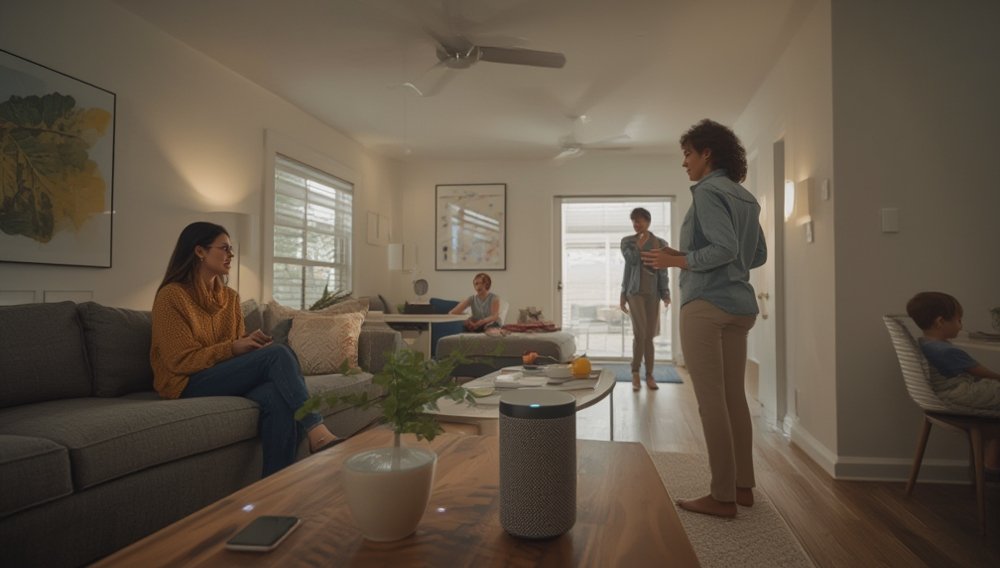
This shift is reshaping home layouts, workflows, and even property values. Whether you want to control lighting, security, appliances, or craft routine automations, the market is robust. As voice control becomes more common, the cost (and risk) of not upgrading grows—you risk missing out on real convenience, time savings, and long-term energy efficiency that future buyers will expect.
Platform snapshot — Alexa smart home vs Google Home vs others
Choosing the right voice platform for your home is a high-stakes decision. In the US, Google Assistant currently leads with 85.4 million users, followed by Apple’s Siri (81.1 million), and Amazon Alexa smart home at 73.7 million users (Strategic Market Research). Yet Amazon Alexa holds 37.1% of the virtual assistant market as of 2023, reflecting its deep integration with smart home hardware (Swift Beacon).
Here’s a quick platform comparison table for homeowners and integrators evaluating their options:
| Platform | Best For | Device Ecosystem Strength | Market Share (US) |
|---|---|---|---|
| Alexa smart home | Variety/largest device ecosystem, routines, integrations | Extensive (Works with Alexa, Zigbee) | 37.1% |
| Google Home | Native Android sync, search accuracy, multi-language users | Broad (Works with Nest, popular brands) | ~43% (Assistant/Siri calc.) |
| Apple HomeKit/Siri | Privacy-first households, iPhone-centric users | Curated (fewer devices, highest privacy) | 41.7% |
| Others (Samsung, Sonos, etc.) | Specialty/advanced AV, regional needs | Limited/specific device support | <10% |
Before you buy more gear, lock in your primary ecosystem. Most devices now “work with” Alexa or Google Home, but mixing systems can create integration headaches or increased costs.
Who’s using voice today — device usage & engagement patterns
The mainstreaming of smart speaker system adoption is more than a trend—it’s a daily habit. In Germany, 66.8% of smart speaker users engage daily. In the US, about 34% of Americans use voice search at least once per month, and nearly half the population uses a voice assistant regularly. Global smart speaker shipments hit 171 million in 2022, with the market volume expected to double (over $14.5 billion in value) by 2024 (Business Research Company).
Typical hands-free home control routines include:
- Morning: Lights, heating, and coffee triggered by a single voice command.
- Evening: Security arming, music playlists, and lighting scenes—all requested without lifting a finger.
- Special needs: Voice reminders, calendar events, and hands-free calling for all household members.
Understanding these patterns helps you design automations and expectations for usability. Daily engagement expects instant response and reliable context—a challenge for mixed or poorly configured setups.
Common pain points — accuracy, privacy, and integration challenges
Voice-activated automation isn’t perfect. Users often cite these issues:
- Misrecognition and context errors: Smart speakers can struggle with multi-user households, accents, or background noise. It’s common for devices to pick up “wrong” voices or misinterpret commands—especially when multiple services overlap or when using less common device brands.
- Privacy hesitations: The idea that all conversations might be stored is a genuine concern. While most platforms offer some privacy controls, many buyers overlook key settings—risking unintentional data retention or sharing.
- Device fragmentation: Having some smart plugs on Alexa, others on Google Home, and lights on a separate vendor’s app can lead to clunky setups, redundant commands, or even insecure integrations.
While specific 2024 complaint data is unavailable (Next MSC), ongoing investments in AI and natural language processing aim to chip away at these pain points. Still, expect integration and privacy controls to require ongoing attention.
Underreported hands-free use cases you should cover (3 high-value sub-topics)
Most guides cover lighting and music, but real smart home value comes from creative, overlooked scenarios. Here are three use cases most buyers (and even integrators) miss:
1. Multi-resident voice profiles and chore/role automation
Why it’s overlooked: Setting up multiple voice profiles means extra initial effort, but it’s a game changer for busy households or rentals.
How to do it: Add individual voice profiles (on Alexa: Settings > Your Profile & Family; on Google: Assistant settings > Voice Match). Assign chores with “assign a reminder to [name]” or set up personalized routines for each resident—so the front door or specific lights only respond to the relevant person.
2. Accessibility and aging-in-place scenarios
Why it’s overlooked: Voice-activated automation isn’t just convenience; it’s independence for those with limited mobility or memory issues.
How to do it: Set medication reminders (“Alexa, remind me to take my medicine at 9 PM”), enable fall detection with supported wearables, or configure routines for remote caregiver check-ins. Test privacy settings to keep sensitive info secure for elderly users.
3. Voice-triggered energy optimization routines
Why it’s overlooked: Most people just turn lights on/off, but combining HVAC, motorized blinds, and lighting in a “Goodnight” or “Leave Home” scene can cut costs.
How to do it: Set up a routine such as “Goodbye Home” to trigger lower HVAC, close blinds, and turn off lights with one phrase. Some platforms can even tweak thermostat settings based on the departing user’s profile and time of day.
Technical improvements and current hardware/software limitations
The smart speaker system market is innovating fast, but real-world limits remain:
- What’s improved: Recent advances in natural language processing (NLP) and cloud-based AI make smart home voice control more accurate and context-aware. Many new models feature far-field microphones that detect quieter voices across the room, enabling reliable hands-free home control (Next MSC).
- What’s still limited: Details like precise microphone ranges (usually 16–25 feet), the number of supported languages, and instant response times aren’t always published—check reviews and specs. Multilingual support remains patchy, and rare devices still exhibit occasional latency or miss “wake words” if commands are rapid-fire or the home is noisy.
- Pace of improvement: The smart speaker segment is growing at 28.7% CAGR, accelerating fixes and new features, but perfection is rare—especially across mixed-brand setups.
How much will it cost to set up a comprehensive system in 2024?
Cost clarity is a top concern for homeowners and property managers. While no source lists exact 2024 setup costs, current market trends and a review of US smart home market data allow for realistic ballpark estimates. Below are three tiers with essential components—adjust for your home size, DIY vs pro install preferences, and ecosystem choice:
| Setup Type | Components Included | 2024 Typical Cost (USD) |
|---|---|---|
| Entry (Single Room, DIY) | 1–2 smart speakers, 2–4 smart bulbs/switches | $90–$200 |
| Mid-range (Whole Home, DIY) | 3–5 smart speakers, 10+ smart bulbs/switches, locks, starter hub | $350–$900 |
| Premium (Multi-platform, Pro Setup) | High-end speakers/displays, integrated sensors, smart thermostats/blinds, pro installation | $1,500–$5,000+ |
- Speakers: Most Amazon Echo and Google Nest speakers retail $30–$200 each.
- Hubs & bridges: $70–$200 for advanced cross-platform ones.
- Pro installation: Add $300–$1,000+ depending on complexity.
Tip: Always check current online pricing as bundle deals and seasonal promos can reduce costs substantially. For additional budgeting on other home upgrades, see this cost guide.
Privacy controls and data protection — platform-by-platform comparison (what to ask and verify)
Smart home voice control is only as trustworthy as its privacy protections. Here’s a quick comparison of leading platforms and actions you should always take:
| Platform | Voice Data Deletion | Physical Mic Mute | User Profiles / Access | Data Sharing Controls |
|---|---|---|---|---|
| Alexa smart home | Yes, auto-delete & manual | Yes (all devices) | Yes, with voice match | Settings opt-out |
| Google Home | Yes, scheduled & manual | Yes (all Nest devices) | Yes, with Voice Match | Google activity controls |
| Apple (Siri) | Yes, on-device only | Via phone/tablet only | Yes, personal Apple ID | Strict (privacy default) |
- Delete old voice recordings regularly—set auto-delete where available.
- Always use the hardware mute button when discussing sensitive topics.
- Review access permissions for each registered user.
- Read each platform’s privacy policy, and opt out of third-party data sharing when possible.
For peace of mind, revisit privacy settings annually and after any system updates.
Real-world examples of convenience and efficiency gains
When done right, hands-free home control offers practical efficiency gains and real time savings:
- Morning routine (single-user): With “Alexa, good morning,” lights, coffee, and news start up together—saving 5–10 minutes daily.
- Caregiving (multi-user): Voice reminders for medicine and instant intercoms simplify daily check-ins and reduce fall risks for elderly or disabled residents.
- Entertainment: Guests can request music or adjust lighting with voice, avoiding app downloads. Family movie nights get an ambient boost.
- Energy savings: Simple “away” scenes can lower heating/cooling, close blinds, and ensure unused rooms aren’t lit, potentially cutting monthly bills by 10% or more.
This seamless IoT connectivity is why voice transactions on smart-home devices are predicted to reach $164 billion by 2025 (Strategic Market Research). And it’s why more owners are adding smart features during major home remodels (see remodel guide).
Practical how-to sections & supporting assets the article must include
A smooth hands-free home setup depends on actionable prep, troubleshooting, and privacy steps—not just hardware choices.
- Step-by-step Setup Checklist
- Alexa smart home: Plug in, open the Alexa app, “Add Device,” connect WiFi, enable skills for each smart device (lights, locks, thermostats). Test with a simple scene (“Alexa, turn on living room lights”).
- Google Home: Plug in, download Google Home, add devices under “Set Up Device,” connect WiFi, add routines for grouped actions. Test with “Hey Google, good night.”
- Mixed System: Use third-party hub (e.g., Hubitat) to bridge both platforms. Always test routines for lag or command conflicts.
- Troubleshooting Quick Fixes
- WiFi issues? Move speakers closer to router.
- Voice not recognized? Redo voice profile and retrain with the latest app.
- Unreliable integrations? Update all apps, and remove duplicate device names.
- Short Privacy Checklist
- Auto-delete old recordings every 3–6 months.
- Turn off third-party data sharing whenever possible.
- Physically mute microphones when discussing private topics.
Should you DIY or call a pro? Here’s a quick cost table:
| Install Option | Cost Range | When to Choose |
|---|---|---|
| DIY | $90–$900 | Single-room or standard home, basic devices |
| Professional | $1,000–$5,000 | Large/multi-zone homes, mixed platforms, advanced automations |
Download: Smart Home Cost Calculator (Excel)
Conclusion + recommended next actions for readers
Smart home voice control is rapidly shaping how we live, relax, and secure our spaces. Success starts by choosing your main ecosystem, configuring privacy settings up front, and piloting automations in a single room that fits your unique habits. Expand gradually—test before scaling, and review privacy every time you add new hardware. If you want more on smart upgrades, check out our guide to finding the right home improvement store and space-maximizing porch ideas for a holistic smarter home. As the voice assistant market climbs past $7.35 billion in value, don’t get left behind—put hands-free home control to work with confidence, clarity, and realistic expectations. Download our cost calculator or print our privacy checklist, and get started today.

FAQ
Is Alexa or Google Home better for smart home voice control in 2024?
Both are excellent, but Alexa offers more third-party device support and mature routines, while Google Home shines in search accuracy and Android integration. Choose the one matching your existing devices and privacy needs.
How much does it cost to automate my whole house with voice in 2024?
Most homeowners spend $350–$900 for a full-DIY setup across a small-to-medium home. Premium setups with pro installation and advanced integrations can exceed $1,500–$5,000. Prices vary by ecosystem, home size, and device choices.
How can I keep my smart speaker system private and secure?
Regularly delete old recordings, use hardware mute, personalize user access, and opt out of third-party data sharing using your device’s settings. Review all privacy controls at least once a year or after major updates.
What are the hidden uses for smart home voice control most people miss?
Multi-resident voice profiles for chores and access, accessibility features such as medication reminders and caregiver check-ins, and voice-triggered “energy saving” scenes are often overlooked but add strong real-world benefits.
Can I mix Alexa smart home and Google Home devices together?
Yes, but integration can be tricky and may need a third-party hub (like Hubitat or IFTTT) to bridge systems. Test compatibility and expect some limitations—mixed setups are best for advanced users or with professional help.