

Spa bathroom upgrades have become one of the hottest investments for homeowners seeking luxury, comfort, and a true hotel-inspired retreat inside their own homes. But creating a spa-like bathroom isn’t just about picking lavish fixtures—it’s a game of smart spending, technical details, and long-term resale value. If you’re considering a high-end bathroom renovation, this guide shows you exactly where to invest, what features to prioritize, and how top designers balance wellness with long-term home equity.
Key Takeaways
- Designing a spa bathroom adds both daily wellness and resale value—but ROI drops fast if you overbuild beyond your neighborhood or skip technical fundamentals.
- Features like walk-in showers, LED lighting, floating vanities, and technically-correct steam showers deliver high-impact experiences and buyer appeal.
- Most competitor guides skip technical specs for steam showers and wellness materials—homeowners should demand detailed installation guidance from their teams.
- Why spa bathrooms are a top renovation priority in 2024
- Cost expectations and realistic budgets for a high-end spa bathroom
- Advanced analysis & common pitfalls
- Final thoughts & next steps
- FAQ: Spa bathroom renovations
Why spa bathrooms are a top renovation priority in 2024
No other room in a luxury home delivers daily comfort quite like a spa bathroom. Wellness-inspired bathrooms are now one of the most-requested upgrades among primary homeowners, fueled by a desire for sanctuary spaces, in-home wellness routines, and growing adoption of smart and energy-efficient technology. According to the Houzz 2024 U.S. Bathroom Trends Study, over 60% of homeowners upgrading bathrooms now prioritize style and comfort equally, while freestanding tubs appear in 39% of significant remodels. [source]
Renovating a primary bath into a spa-like retreat isn’t just about personal comfort—buyers take notice. Realtors report homes with updated bathrooms sell 23% faster, and innovative spa features boost listing interest and overall property value. [source]

Cost expectations and realistic budgets for a high-end spa bathroom
How much should you expect to invest in a real spa bathroom? According to 2024 data, luxury primary bathroom renovations range from $30,000 to $75,000, with ultra-luxury projects exceeding $100,000. For optimal returns, experts suggest spending 5–10% of your home’s value—think $25,000 to $50,000 on a $500,000 property. [source]
Here’s a typical breakdown for a spa-like bathroom design:
- Design & Planning: $2,000–$8,000
- Materials & Fixtures: $15,000–$40,000+
- Labor & Construction: $10,000–$30,000
- Budget Allocation: Labor (~20%), fixtures (~15%), plumbing (~14%) [source]
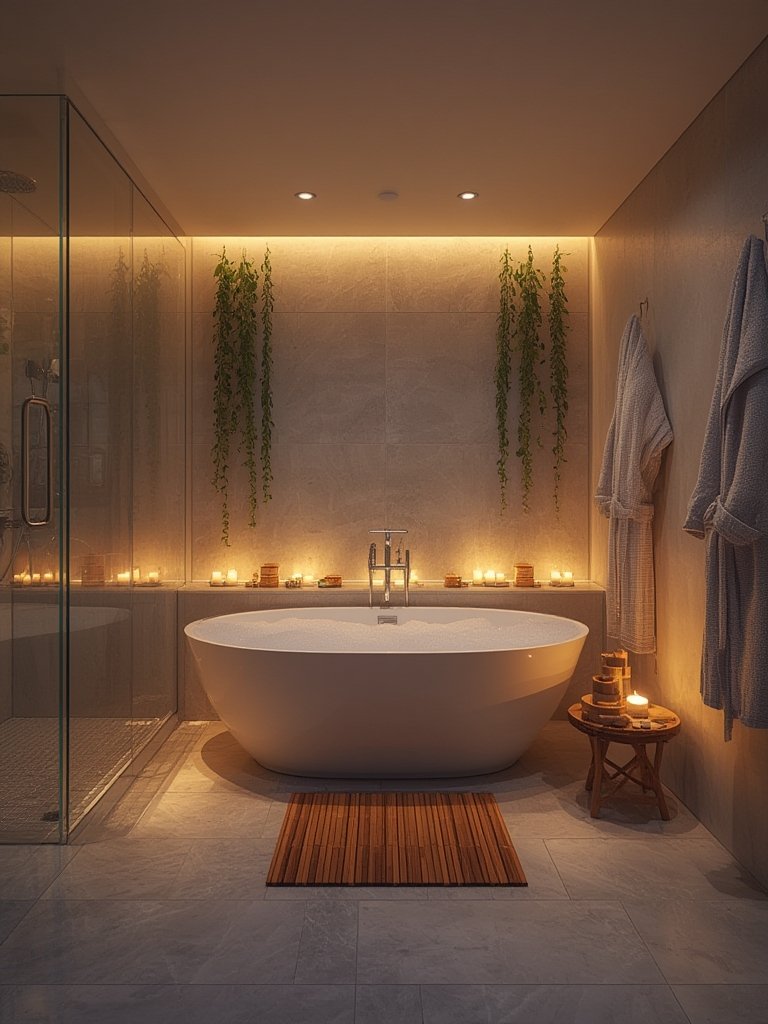
Most high-end spa bathrooms include features like large-format walk-in showers, premium tile, floating vanities, freestanding tubs, and optional steam systems. Homeowners who splurge on ultra-luxury materials often discover diminishing returns—ROI typically drops below 50% as finishes and tech escalate. On the other hand, investing in wellness bathroom upgrades and features that balance daily comfort with technical reliability delivers the best overall value.

Where to Splurge, Where to Save
- SPLURGE: Custom walk-in showers, reliable steam showers (e.g., MrSteam, Steamist), floating vanities, and quality fixtures. Also budget for moisture- and mold-resistant finishes (StepWise tiles by Daltile).
- SAVE: Vanity mirrors, open shelving, non-structural accent lighting, and standard floor warming mats (smart controls optional).
Sample Budget Table (Luxury Spa Bath)
| Package | Estimated Cost | Includes |
|---|---|---|
| Elevated Spa | $30k–$50k | Walk-in shower, freestanding tub, floating vanity, LED lighting, low-flow fixtures |
| Luxe Retreat | $50k–$100k | All from Elevated Spa plus steam shower, high-end stone, smart tech, custom tilework |
| Ultra-Hotel | $100k+ | All from Luxe plus full smart home integration, designer finishes, bespoke lighting, unique materials |
Remodel costs depend heavily on the scope, quality of finishes, and local labor rates. For more on city-based cost adjustments, see our ultimate kitchen and bathroom remodel guide.
Features That Balance Experience and Resale
- Walk-in rain showers (curbless preferred for accessibility)
- Freestanding tubs (choose ergonomic shapes)
- Floating vanities with integrated lighting
- Low-flow toilets/showers (up to 60% water savings!)
- LED lighting (75% less energy than halogen)
These features deliver both wellness and resale value. Energy- and water-efficient fixtures reduce long-term costs and appeal to buyers mindful of green living.
High-Return Wellness Materials (What Most Miss)
- Low-VOC finishes on walls and cabinetry (reduce off-gassing for healthier air)
- Moisture-stable engineered wood (resists humidity swings)
- Certifications for natural stone suppliers (verify non-toxic sealants)
- Antimicrobial porcelain or glass tiles for showers and floors
Most spa-like bathroom design content glosses over these specifications. Be sure to ask your contractor about product certifications and maintenance requirements for every finish. You can also explore more ideas in this guide to functional bathroom upgrades.
Smart Home Integration—Hotel Experience at Home
Spa bathroom systems are rapidly going smart: app- and voice-controlled lighting, towel warmers, heated floors, climate/ventilation, and even shower/steam operating systems. Confirm early with your designer and automation expert which protocols are compatible (Z-Wave, WiFi, Matter, etc.), and always rough-in extra conduit or power circuits during demolition—retrofitting later is much costlier. For tech adoption trends, see these smart spa trends.
Technical Checklist: Steam Shower & Spa System Installation
- Calculate room volume against steam generator sizing (see manufacturer specs, e.g., MrSteam generators).
- Fully sealed shower enclosure, including door and ceiling (no drywall gaps).
- Dedicated GFCI-protected electrical circuits; often requires separate subpanel.
- Moisture-resistant tile, waterproof backer board, and anti-microbial grout.
- Correct placement and height of steam head—never below seat level or near glass.
- Ventilation fan sized to CFM requirements for space; automatic cycling preferable.
- Service access for steam generator and filtration.
- Up-to-date plumbing for anti-scald and drainage protection.
Manufacturer specs are critical—most competitor articles gloss over these details, so insist your builder provides them. For installation assistance, see options from Steamist and your selected vendor.
Downloadable Assets for Homeowners
- Budget Calculator (Download)
- Steam Shower Technical Checklist (Download)
- Maintenance Schedule Template (Download)
- Mood Boards: Elevated/Luxe/Ultra Spa Packages (Download)
If you want more planning tools, be sure to check our home decor and style guide for personalizing these spaces with seasonal flair.
Advanced analysis & common pitfalls
Even the best spa bathroom can fail if technical details or future resale perspectives are overlooked. Here are some of the most frequent issues affluent homeowners report after high-end renovation projects—plus how you can avoid them.
| Pitfall | Why It Happens | How to Prevent |
|---|---|---|
| Over-investing past neighborhood value | High-end finishes/tech that don’t reflect local comps | Budget 5–10% of home value; check similar listings |
| Poor ventilation/humidity issues | Undersized exhaust fans and missing vapor barriers | Specify CFM fan targets; use timer or humidity sensors |
| Inadequate service access for steam generator | Builder boxes in unit or skips easy maintenance panel | Insist on accessible service panel per manufacturer specs |
| Hard-to-maintain finishes | Porous stone, high-gloss tiles, grout stains | Use antimicrobial, sealed materials; opt for larger tiles |
| Disappointing steam system performance | Underpowered generator, leaky enclosure, or poor controls | Match generator to room; seal enclosure fully; test after install |
Remember: most search results and even designer blogs do not mention reported user regrets or technical flaws—this is a critical content gap. For specific maintenance and durability tips, see the technical checklists above or our cost and value bathroom guide.
Maintenance & Warranty Essentials
- Plan for annual descaling of steam generators; review warranty requirements with your installer.
- Use moisture sensors and inspect grout/sealant twice yearly.
- Set realistic expectations: even with top brands, humidity management is ongoing work—not set and forget.
To avoid ill-fated decisions or product failure, always request manufacturer install guides at the proposal stage and review user experience posts from trusted sources.
Final thoughts & next steps
Designing your dream spa bathroom is equal parts inspiration, technical strategy, and market discipline. By focusing your spend on features that deliver daily wellness and proven buyer appeal—like large walk-in showers, energy-efficient lighting, floating vanities, and reliably installed steam showers—you maximize both luxury and long-term value. Don’t fall for article gaps: demand specs for every major system, prioritize sustainable materials, and use a clear decision framework to balance your personal retreat with future resale. Start with our downloadable checklists and compare finish selections using our mood boards, and your spa bathroom renovation will perform for years to come.
Ready for a lasting upgrade? Use our free download tools and check out our remodel planning resources or book a consult with your local spa bath specialist today.
FAQ: Spa bathroom renovations
What is the best way to budget for a spa bathroom renovation?
Experts recommend allocating 5–10% of your overall home value to a primary bathroom renovation. Most luxury spa bathroom projects land between $30,000 and $75,000, with ultra-luxury exceeding $100,000 depending on materials and features.
Where can I safely save money on a spa-like bathroom design?
Save by choosing quality but less exotic materials for flooring and accent tile, using standard plumbing fixtures with premium finishes, and skipping full smart-home automation for lights/fan if budget is tight. Invest where you’ll use it most—like the shower, bathtub, and reliable ventilation.
What technical requirements should I know before adding a steam shower?
Always check your steam shower’s generator sizing (matched to room volume), require a fully sealed enclosure, GFCI electrical, vapor barriers, antimicrobial tile/grout, and easy service panel access. Manufacturer installation manuals are non-negotiable.
How do sustainable and wellness materials add value to my bathroom?
Low-VOC, non-toxic, and moisture-stable finishes improve indoor air quality, reduce maintenance, and appeal to wellness-minded buyers—making them smart long-term choices for both livability and resale.
Are there any regrets homeowners report after doing a luxury spa bathroom renovation?
Yes—common regrets include over-investing past local values, poor humidity control, inaccessible maintenance points (especially for steam systems), or choosing high-maintenance finishes. Plan ahead and demand technical clarity from your contractor to avoid these issues.