


The promise of Biometric Pet Harnesses is proactive health monitoring, but navigating the marketing claims to find a genuinely effective device requires a critical eye. This guide cuts through the hype to provide a transparent, buyer focused look at what today’s smart harnesses can—and cannot—do for your pet’s well being.
Key Takeaways
- Current biometric pet harnesses excel at tracking activity and sleep but often lack verifiable, medical grade accuracy for specific vital signs like respiration or ECG.
- Focus on essential specifications like sensor comfort, realistic battery life in active mode, and durable, waterproof materials, as manufacturers rarely publish quantitative performance benchmarks.
- Data privacy is a critical, overlooked factor; you must question how your pet’s sensitive health information is stored, used, and protected before purchasing any device.
- The Rise of Smart Pet Care: What are Biometric Pet Harnesses?
- What Can These Harnesses Really Track? Navigating Vital Sign Capabilities
- The Missing Pieces: Advanced Insights Competitors Overlook
- Essential Specifications: What to Prioritize in Your Biometric Harness
- Bridging the Gap: Integrating Health Data with Veterinary Care
- Protecting Your Pet’s Data: Security and Privacy Considerations
- Making an Informed Choice: Beyond the Marketing Hype
- Frequently Asked Questions
The Rise of Smart Pet Care: What are Biometric Pet Harnesses?
Biometric Pet Harnesses represent the next evolution in pet wearable technology, moving beyond simple GPS tracking to function as a smart vital sign pet monitor. Positioned within a booming market, these devices aim to collect and analyze health data to provide early warnings and deeper insights into a pet’s overall wellness. The global pet wearable market is projected to grow at a CAGR between 10-16% through 2027, a clear indicator of the rising demand for tech-driven pet care solutions. While the niche is still emerging, its goal is clear: to transform reactive vet visits into a proactive health management partnership between owners, technology, and veterinarians.
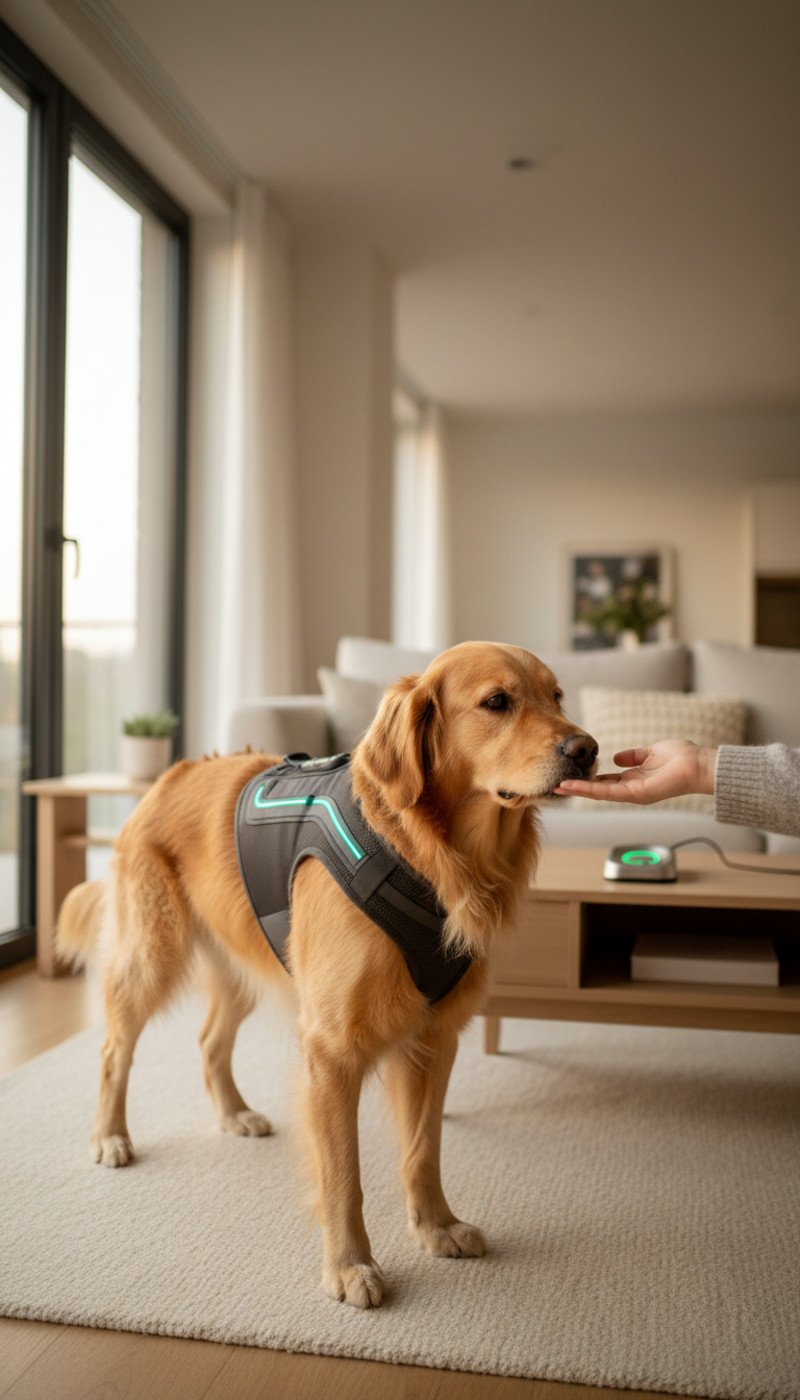
Unlike basic activity trackers, these advanced harnesses are designed to continuously monitor physiological indicators. The concept is powerful, offering peace of mind to tech savvy pet parents who want to stay ahead of potential health issues. However, the technology is nascent, and the market is filled with ambitious claims that often outpace the current reality of what can be reliably measured on a furry, active animal.
What Can These Harnesses Really Track? Navigating Vital Sign Capabilities
A primary source of confusion for buyers is understanding which vital signs a harness can genuinely track with accuracy. Most devices reliably monitor activity levels, sleep patterns, and general behavior. But when it comes to specific medical metrics, the marketing can become vague. While you might hope for precise data on respiration rate, core body temperature, or even an ECG, the reality is that current research shows these are not consistently or reliably measured by commercially available harnesses. The technical challenge of getting a clean signal through fur and movement is significant.
The term “biometric data analysis” is often used as a catch-all, but it rarely translates to specific, verifiable metrics. A heart rate tracking dog vest, for example, might provide a beats-per-minute (BPM) reading, but without published accuracy benchmarks (e.g., +/- 5 BPM), this data should be seen as a directional trend rather than a diagnostic tool. As a discerning buyer, it’s crucial to manage expectations and scrutinize claims that lack supporting data. The potential of these devices is immense, but we’re still in the early stages of seeing true predictive pet wearables become a mainstream reality.
Ultimately, the most reliable data from today’s harnesses revolves around activity, rest, and location. This information is still incredibly valuable for identifying lethargy, restlessness, or changes in routine that could signal an underlying issue. Think of the device less as a medical monitor and more as a sophisticated wellness journal.
The Missing Pieces: Advanced Insights Competitors Overlook
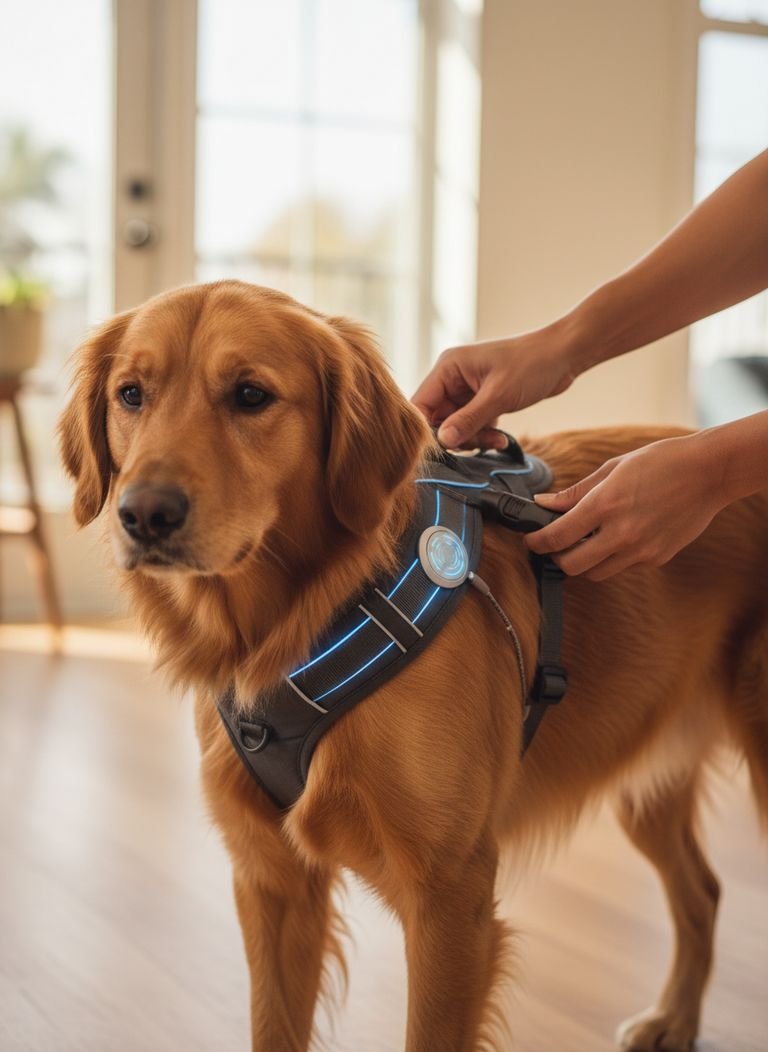
Many reviews and product comparisons focus on features like GPS and battery life but consistently miss the more nuanced aspects that determine a harness’s true value. An AI health harness is only as smart as the context it’s given. Here are three critical considerations often overlooked:
1. Breed-Specific Data Interpretation
A resting heart rate that is normal for a Great Dane could be a sign of distress for a Chihuahua. Yet, market reports and product pages rarely discuss whether the device’s algorithms account for breed, age, and weight. Without this personalization, alerts can be misleading. A true smart device should learn your pet’s individual baseline and compare it against breed-specific data, a feature that separates a basic tracker from a genuine health tool. Similar to how a smart pet crate might tailor its climate control, a harness should tailor its health analysis.
2. Long-Term Health Trend Analysis
The real power of biometric monitoring lies in long-term data. A single high heart rate reading might be meaningless, but a gradual upward trend over several weeks could be an early indicator of a developing condition. Competitor articles often fail to scrutinize the app’s ability to visualize and analyze these trends. Can you easily compare this month’s average activity level to last year’s? Does the app flag subtle, persistent changes? These are the features that provide actionable insights, not just raw data.
3. Transparency on Limitations and False Positives
No sensor is perfect. Movement, poor fit, and environmental factors can all lead to inaccurate readings and false positives for real-time pet health alerts. Honest manufacturers should be transparent about these limitations. However, this topic is almost entirely absent from market analysis. As a buyer, you should ask about the potential for false alerts and whether the system has safeguards, such as requiring multiple abnormal readings before triggering a critical notification. This manages “alert fatigue” and ensures that when you do get a warning, you take it seriously.
Essential Specifications: What to Prioritize in Your Biometric Harness
In a market lacking standardized performance benchmarks, you must become an expert in evaluating the fundamentals. While manufacturers are slow to provide quantitative details, you can focus on these essential specifications to make a smarter choice.
| Specification | What to Look For | Why It Matters |
|---|---|---|
| Sensor Type & Placement | Look for harnesses with sensors (e.g., ECG electrodes, PPG sensors) integrated into soft, flexible materials that make direct, gentle contact with the pet’s skin, typically around the chest. | Proper placement and contact are non-negotiable for even basic data quality. Hard, bulky sensors can cause chafing and discomfort, leading to your pet rejecting the device. |
| Battery Life (Active Mode) | Demand clarity on battery life during “active” monitoring versus “standby.” A realistic expectation for continuous tracking is 18-36 hours, not the “days” often advertised for standby mode. | The most valuable data is collected continuously. A battery that only lasts a few hours in active mode is impractical for 24/7 health monitoring. |
| Waterproof Rating | Look for a specific IP (Ingress Protection) rating, such as IP67 or IP68. “Water-resistant” is a vague marketing term. | An IP67 rating ensures the device is protected from dust and can be submerged in up to 1 meter of water for 30 minutes, making it durable enough for rain, puddles, and swimming. |
| Material & Comfort | Prioritize lightweight, breathable, and adjustable materials. The harness should fit snugly without restricting movement or causing hot spots. | If the harness isn’t comfortable, your pet won’t wear it. This is the single biggest point of failure for any wearable device. Good design is as important as good technology. |
The integration of technology into everyday items, from a smart home voice control system to a pet harness, requires a focus on user experience. For a pet, that experience is all about comfort and fit. An AI health harness with groundbreaking sensors is useless if your dog refuses to wear it after the first day.
Bridging the Gap: Integrating Health Data with Veterinary Care
The ultimate vision for any smart vital sign pet monitor is to create a seamless data bridge to your veterinarian. Imagine your vet’s office receiving real-time pet health alerts or being able to review weeks of heart rate and activity data to spot trends before an annual checkup. This level of proactive, data-driven care could revolutionize pet health.
Unfortunately, the industry is not there yet. Current research reveals no established protocols or widespread integration between commercial biometric harnesses and veterinary practice management software. The data collected by these devices largely remains in a closed ecosystem, accessible only to the pet owner through a proprietary app. Even something as simple as a microbiome pet testing kit often provides a more direct path for sharing results with a vet.
However, this shouldn’t stop you from asking the right questions. When considering a harness, look for data export features. Can you download the raw data as a CSV or generate a PDF report to share with your vet? A manufacturer that prioritizes data portability is one that understands the importance of the veterinary partnership, even if direct integration isn’t yet possible. This simple feature can turn your device from a personal gadget into a valuable clinical tool.
Protecting Your Pet’s Data: Security and Privacy Considerations
As we equip our pets with smart devices, we must confront a critical and often-ignored issue: data privacy. A biometric pet harness collects sensitive information about your pet’s health, location, and daily routines. This data, in aggregate, can be incredibly valuable to third parties, from pet insurance companies to marketers.
The problem is a profound lack of transparency. Current market research contains no information on the specific data security protocols, privacy policies, or data sharing practices of leading manufacturers. This is a significant gap that tech-savvy pet parents must address directly. Before investing in an AI health harness, you have a right to know:
- Where is the data stored? Is it on servers in your country, subject to its privacy laws?
- Is the data encrypted? Both during transmission (from the harness to your phone) and at rest (on the company’s servers).
- Who owns the data? Do you own your pet’s data, or do you grant the company a broad license to use it?
- What is the data sharing policy? Does the company sell or share anonymized or aggregated data with third parties? If so, who are they?
Asking these questions sends a clear message to the industry that privacy matters. Just as you would scrutinize the security of a smart deadbolt lock for your home, you should demand the same level of security for your pet’s personal health information.

Making an Informed Choice: Beyond the Marketing Hype
The market for biometric pet harnesses is filled with exciting potential, but it currently operates in a fog of vague claims and missing data. As an informed buyer, your greatest tool is a healthy dose of skepticism. The technology holds the promise to deepen the bond with our pets and empower us to be more proactive about their health, but its effectiveness hinges on cutting through the noise.
Instead of being swayed by promises of “AI-powered insights,” focus on the fundamentals: a comfortable and durable design, a realistic battery life, a user-friendly app, and a transparent privacy policy. A simple, reliable device that your pet will actually wear is far more valuable than an advanced one that over-promises and under-delivers. By asking detailed questions and prioritizing verifiable features, you can find a smart vital sign pet monitor that provides genuine peace of mind.
The ultimate goal is to find a tool that complements, rather than replaces, regular veterinary care. By making a critical and informed choice, you can invest in one of the few Biometric Pet Harnesses that truly serves as a valuable partner in your pet’s long-term health journey.
Frequently Asked Questions
Are biometric pet harnesses accurate enough to replace vet visits?
No. Currently, no commercially available biometric harness provides medical-grade data. They are best used as wellness monitoring tools to spot trends and changes in behavior, activity, or resting heart rate that may warrant a conversation with your veterinarian. They are a supplement to, not a replacement for, professional veterinary care.
What is the most important feature to look for in a heart rate tracking dog vest?
Beyond the sensor itself, the most critical feature is the fit and comfort of the harness. The sensors must maintain consistent, gentle contact with the dog’s skin to get a reading. A poorly fitting, uncomfortable harness will produce unreliable data and your dog will likely resist wearing it, making the technology useless.
How much do high-quality biometric pet harnesses typically cost?
While specific pricing data is scarce, you can expect high-quality harnesses with genuine biometric sensors and a well-developed app to be a premium product, likely costing between $150 to $300, with some potentially requiring an ongoing subscription for data analysis and storage.
Can these harnesses track a pet’s location in real-time?
Yes, many biometric harnesses integrate GPS tracking as a core feature. This allows for real-time location tracking and the ability to set up “safe zones” that send you an alert if your pet leaves a designated area. However, constant GPS use significantly impacts battery life.
Is my pet’s health data secure with these devices?
Data security is a major concern with limited transparency from manufacturers. Before buying, it is essential to review the company’s privacy policy. You should look for information on data encryption, storage location, and whether they share or sell user data with third parties. If this information is not clear, proceed with caution.