
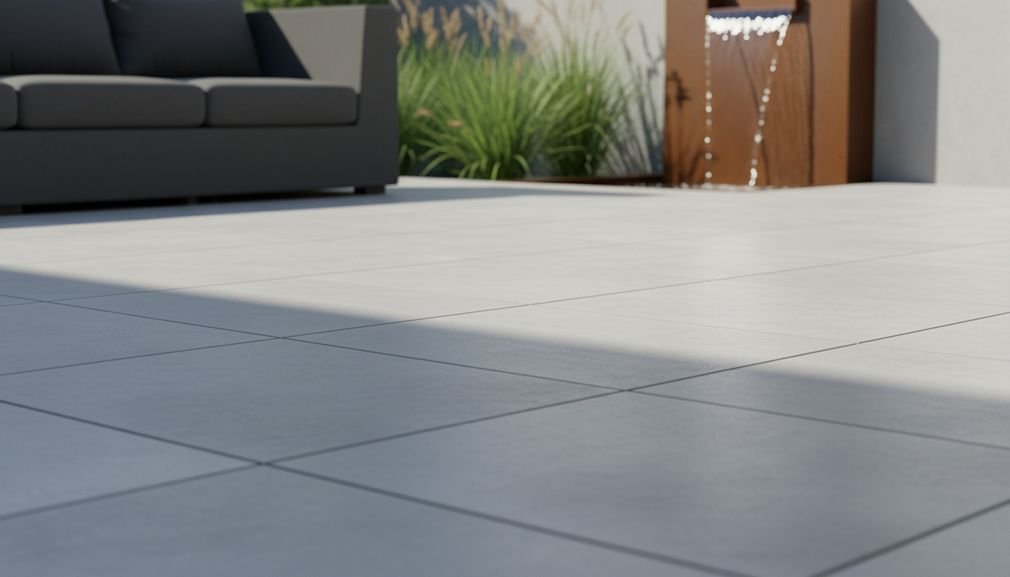
Choosing the right Porcelain Garden Paving is a critical decision that balances aesthetics, durability, and long term value for any outdoor project. As a premium, high performance material, it offers a sophisticated and modern alternative to traditional stone or concrete, but understanding its true capabilities requires a closer look at the details beyond the marketing claims.
Key Takeaways
- Porcelain garden paving is a rapidly growing market segment, valued at USD 1,200 million in 2024, prized for its low porosity, which contributes to stain and frost resistance.
- Verifying performance claims is crucial. Always request manufacturer specific technical data sheets for anti slip ratings (like PTV or R ratings) as independent comparative data is not readily available.
- Professional installation is non negotiable for longevity. The durability of porcelain paving is entirely dependent on a correctly prepared sub base, proper bedding, and appropriate jointing methods.
- Porcelain Garden Paving: A Modern Choice for Enduring Outdoor Elegance
- Why Porcelain is Gaining Ground: Market Growth and Inherent Advantages
- Demystifying Anti-Slip Properties for Safe Outdoor Spaces
- The Foundation of Durability: Critical Installation Requirements for Porcelain Paving
- Achieving True Low-Maintenance: Care and Common Issue Management for Porcelain
- The Investment Value: Understanding the Cost of Porcelain Garden Paving
- Frequently Asked Questions
Porcelain Garden Paving: A Modern Choice for Enduring Outdoor Elegance
Porcelain garden paving, often referred to as outdoor vitrified tiles, represents a significant advancement in materials for contemporary outdoor living. Engineered for performance, these tiles are manufactured from fine clays and fired at extremely high temperatures, creating a dense, hard wearing, and non porous surface. This process makes them an ideal choice for patios, walkways, and pool surrounds, offering a sleek, uniform appearance that is difficult to achieve with natural materials. Its rising popularity is not just about looks; it is a direct response to consumer demand for high performance, low maintenance solutions that stand the test of time. The market reflects this trend, with the porcelain segment of outdoor paving valued at an impressive USD 1,200 million in 2024 and projected to climb to USD 1,800 million by 2035. This material forms the backbone of many modern landscaping services and backyard ideas, providing a clean canvas for everything from an outdoor kitchen to a serene lounge area.
Why Porcelain is Gaining Ground: Market Growth and Inherent Advantages
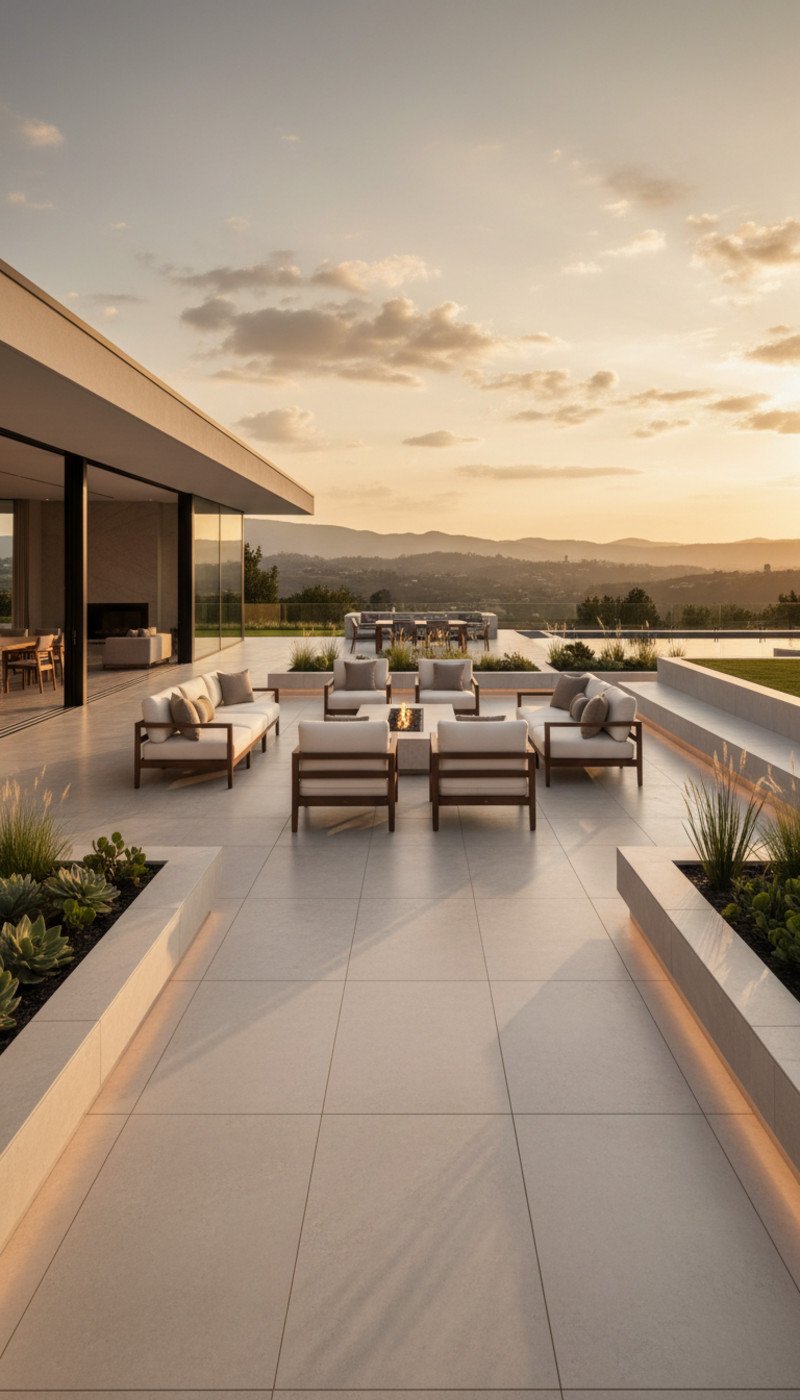
The shift towards porcelain in outdoor landscaping is underpinned by compelling market growth and the material’s inherent qualities. While the broader outdoor paving slab market is projected to grow at a steady 3.5% CAGR, the porcelain slab segment is expanding at a much faster rate of 6.5% CAGR. This highlights a clear preference among discerning homeowners and designers. A key driver is its exceptionally low porosity (typically a water absorption rate of less than 0.5%), which gives it a distinct advantage over more porous materials like sandstone or concrete.
This low absorption rate means porcelain is highly resistant to staining from spills, leaf tannins, and other organic matter. It also makes the surface less hospitable to moss and algae growth, a common frustration with other paving types, positioning it as a top choice for those seeking moss-resistant patio slabs. Furthermore, its dense structure provides excellent frost resistance, preventing cracking and spalling in harsh winter climates. In 2024, North America leads the outdoor paving market with a value of USD 2,250 million, and Europe holds a 32.15% share of the global porcelain market, indicating widespread adoption across key regions as noted by market analysts.
Demystifying Anti-Slip Properties for Safe Outdoor Spaces
Safety is a primary concern for any outdoor surface, especially in areas exposed to rain or near swimming pools. While porcelain garden paving is often marketed as having excellent anti slip properties, it is crucial for consumers to look past generic claims and seek verifiable data. Reputable manufacturers engineer their outdoor vitrified tiles with textured surfaces to provide grip underfoot. These textures are not merely aesthetic; they are designed to achieve specific safety ratings.
The two most common ratings to look for are the ‘R’ rating (Ramp Test) and the Pendulum Test Value (PTV). An ‘R’ rating of R11 or higher is generally recommended for external, uncovered areas. A PTV score of 36+ in wet conditions indicates a low slip risk. However, our research found no independent, long term studies comparing the anti slip performance of porcelain directly against natural stone or concrete over time. This makes it imperative that you, as the buyer, request the official product data sheet for the specific tile you are considering. Do not rely on a brochure’s general statements. Insist on seeing the certified PTV or R rating for that exact product to ensure your outdoor lounge area is as safe as it is stylish.
The Foundation of Durability: Critical Installation Requirements for Porcelain Paving
The promise of high durability and a long lifespan for porcelain paving is only realized through meticulous and professional installation. Unlike forgiving materials, porcelain’s rigidity means it will not tolerate an imperfect foundation. Any movement or instability in the sub base will inevitably lead to cracked tiles and failed grout joints. While specific technical details on bedding materials and jointing compounds were not available in market wide research, the principles of a robust installation are universally accepted by industry professionals.
A successful installation involves three critical stages:
- Sub-Base Preparation: This is the most crucial step. A deep, well compacted sub base of crushed stone (like MOT Type 1) is essential to provide a stable, load bearing foundation that will not shift or sink over time. The depth of this base will depend on ground conditions and expected usage (e.g., a driveway requires a deeper base than a garden path). Proper drainage must be incorporated at this stage to prevent water logging, a key component of effective rainscaping systems.
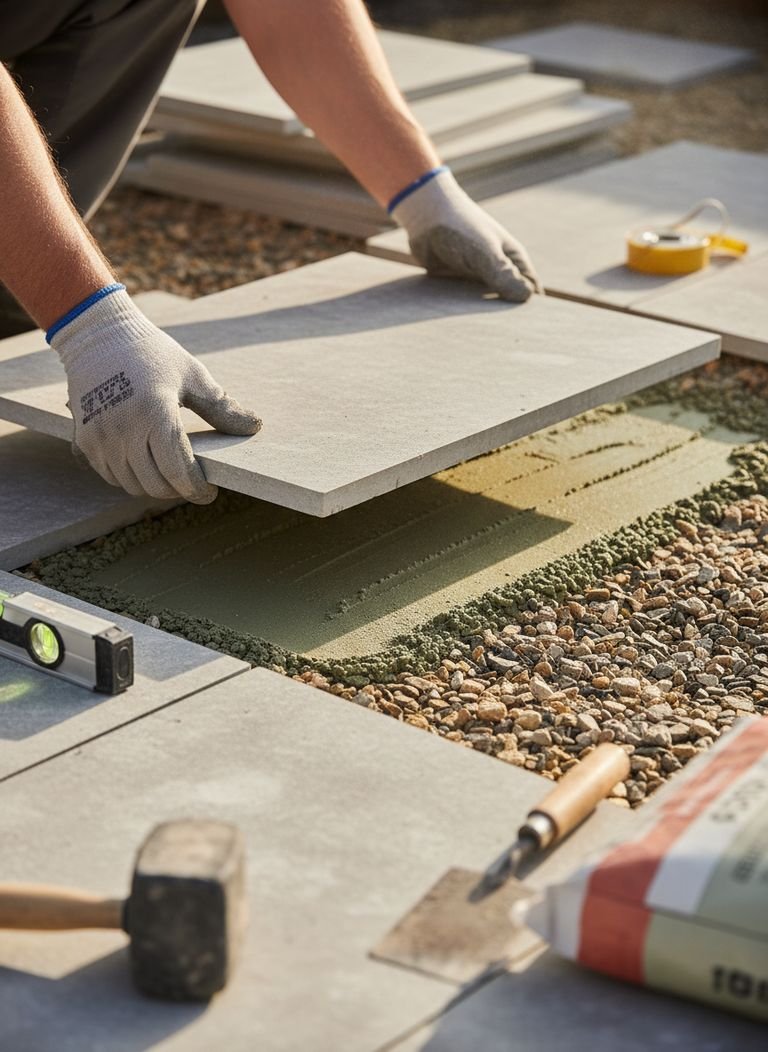
- Bedding Mortar: Porcelain tiles must be laid on a full, solid bed of mortar. The “dot and dab” method, where dabs of mortar are placed on the corners, must be avoided at all costs. This creates voids under the tiles that collect water, which can freeze and expand, and creates weak points that can easily crack under pressure. A strong cement based primer should also be applied to the back of each tile to ensure a tenacious bond with the mortar bed.
- Jointing: The gaps between the tiles should be filled with a high quality, weather resistant jointing compound. For a truly low maintenance and moss resistant finish, consider a two part epoxy or resin based grout, which sets hard, is impermeable, and prevents weed growth far more effectively than traditional sand and cement mortars.
Achieving True Low-Maintenance: Care and Common Issue Management for Porcelain
One of the strongest selling points of porcelain garden paving is its reputation for being low maintenance. Its dense, non porous surface inherently resists staining, moss, and algae. For the most part, routine cleaning with a stiff brush and water, or a light pressure wash, is all that is needed to keep it looking pristine. However, “low maintenance” does not mean “no maintenance,” and certain issues can still arise if not managed properly.
While our research did not uncover specific manufacturer advice for troubleshooting issues like rust stains or efflorescence (a white, powdery deposit), we can rely on general best practices for vitrified materials.
General Maintenance and Troubleshooting:
- Routine Cleaning: Regularly sweep away leaves and debris to prevent organic stains from setting. A periodic wash with a pH neutral cleaner will lift most dirt.
- Stain Management: For stubborn stains like rust from metal furniture or leaf tannins, a specialist porcelain tile cleaner may be required. Always test any cleaning product on an inconspicuous area first.
- Preventing Efflorescence: This issue typically stems from soluble salts migrating from the cement bed or sub base. It is often a sign of excessive moisture trapped beneath the tiles, reinforcing the importance of a correct installation with proper drainage. If it appears, it can usually be removed with a stiff brush and specialist efflorescence cleaner.
- Chip Repair: While incredibly tough, a sharp impact from a heavy object can chip a porcelain paver. Color matched epoxy repair kits are available that can effectively fill and disguise minor damage.
Ultimately, the best way to ensure a low maintenance experience is to start with a flawless installation. A properly laid patio will prevent the majority of long term issues. It is also an important consideration for ember-resistant hardscaping, as a solid, well maintained surface reduces areas where embers can collect.
The Investment Value: Understanding the Cost of Porcelain Garden Paving
When considering porcelain garden paving, it is essential to view it as a long term investment rather than just a material purchase. While market research does not provide a standardized average installed cost per square foot for 2024, it is widely acknowledged that the initial outlay for porcelain is higher than for many concrete or natural stone options. This cost is a function of the sophisticated manufacturing process and the quality of the raw materials.
However, the true value proposition emerges over the lifespan of the patio or walkway. The higher upfront cost is offset by significantly lower long term maintenance expenses. You will spend less time and money on intensive cleaning, sealing, and weeding that are common with more porous materials. A high quality porcelain installation will not fade or degrade, retaining its color and finish for decades. This longevity and enduring aesthetic appeal not only enhances your enjoyment of the space but also adds tangible value to your property. When you factor in the reduced need for replacement and repair, a luxury porcelain walkway or patio often proves to be the more cost effective choice over time. A report on the outdoor paving market from Wise Guy Reports supports the material’s growing financial footprint in the sector.
Conclusion: Making an Informed Decision
Porcelain garden paving offers a compelling combination of modern aesthetics, exceptional durability, and low maintenance living. Its resistance to stains, frost, and fading makes it a superior choice for homeowners and designers seeking a long lasting, high performance surface. However, its benefits are only fully unlocked through an understanding of its specific requirements. It is critical to verify anti slip ratings directly from manufacturer data sheets and to invest in a professional installation that prioritizes a robust sub base and correct laying techniques.
By focusing on these foundational elements, you can ensure your project delivers on its promise of enduring elegance. The upfront investment in quality materials and expert labor pays dividends in longevity and reduced upkeep, making Porcelain Garden Paving a smart, valuable addition to any modern home. Ready to transform your outdoor space? Contact a qualified landscape professional today to discuss your project.
Frequently Asked Questions
Is porcelain paving slippery when wet?
It can be, depending on the surface finish. It is essential to choose outdoor-rated porcelain tiles with a textured, anti-slip surface. Always verify the product’s specific slip rating (an R-rating of R11 or higher is recommended for outdoor use) by checking its technical data sheet before purchasing.
Does porcelain paving get hot in the sun?
Yes, like any paving material, porcelain can get hot in direct sunlight. Lighter colors will reflect more heat and stay cooler to the touch than darker shades. If the area is in full sun and will be used for barefoot traffic, choosing a lighter-colored tile is a practical consideration.
Can I install porcelain garden paving myself?
While possible for an experienced DIYer, it is not recommended. Porcelain is a rigid, unforgiving material that requires a perfectly level and stable sub-base. Installation errors, such as an inadequate foundation or improper bonding, can lead to cracked tiles and costly repairs. Professional installation is strongly advised for a lasting result.
How does porcelain paving compare to natural stone?
Porcelain is a manufactured product, offering greater consistency in color and size, and is virtually non-porous, making it highly resistant to staining and frost. Natural stone offers unique, one-of-a-kind variations but is typically more porous, requiring regular sealing to protect it from stains and weathering.
What is the expected lifespan of porcelain garden paving?
When installed correctly, porcelain paving can last for decades. Its color is fired into the body of the tile, so it will not fade over time. The material itself is incredibly hard-wearing and resistant to scratches, frost, and chemical damage. The longevity is almost entirely dependent on the quality of the sub-base and installation.