

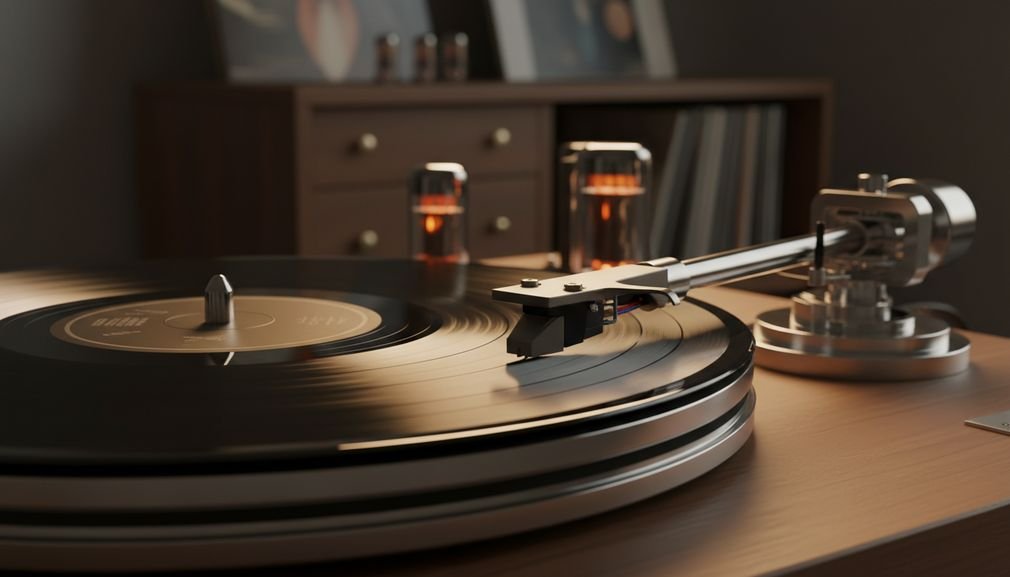
Creating dedicated Analog Listening Rooms is an art form where the environment is as critical as the high fidelity equipment it houses. For discerning audiophiles, the journey doesn’t end with acquiring the perfect turntable or amplifier; it extends to crafting a sanctuary that enhances both sonic performance and aesthetic enjoyment. This guide provides a strategic framework for furnishing your space, acknowledging the market’s scarcity of specific data and empowering you to make informed decisions that honor your investment in pure, unfiltered sound.
Key Takeaways
- Acknowledge that while specific furnishing budget data is rare, your room’s setup should be proportional to your significant investment in audio hardware.
- Prioritize purpose built Hi-Fi furniture to address critical needs like vibration isolation, component ventilation, and cable management that generic furniture overlooks.
- Focus on a combination of functional vinyl storage, strategic acoustic treatments, and personal aesthetic choices to create a cohesive and high performing listening sanctuary.
- The Foundational Investment: Understanding Your Analog Listening Room Budget
- Beyond the Electronics: Why Purpose Built Hi-Fi Furniture is Essential
- Curating Your Collection: The Art and Science of Vinyl Record Storage Credenzas
- Crafting Sonic Excellence: The Role of Acoustic Wood Paneling and Room Treatment
- Designing Your Sanctuary: Aesthetic and Functional Considerations
- Final Thoughts: Assembling Your Sonic Sanctuary
- Frequently Asked Questions
The Foundational Investment: Understanding Your Analog Listening Room Budget
Pinpointing an “average” budget for furnishing analog listening rooms is challenging due to the highly personal nature of this pursuit. However, we can establish a logical starting point by looking at the cost of the audio equipment itself. Your investment in the room should be a considered extension of your investment in the gear. When a quality system represents a significant financial commitment, the environment supporting it deserves a proportional budget to protect and optimize its performance.
According to industry analysis, even a basic audiophile setup can start around $2,500, with mid tier systems easily reaching $7,500 or more, and this is before accounting for any room furnishings or treatments. As noted by Future Audiophile, a system might include a PS Audio Strata MK2 amplifier ($3,499) and SVS Prime Pinnacle speakers ($2,000). This $5,500+ investment in electronics alone underscores the necessity of moving beyond makeshift solutions. A practical approach is to allocate an additional 15% to 30% of your hardware budget for furniture, storage, and acoustic treatments. This ensures your system is not just placed in a room, but integrated into an environment designed for peak performance.
Beyond the Electronics: Why Purpose Built Hi-Fi Furniture is Essential
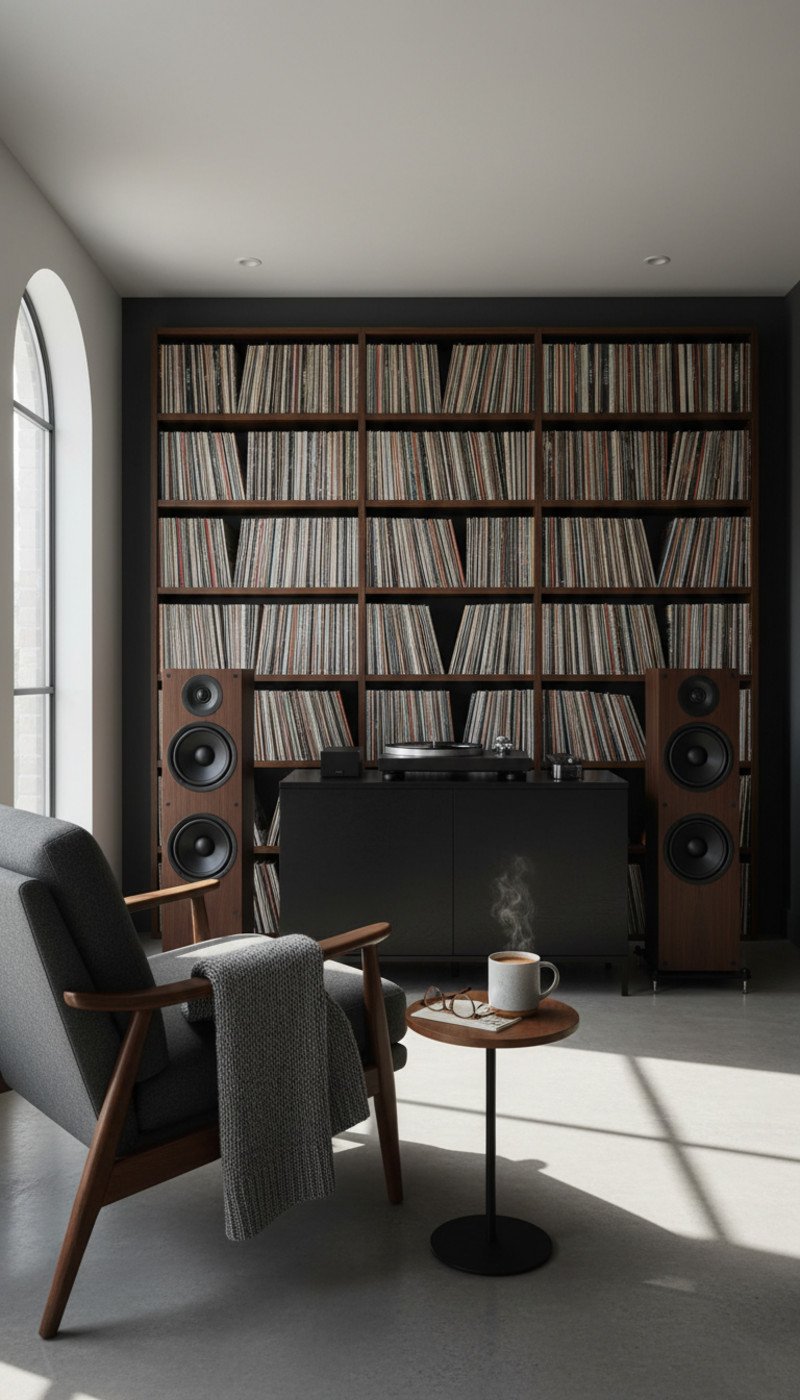
Using a standard console table or entertainment center for thousands of dollars in sensitive audio equipment is a common but critical mistake. Generic furniture fails to address the unique demands of high fidelity components, making specialized Hi Fi furniture setups a non negotiable part of any serious listening room. The core functions of this furniture go far beyond simple storage; they are integral to the system’s overall performance and longevity.
Three primary considerations separate dedicated audio furniture from the rest: vibration isolation, ventilation, and cable management. Turntables are exquisitely sensitive to micro vibrations, which can be transmitted through the floor and furniture, muddying the sound. Purpose built racks use dense materials and isolation feet to dampen these vibrations. Amplifiers, especially Class A models, generate significant heat that can shorten their lifespan if not properly dissipated. Audio racks provide the necessary open air shelving or integrated ventilation to keep components cool. Finally, a tangle of cables can introduce signal interference and looks untidy. Proper Hi Fi furniture incorporates channels and routing options to keep power and signal cables separate and organized.
The fact that our research found no specific forum discussions detailing user frustrations with these issues suggests a significant gap. It indicates that audiophiles often resign themselves to these problems or that manufacturers are not adequately addressing these core pain points in their marketing. When shopping, you must proactively seek out these functional features rather than assuming they are standard. This is a key part of creating effective and functional home decor that serves a technical purpose.
Curating Your Collection: The Art and Science of Vinyl Record Storage Credenzas
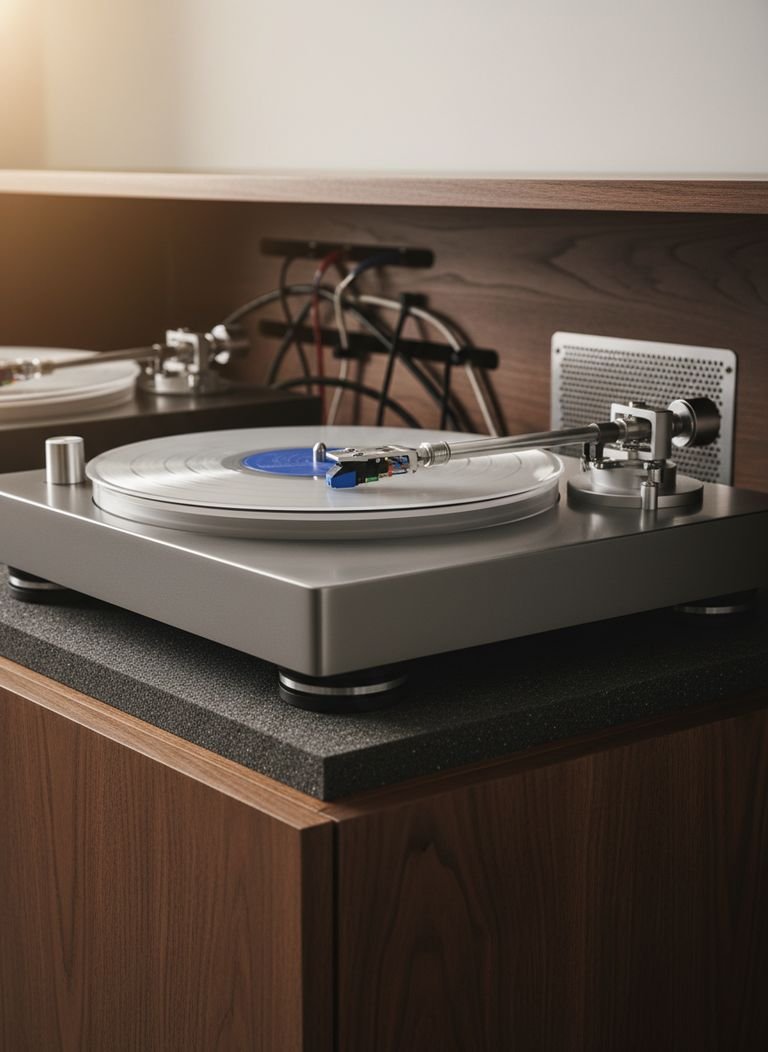
For the dedicated collector, a vinyl record storage credenza is more than just shelving; it is the library and centerpiece of the listening room. Proper storage is crucial for preserving your collection. Records should always be stored vertically to prevent warping, with just enough pressure to keep them upright without being packed too tightly, which can cause ring wear on the album jackets. A well designed credenza provides the correct structural support and dimensions for this purpose.
The ideal credenza seamlessly integrates with your audio setup, often providing a stable surface for the turntable while housing other components below. Look for models with strong internal dividers to keep records upright and organized. Capacity is a major factor; while our research found no specific cost data for units holding up to 500 records, you should plan for future collection growth. A modular approach, allowing you to add matching units over time, can be a wise investment. The principles of effective kitchen storage solutions, like accessibility and organization, apply here as well. You want to be able to easily flip through and find the album you’re looking for without struggle.
Beyond pure function, the credenza is a significant aesthetic element. Materials like solid walnut, oak, or birch not only offer durability and mass but also add warmth and character to the space. Details like integrated lighting, soft close drawers for accessories, and of course, cable management ports, elevate a simple storage unit into a piece of high performance furniture. Look for designs that echo the style of your audio gear, whether it’s vintage mid century or modern minimalist. Pieces that incorporate textured elements, like the popular fluted wood cabinets, can add a sophisticated visual touch.
Crafting Sonic Excellence: The Role of Acoustic Wood Paneling and Room Treatment
You can have the world’s best audio system, but it will sound mediocre in a room with poor acoustics. Hard, flat surfaces like drywall, glass, and hardwood floors create reflections that can make music sound harsh, bright, and muddled. The goal of room treatment is to control these reflections, creating a balanced and clear soundstage. While comprehensive data on common acoustic pitfalls in DIY rooms is scarce, the fundamental principles of absorption and diffusion are well established.
Acoustic treatment is a game of managing first reflection points—the spots on the side walls, ceiling, and floor where sound from your speakers bounces before reaching your ears. You can find these points by sitting in your listening chair and having a friend move a mirror along the walls; wherever you can see the speaker driver is a first reflection point. Placing absorptive panels in these locations will tame harsh high frequencies and improve imaging.
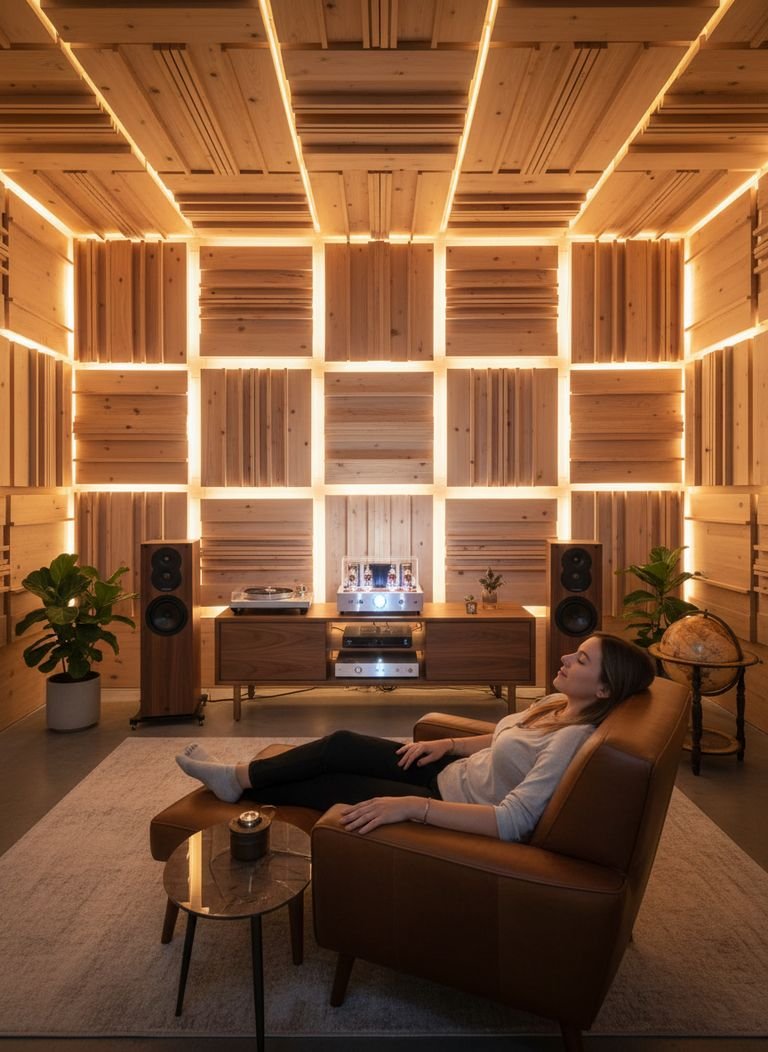
Bass frequencies are non directional and tend to build up in the corners of a room, creating a “boomy” or muddy sound. Bass traps, which are large absorptive panels designed specifically for low frequencies, are essential for tightening up the low end and should be placed in the corners of the room. A combination of absorption and diffusion (which scatters sound waves rather than absorbing them) is often ideal. Acoustic wood paneling can serve as an excellent diffuser, breaking up sound waves to create a more spacious and live feeling without deadening the room’s energy. As one source rightly notes, the “space pairing with gear” is critical, a concept that Steve Huff Photo highlights as vital to achieving high-end sound. Furniture itself can also act as a diffuser; a bookshelf full of irregularly shaped books and objects can do a great job of breaking up sound waves.
Designing Your Sanctuary: Aesthetic and Functional Considerations
In a market without clearly defined design trends, the aesthetic of your dedicated music den setup is a blank canvas for personal expression. The absence of prevailing styles is not a limitation but an opportunity to create a space that is uniquely yours. Whether your taste leans towards the warm woods and clean lines of a Japandi 2.0 furniture style, the rustic charm of a Modern Tuscan decor, or a stark, industrial minimalism, the key is cohesion and intention.
Functionality must lead the design process. The “listening triangle,” the equilateral triangle formed between the two speakers and your listening chair, is the geometric foundation of your layout. All other furniture placement should support, not interfere with, this critical arrangement. Avoid placing large, reflective objects like glass coffee tables between you and the speakers. Choose a comfortable, supportive listening chair that is not so high backed that it blocks sound from reaching your ears.
While specific trends are not documented, the concept of bespoke, personal spaces is gaining traction. An example cited in our research of a 30 seat HiFi lounge built in a repurposed garage, highlighted by In Sheep’s Clothing HiFi, illustrates this beautifully. It shows a move toward creating immersive experiences rather than just rooms. Think about lighting—it should be warm and dimmable to create an inviting atmosphere. Consider textures—a plush rug not only feels good but also helps absorb floor reflections. Your space should be a sanctuary that invites you to sit down, disconnect from the digital world, and fully engage with your music collection.
Final Thoughts: Assembling Your Sonic Sanctuary
Building one of the great analog listening rooms is a deeply rewarding process that merges technical precision with personal style. While the market may lack specific data on budgets and trends, the core principles remain constant. Prioritize a foundational budget that respects your hardware investment. Insist on purpose built Hi-Fi furniture that provides isolation, ventilation, and organization. Thoughtfully integrate vinyl storage that protects and showcases your collection, and strategically apply acoustic treatments to let your system perform at its absolute best.
Ultimately, the goal is to create a cohesive environment where every element, from the audio rack to the rug, works in concert to serve the music. By focusing on these functional pillars and infusing the space with your own aesthetic, you can transform any room into a true sanctuary for sound. Your investment in high fidelity audio deserves a home that is just as thoughtfully crafted, ensuring countless hours of immersive listening in your perfect Analog Listening Rooms. Contact us today to explore custom furniture solutions for your space.
Frequently Asked Questions
How much should I budget for furnishing my analog listening room?
While there is no fixed rule, a good guideline is to allocate 15% to 30% of your total audio equipment budget towards furniture, storage, and acoustic treatments. This ensures the environment supports and optimizes the performance of your high value gear.
Can I just use a regular bookshelf for my vinyl records?
You can, but it is not ideal. Standard bookshelves like the IKEA Kallax are a popular budget option, but they often lack the depth and structural integrity for a large, heavy collection. Purpose built vinyl storage ensures records are properly supported vertically and provides better ventilation and aesthetic integration.
What is the most important piece of furniture for an analog listening room?
The audio rack or stand is arguably the most critical piece. Its primary function is to provide a stable, vibration resistant platform for your components, especially the turntable. Proper isolation and ventilation provided by a dedicated rack directly impact sound quality and equipment longevity.
Where should I start with acoustic treatment?
Begin by addressing the first reflection points on the side walls and the wall behind your speakers with absorptive panels. The next crucial step is placing bass traps in the corners of the room to control low frequency buildup, which is a common problem in most residential spaces.
Does the listening chair really make a difference?
Yes, significantly. A chair with a high back or large headrest can block sound waves from reaching your ears, distorting the stereo image. Choose a comfortable chair with a low back, or one with an acoustically transparent headrest, positioned at the apex of the listening triangle for the best experience.