

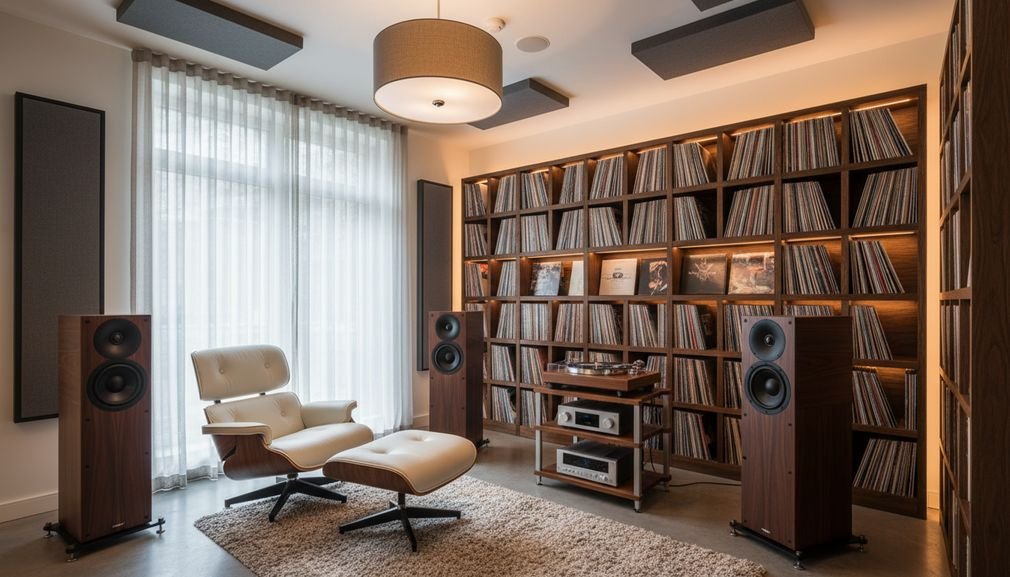
Creating one of the best analog listening rooms is about more than just expensive equipment; it’s about crafting a personal sanctuary dedicated to the pure, immersive experience of sound. In a world saturated with digital noise, a dedicated space for vinyl or tape lets you intentionally disconnect and reconnect with music on a deeper, more tactile level. This guide provides a realistic, step by step framework for transforming any room into a high fidelity haven, balancing acoustic principles with aesthetic design and practical budget considerations.
Key Takeaways
- Analog listening rooms are a direct response to digital fatigue, creating a dedicated space for mindful, high fidelity music consumption away from screens and notifications.
- Effective room design prioritizes acoustics and thoughtful layout over just expensive gear. Simple treatments like absorption panels and bass traps can dramatically improve sound quality in a standard room.
- Strategic budgeting is key. Prioritize spending on speakers and acoustic treatment first, as they provide the most significant impact on the listening experience, before upgrading other components.
- The Analog Renaissance: Why Dedicated Listening Rooms are More Popular Than Ever
- Beyond the Equipment: Designing Your Personal Sound Sanctuary
- Mastering Your Room’s Acoustics: Practical Solutions for Home Environments
- Hi-Fi Furniture Setups: Integrating Form, Function, and Flawless Sound
- Building Your Dream: Budget Considerations for an Analog Listening Room
- Your Analog Journey: Steps to Creating a Lasting Listening Experience
- Frequently Asked Questions About Analog Listening Rooms
The Analog Renaissance: Why Dedicated Listening Rooms are More Popular Than Ever
The resurgence of vinyl, reel to reel tapes, and other physical media is not just about nostalgia. It represents a significant cultural shift away from the passive, often compressed nature of digital streaming toward a more active and intentional form of consumption. People are seeking tangible, high quality experiences to counteract the burnout of constant connectivity. This desire for immersive engagement is fueling the trend of creating analog listening rooms. These spaces serve as a deliberate escape, a room where the sole purpose is to experience music as the artist intended, without interruption.
This trend is reflected in the market’s trajectory. The high end audio market is projected to grow at a compound annual growth rate of 7.8% between 2025 and 2033, with an estimated market size expanding from USD 5,800 million to USD 10,500 million. This data, while broad, points to a growing consumer willingness to invest in superior sound quality, which is the foundational principle of a dedicated listening room.
Beyond the Equipment: Designing Your Personal Sound Sanctuary
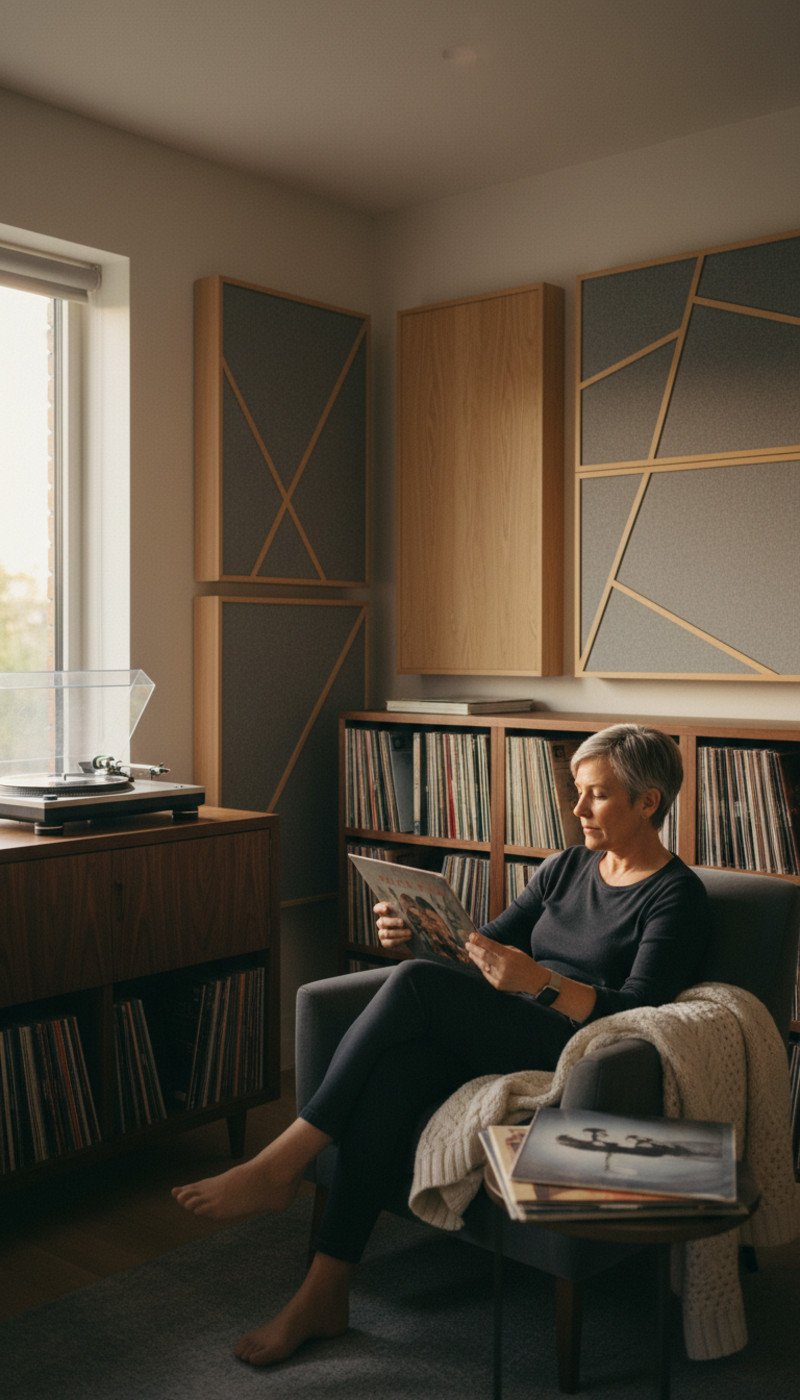
A successful listening room is a holistic environment. While the turntable, amplifier, and speakers are the heart of the system, the room itself is the body. The goal is to design a space that minimizes distractions and maximizes comfort, allowing you to fully immerse yourself in the music. This means considering everything from lighting and seating to the overall mood. It’s about reclaiming a corner of your home from the multipurpose chaos of daily life and transforming it into one of your dedicated music dens. This is less about creating a sterile audio laboratory and more about building a comfortable, personal retreat.
Think of it as a parallel to creating a spa like bathroom retreat; the objective is to build an environment that promotes relaxation and focus. Soft, dimmable lighting, a comfortable chair positioned in the “sweet spot” between the speakers, and uncluttered surfaces all contribute to a focused listening session. The absence of a television or computer screen is often a defining feature, removing the temptation for multitasking and allowing your sense of hearing to take center stage.
Mastering Your Room’s Acoustics: Practical Solutions for Home Environments
The single biggest improvement you can make to your sound system has nothing to do with the electronics. It’s the room itself. Most residential rooms are acoustic nightmares, with hard, parallel surfaces like drywall and windows that create harsh reflections, echoes, and uneven bass response. Mastering basic acoustic principles is crucial for achieving clear, balanced sound.
The three main goals of acoustic treatment are:
- Absorption: This reduces reverberation and echo. Materials like thick rugs, heavy curtains, and purpose built acoustic foam or mineral wool panels absorb sound energy, especially in the mid and high frequencies. You should place absorption panels at the first reflection points on the side walls and the wall behind your speakers.
- Diffusion: This scatters sound waves that would otherwise reflect directly back at you, creating a more spacious and natural soundstage. Diffusers are often made of wood blocks of varying depths and are best placed on the wall behind your listening position.
- Bass Trapping: Low frequency sound waves accumulate in the corners of a room, causing a “boomy” or muddy bass sound. Bass traps are thick, dense absorption panels designed specifically to be placed in corners to tame this low end energy.
While professional acoustic analysis can be complex, you can achieve excellent results with some simple, practical steps. Start with the “mirror trick”: sit in your listening chair and have a friend slide a mirror along the side walls. Anywhere you can see the reflection of a speaker is a first reflection point and a prime location for an absorption panel. Similarly, adding a thick rug between you and your speakers is one of the easiest and most effective acoustic treatments you can implement.
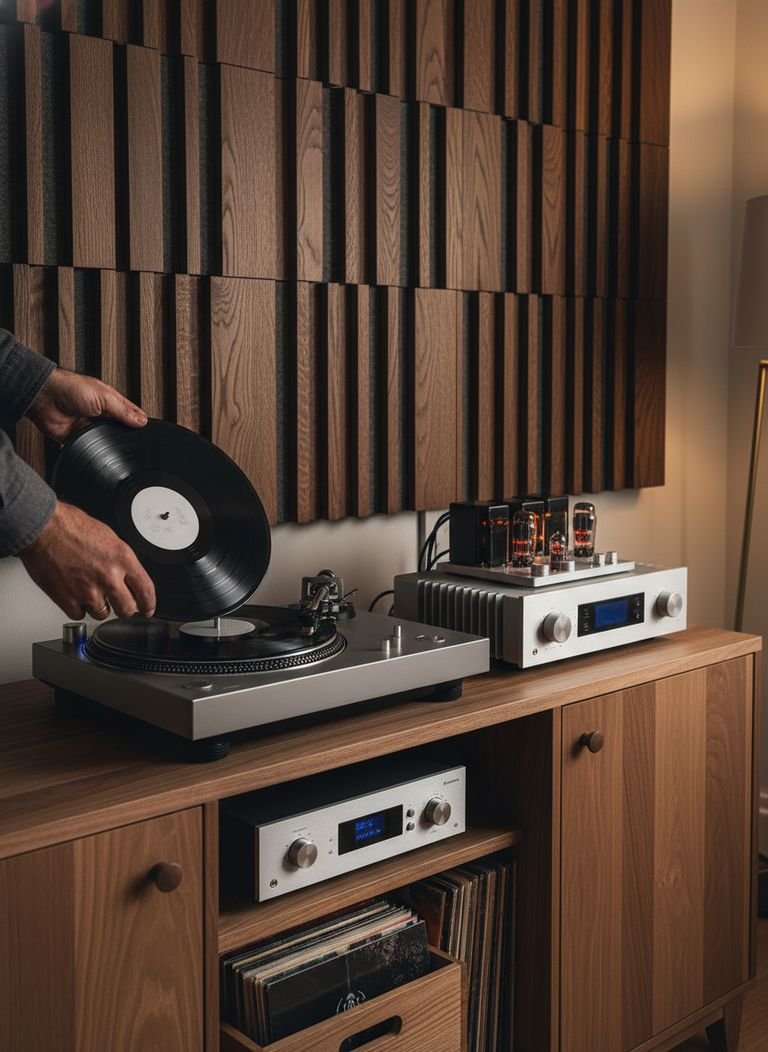
Many people are drawn to the aesthetic of acoustic wood paneling, which can serve both functional and decorative purposes. Slat wood panels with acoustic felt backing provide a good balance of absorption and diffusion, and their clean lines can enhance a room’s decor. You can explore similar visual styles with options like fluted wood cabinets to create a cohesive, textured look throughout your space.
Hi-Fi Furniture Setups: Integrating Form, Function, and Flawless Sound
The furniture in your listening room does more than just hold your gear; it impacts both performance and usability. Proper Hi-Fi furniture setups are designed to address critical needs like vibration isolation, equipment ventilation, and cable management, all while fitting your personal aesthetic. A flimsy, resonant shelf can transfer vibrations to your turntable, muddying the sound. A cabinet without proper airflow can cause amplifiers to overheat, shortening their lifespan.
When selecting furniture, consider these factors:
- Mass and Stability: Heavy, rigid furniture is best. It provides a stable platform for your components and helps dampen unwanted vibrations. Look for solid wood or heavy gauge steel construction.
- Ventilation: Amplifiers, especially tube amps, generate significant heat. Ensure your chosen console or rack has an open back or ample space around the components to allow for proper airflow.
- Cable Management: A tangle of wires is not only unsightly but can also introduce electrical interference. Look for furniture with built in channels or cutouts to neatly route your cables.
- Vinyl Storage: Proper vinyl storage cabinets are essential. Records are heavy and should be stored vertically to prevent warping. A flimsy shelf can easily buckle under the weight. Look for sturdy, reinforced shelving with appropriate dimensions to house your collection safely. For creative organization, you can adapt ideas from our guide on kitchen storage solutions, focusing on modularity and accessibility.
While specific market data on consumer pain points with Hi-Fi furniture is not readily available, common user experience issues are well known in enthusiast communities. These include a lack of depth for larger components, inadequate weight capacity for growing record collections, and a poor balance between aesthetic appeal and functional requirements like ventilation. Addressing these practical needs from the start will save you frustration down the line.
Building Your Dream: Budget Considerations for an Analog Listening Room
Creating an analog listening room doesn’t have to be an exorbitant expense. You can build a deeply satisfying system at various investment levels. While detailed consumer spending data isn’t available, we can outline a practical approach based on common wisdom in the audiophile community, focusing on where to prioritize your funds for the greatest sonic return.
Entry Level ($2,000 – $5,000)
At this level, the focus is on a solid foundation. Prioritize your budget in this order: speakers, amplifier, and then turntable. Good speakers can make a modest system sound great, but great electronics can’t save bad speakers. Dedicate a small portion of your budget to DIY acoustic treatment like thick rugs and a couple of absorption panels. Furniture can be a sturdy, second hand piece.
Mid Range ($5,000 – $15,000)
Here you can invest in more refined components across the board. Upgrade to a turntable with a better tonearm and cartridge, a more powerful and cleaner sounding integrated amplifier, and speakers with greater detail and dynamic range. This is also where you should allocate a significant budget (10-15%) for dedicated acoustic treatments, including bass traps and diffusers, and invest in a proper Hi-Fi rack.
High End ($15,000+)
At this tier, you’re chasing the final few percentage points of performance. This involves separate preamplifiers and power amplifiers, high end turntables with advanced isolation, and specialized speakers. A significant portion of the budget goes toward comprehensive room treatment, possibly including professional acoustic consultation. You might even consider building a dedicated space from scratch, such as an accessory dwelling unit (ADU) designed with acoustics in mind from the ground up.
Your Analog Journey: Steps to Creating a Lasting Listening Experience
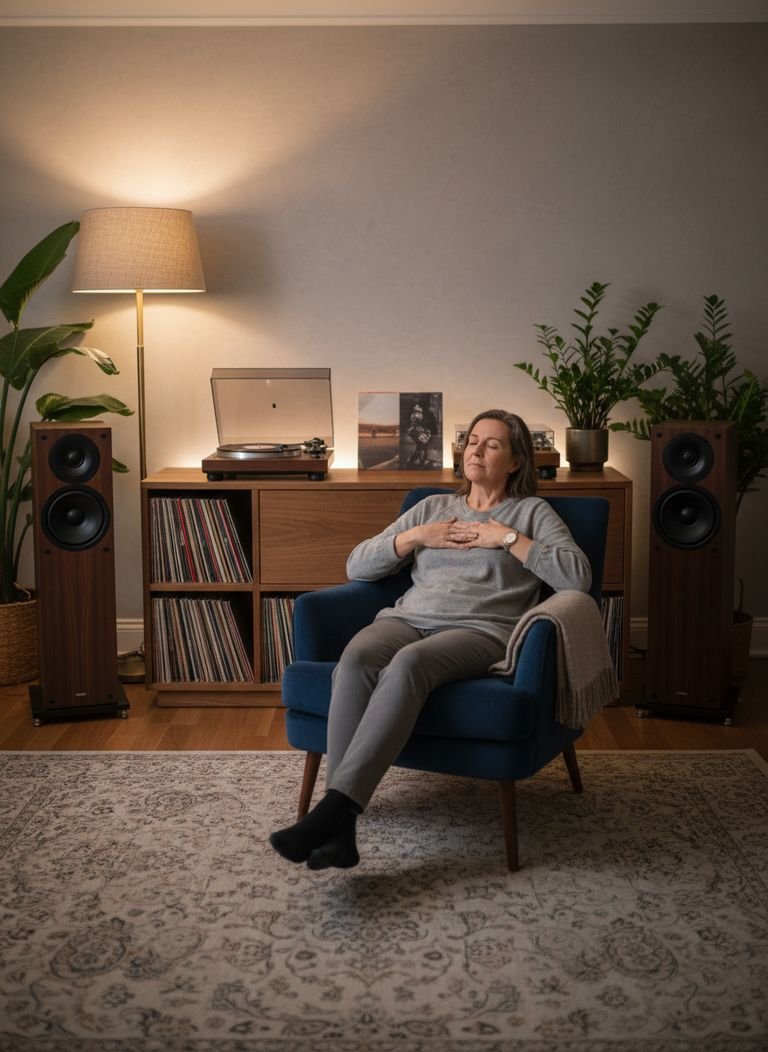
Embarking on the creation of a listening room is a rewarding process of discovery. It’s a journey that encourages you to listen more critically, to understand the relationship between your gear and your space, and ultimately, to connect more deeply with the music you love. Start small, address the most critical elements like speaker placement and basic acoustics first, and upgrade components over time as your ear develops and your budget allows.
The ultimate goal is not to chase a perfect specification sheet but to create a personal haven that brings you joy. The value of this space goes far beyond the sum of its parts. It’s an investment in your well being, offering a powerful antidote to the pace and noise of modern life. By following these principles, you can build one of the truly special analog listening rooms that will provide countless hours of immersive, high fidelity enjoyment.
Frequently Asked Questions About Analog Listening Rooms
What is the most important component in an analog listening room?
While every component plays a role, the room’s acoustics and the speakers have the most significant impact on the final sound quality. You can have the most expensive turntable and amplifier in the world, but if they are in a room with poor acoustics and paired with mediocre speakers, the system will not perform to its potential. Always prioritize treating your room and investing in the best speakers your budget allows.
Do I need a dedicated room for a good listening experience?
Not necessarily. While a dedicated room is ideal, you can achieve excellent results in a shared space like a living room by applying the same principles on a smaller scale. Use strategic placement of furniture, rugs, and curtains to manage acoustics, and position your main listening chair in the sweet spot for focused listening sessions. The key is creating an intentional listening zone within the larger space.
Is vinyl really better than digital?
“Better” is subjective. Digital audio offers convenience and technical perfection (lower noise floor, wider dynamic range). Analog audio, particularly vinyl, offers a different experience that many find more engaging and warm. The physical ritual of handling a record, the subtle imperfections, and the all analog signal chain contribute to a sound character that many enthusiasts prefer. It is less about technical superiority and more about the quality and nature of the listening experience.
How much should I spend on cables?
This is a highly debated topic. For entry and mid level systems, you do not need to spend a fortune on cables. Invest in well made, properly shielded cables from a reputable brand to ensure a clean signal transfer without interference. Avoid the cheapest, unshielded options. In very high end systems, subtle differences in cable construction can become audible, but for most setups, your money is far better spent on improving your core components or acoustic treatment.