

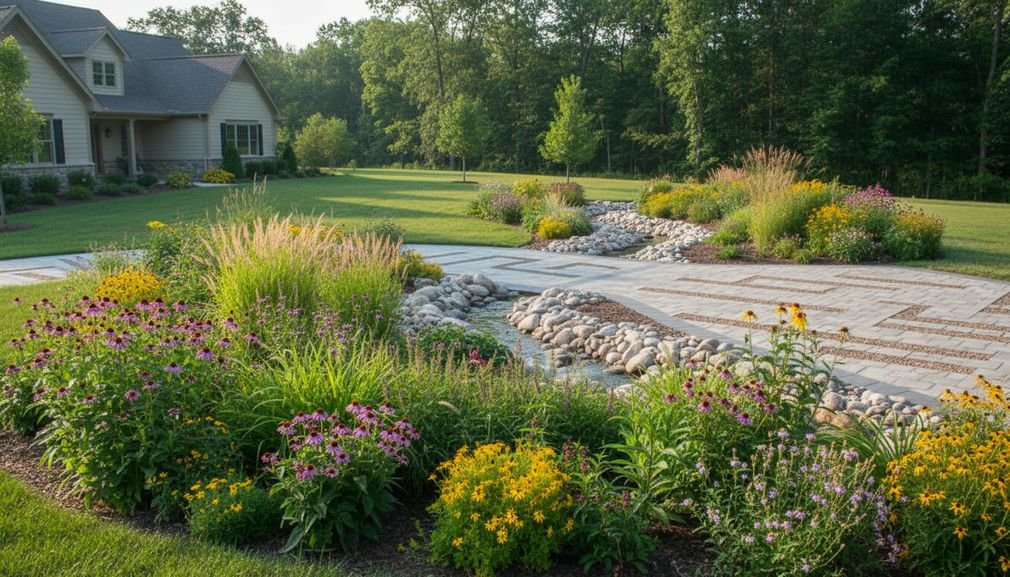
Introduction: Transforming Your Yard with Rainscaping
Effective rainscaping systems offer a permanent solution to the recurring nightmare of soggy lawns, basement moisture, and uncontrolled stormwater runoff that plagues many homeowners. If you’re tired of temporary fixes that fail after the next downpour, understanding how to strategically manage water where it falls is the first step toward a dry, beautiful, and sustainable property. This guide breaks down the most effective rainscaping solutions, clarifies the investment, and explains why professional design is often the key to long term success.
Key Takeaways
- Rainscaping systems are designed to manage stormwater runoff at its source, preventing soggy lawns, erosion, and water damage by promoting infiltration and controlled redirection.
- Solutions range from aesthetic dry creek beds and beautiful rain gardens to functional permeable driveways and engineered bioswales, each serving a specific drainage purpose.
- Investing in professional rainscaping can significantly increase home value, with landscaping upgrades potentially boosting resale value by 10-20%, while also providing critical environmental benefits.
Table of Contents
- Understanding Rainscaping: Your Defense Against Stormwater
- Popular Rainscaping Solutions for Every Property
- Beyond Aesthetics: The Tangible Value of Investing in Rainscaping
- Professional vs. DIY Rainscaping: Navigating Your Project
- Long-Term Performance: Maintenance and Durability of Your System
- Why Expert Design and Installation Make a Difference
- Conclusion: Achieve a Sustainable and Dry Landscape
- Frequently Asked Questions
Understanding Rainscaping: Your Defense Against Stormwater
At its core, rainscaping is a landscape design approach that uses natural and engineered elements to manage stormwater on your property. Instead of simply channeling water away as quickly as possible—which often just moves the problem to a neighbor’s yard or the municipal system—rainscaping systems are designed to slow it down, spread it out, and soak it in. This method tackles the root cause of chronic soggy lawns and excess runoff by mimicking natural hydrology. The goal is to capture rainwater from your roof, driveway, and other hard surfaces, allowing it to be absorbed into the ground or be filtered naturally. This protects your home’s foundation, prevents soil erosion, and enhances the health and beauty of your landscape.
Popular Rainscaping Solutions for Every Property
Choosing the right rainscaping system depends on your property’s specific challenges, soil type, and aesthetic goals. A well-designed solution often integrates several components to create a comprehensive water management plan. Here are some of the most popular and effective options homeowners are turning to.
Dry Creek Beds: Natural Drainage & Aesthetic Appeal
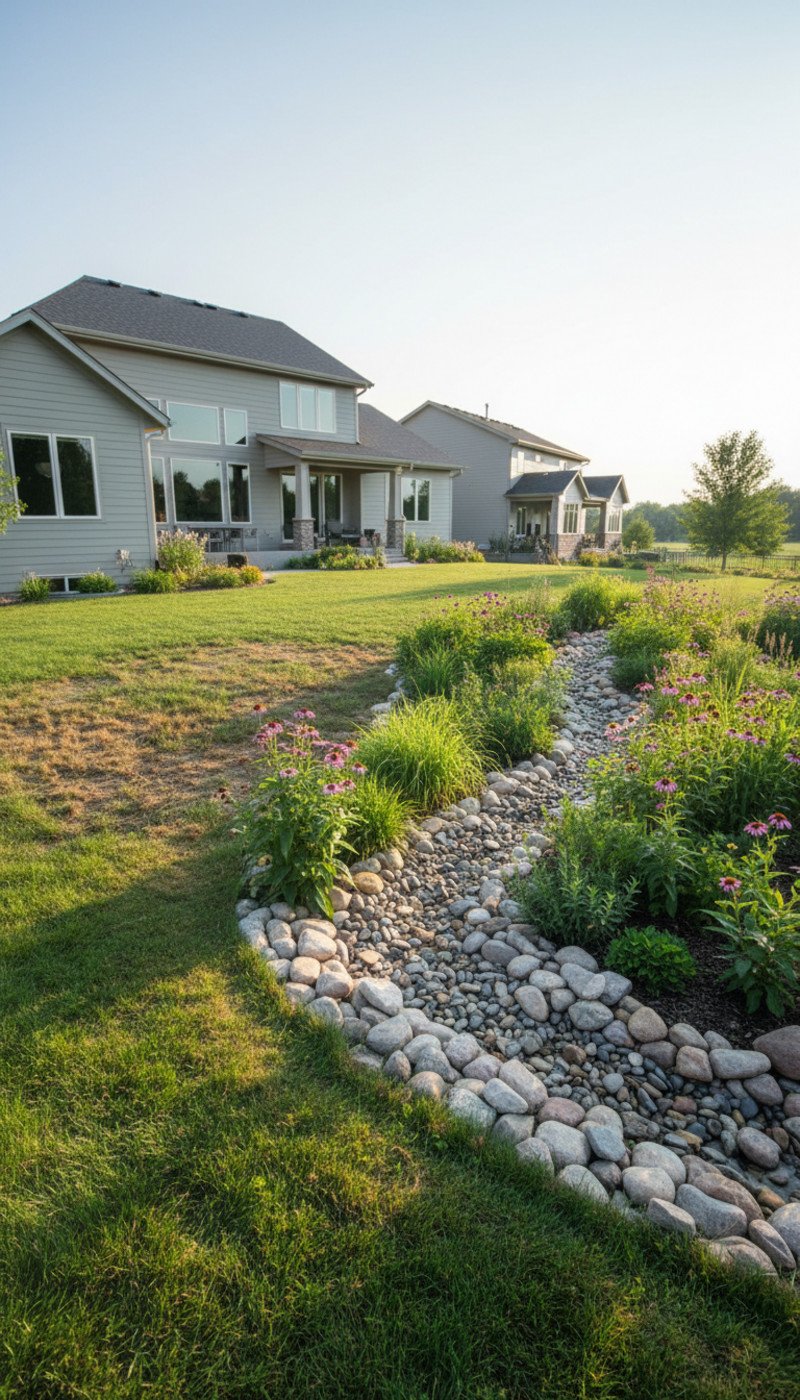
A dry creek bed is a trench lined with stones of various sizes that is designed to look like a natural, seasonal creek. During a storm, it functions as a channel, collecting runoff and directing it away from sensitive areas like your home’s foundation or low spots in the yard. Its primary advantage is controlling the flow and speed of water, which significantly reduces erosion. Beyond its functional benefits, a properly executed dry creek bed installation adds immense visual interest and texture to the landscape, creating a beautiful focal point even when it’s not raining.
Rain Gardens: Functional Beauty for Water Absorption
A rain garden is a shallow depression in your landscape filled with deep-rooted native plants and grasses. It’s strategically placed to collect runoff from roofs or driveways. Unlike a pond, a rain garden is designed to hold water for only 24-48 hours, just long enough for it to be absorbed into the soil. The plants and soil work together to filter out pollutants like fertilizers and oils, protecting local waterways. A professional rain garden design-build project ensures the correct soil mix, plant selection, and size for your property’s specific runoff volume, turning a drainage problem into a beautiful, low-maintenance garden that attracts pollinators.
Permeable Driveways & Patios: Hardscaping That Lets Water Through
Traditional asphalt and concrete surfaces are impervious, meaning they create massive amounts of runoff. Permeable driveway pavers, on the other hand, are a type of hardscaping designed with gaps between the pavers filled with small stones. This allows rainwater to pass through the surface and into a specially prepared gravel base below, where it can slowly soak into the ground. This technology drastically reduces runoff, recharges groundwater, and can even help melt snow and ice faster. While the initial investment is higher than traditional materials, permeable surfaces provide a durable and elegant solution to managing water from large, flat areas.
Bioswale Garden Kits: Engineered Solutions for Water Filtration
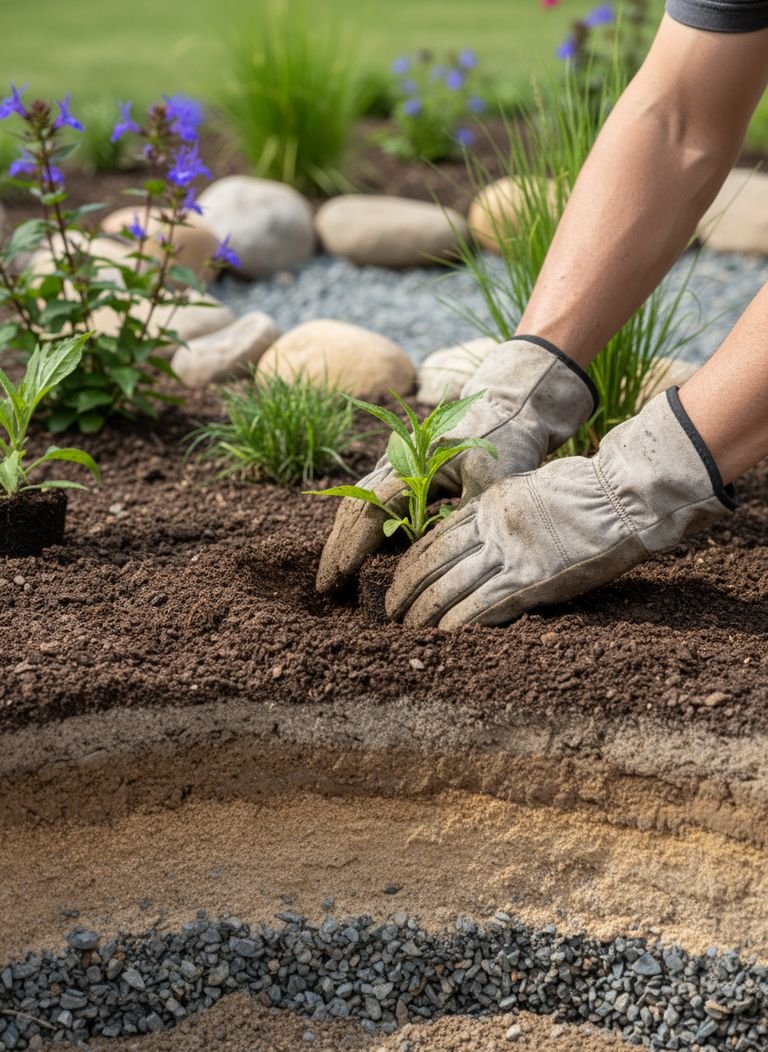
A bioswale is essentially a more engineered version of a rain garden. It’s a vegetated channel designed not just to absorb water, but also to transport it slowly while cleaning it. Bioswales are excellent for properties with a gentle slope and are often used along property lines or driveways. The vegetation slows water flow, allowing sediment and pollutants to settle out, while the soil and plant roots filter the water as it infiltrates. While some homeowners explore bioswale garden kits for smaller applications, larger or more critical drainage issues require professional engineering to ensure they function correctly and don’t create new problems.
Beyond Aesthetics: The Tangible Value of Investing in Rainscaping
Investing in professionally designed rainscaping systems delivers returns that go far beyond a dry yard. These functional landscape upgrades are increasingly recognized for their financial and environmental benefits. For homeowners evaluating the ROI of a significant home improvement, the numbers are compelling. According to Grand View Research, professional landscaping upgrades can increase a home’s resale value by an estimated 10-20%. This means a well-executed rain garden or permeable patio isn’t just a cost; it’s an equity-building investment.
Furthermore, these systems play a crucial role in broader environmental health. By managing water on-site, you reduce the strain on municipal storm sewers, which helps prevent localized flooding and combined sewer overflows. Data on related technologies like rainwater harvesting shows that on-site management can reduce stormwater runoff volume by up to 70%. This ecological benefit is becoming more valuable as communities grapple with aging infrastructure and more intense storm events, making rainscaping a responsible and forward-thinking choice for any property owner.
Professional vs. DIY Rainscaping: Navigating Your Project
The decision between a DIY approach and hiring a professional is a critical one for any homeowner. While simple projects can be tackled by a dedicated DIYer, the technical nature of water management means that mistakes can be costly. An improperly designed dry creek bed can worsen erosion, and a poorly placed rain garden can flood or threaten your home’s foundation. The complexity lies in understanding soil infiltration rates, calculating runoff volumes, and ensuring proper grading—skills that landscape architects and certified installers possess.
The financial investment also varies dramatically. A basic DIY rainwater harvesting system, a related concept, might only cost $70-$80 in materials. However, more advanced setups can range from $2,000 to $3,000 for materials alone, excluding the extensive labor involved. This highlights the investment gap for more complex systems like permeable driveways or large-scale bioswales. While DIY bioswale garden kits might seem like a cost-effective shortcut, they often lack the site-specific engineering needed to handle significant water flow, making professional consultation a wise investment for any chronic drainage issue.
Long-Term Performance: Maintenance and Durability of Your System
Effective rainscaping systems are designed to be low-maintenance, but not “no-maintenance.” To ensure their longevity and performance, some ongoing care is required. For rain gardens and bioswales, this typically involves weeding, mulching, and cutting back plants annually, just like any other garden bed. It’s also important to monitor for sediment buildup at the inflow point after major storms and remove it as needed to prevent clogging.
For hardscaping solutions like permeable pavers, maintenance involves keeping the joints clear of debris. Regular sweeping and occasional rinsing can prevent the gaps from getting clogged with dirt and organic matter, which would reduce their permeability. Dry creek beds may require occasional rearranging of stones and removal of leaves or sediment that can obstruct flow. Drawing parallels from related systems, professional inspections are often recommended every 2-3 years to ensure the entire system is functioning as designed and to catch potential issues like erosion or unforeseen blockages before they become major problems.
Why Expert Design and Installation Make a Difference
The success of any rainscaping project hinges on a design that is perfectly tailored to your property’s unique topography, soil composition, and water load. This is where professional expertise becomes invaluable. A landscape architect or certified drainage contractor doesn’t just see a soggy yard; they see the flow of water across the entire property. They can perform a percolation test to determine how quickly your soil absorbs water, a critical factor in sizing a rain garden or designing the base for permeable driveway pavers.
Professionals also understand the unseen complexities. They know which native plants have the deep, fibrous root systems needed to stabilize a bioswale and enhance infiltration. For a rain garden design-build project, they ensure it is sited at least 10 feet away from your home’s foundation to prevent any risk of water intrusion. Attempting a complex installation without this knowledge can lead to system failure, wasted investment, and potentially more significant water problems than you started with. Expert installation guarantees that every layer of gravel, every slope, and every plant contributes to a cohesive, effective, and lasting solution.
Conclusion: Achieve a Sustainable and Dry Landscape
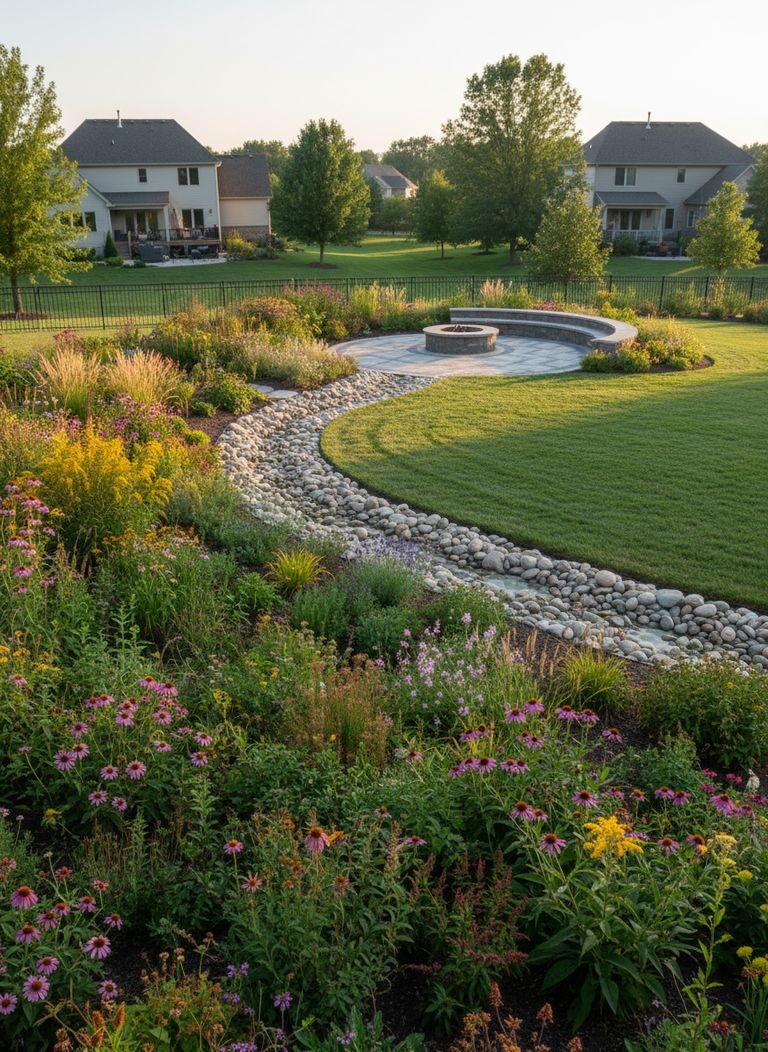
Moving beyond the cycle of temporary fixes for a soggy yard requires a strategic, holistic approach to water management. By integrating elements like rain gardens, dry creek beds, and permeable surfaces, you can solve chronic drainage issues while creating a more beautiful, sustainable, and valuable property. These solutions work with nature, not against it, to protect your home and the surrounding environment.
While the appeal of a DIY project is understandable, the technical demands of effective water management often necessitate professional expertise. A skilled designer and installer can ensure your investment yields a durable and efficient solution. If you’re ready to permanently solve your stormwater problems, investing in professionally designed rainscaping systems is the most reliable path to a dry, functional, and resilient landscape.
Frequently Asked Questions
What is the main goal of rainscaping?
The primary goal of rainscaping is to manage stormwater runoff on a property as close to its source as possible. Instead of directing water into storm drains, rainscaping systems like rain gardens and bioswales are designed to slow down, filter, and absorb rainwater into the ground, which helps prevent erosion, reduce pollution, and recharge groundwater.
Are rain gardens the same as ponds?
No, they are different. A rain garden is a landscaped depression designed to temporarily hold and soak in rainwater runoff from roofs or driveways. A properly functioning rain garden should drain completely within 24 to 48 hours and will not hold standing water long enough to become a breeding ground for mosquitoes. A pond is a permanent body of water.
How much do professional rainscaping systems cost?
Costs vary widely based on the project’s scale, complexity, and materials. A simple dry creek bed might cost a few thousand dollars, while an extensive project involving permeable driveway pavers and multiple rain gardens can be a significant investment, often $10,000 or more. It’s best to get a detailed quote from a qualified landscape contractor who can assess your specific property needs.
Can rainscaping really increase my property value?
Yes. Well-designed, functional landscapes are a significant draw for homebuyers. Professional landscaping that solves a major problem like poor drainage while also enhancing curb appeal can increase home value by 10-20%. Features like attractive rain gardens or high-end permeable patios are seen as valuable upgrades that improve both usability and sustainability.
What is the most common mistake in DIY rainscaping?
The most common DIY mistake is improper siting and sizing. Placing a rain garden too close to a home’s foundation (less than 10 feet away) can lead to basement leaks. Likewise, underestimating the amount of runoff a system needs to handle will cause it to be overwhelmed during a heavy storm, rendering it ineffective. Professional assessment avoids these critical errors.