


Predictive Pet Wearables are transforming how devoted pet owners and veterinarians monitor health, spot issues early, and make proactive decisions about dog and cat wellness. But not every smart collar or health vest lives up to the claims. Here’s what you need to know before you buy or recommend one.
Key Takeaways
- Global Predictive Pet Wearables market is booming—projected to reach up to $10.43B by 2032—yet clinical proof remains scarce and buyer confusion is high.
- Smart health monitoring collars dominate sales, but sensor reliability, data privacy, and actual illness prediction are often oversold.
- Smart buyers and vets must carefully compare features, real costs, and look for genuine evidence—not just marketing hype.
- Market snapshot — why predictive pet wearables matter now
- Why smart health monitoring collars dominate (and what “smart” really means)
- What existing products measure — core sensors & metrics you should expect
- Real-world user pain points and complaints to investigate
- Clinical evidence & case studies — what exists, what’s missing, and how to evaluate claims
- Pricing & subscription landscape — typical costs, models, and what owners actually pay
- Technical differentiators and AI features that matter most for early-illness detection
- Overlooked topics competitors rarely cover
- Common negative reviews & warning signs to watch for
- How to evaluate vendors and choose the right device (actionable checklist)
- Next steps for the reader (call-to-action + research transparency)
- FAQ
Market snapshot — why predictive pet wearables matter now
Pet health is becoming a high-stakes tech battleground. The global Predictive Pet Wearables market is valued at $2.70–$3.55 billion in 2023–2024 and is projected to rocket to $6.89–$10.43 billion by 2030–2032 at CAGRs of 13.3%–14.3% (Grand View Research). North America commands an estimated 38% share, with the U.S. market alone forecasted at $568 million in 2024, growing 12.6%–12.9% CAGR through 2033 (IMARC Group).
This rapid growth is fueled by several converging trends: urban owners treating pets like family, sky-high spending on pet healthcare, and tech breakthroughs in IoT and artificial intelligence. Venture capital and tech giants are pouring money into this space to develop smarter devices that promise to catch canine and feline illness before symptoms emerge.

Why smart health monitoring collars dominate (and what “smart” really means)
Smart health monitoring collars account for the lion’s share—projected at 44.92% by 2026—because they combine heart rate, temperature, movement, and GPS tracking in a format both convenient and familiar to pet owners (Fortune Business Insights). RFID technology led the field with 40.03% revenue share in 2023 for tracking heart rate variability, caloric burn, and temperature, while GPS-enabled collars are exploding at a 15% CAGR for both security and activity use cases. Owners value all-in-one simplicity, while veterinarians seek more reliable field data to support earlier interventions.
But it’s not just about high-tech features. Most leaders in this segment focus on comfortable, breed-adjustable fit and seamless mobile integration—though not always successfully. Many collars tout “AI-powered illness prediction” or “medical-grade accuracy,” but the lack of clinical validation and real-world outcome data means buyers must stay skeptical.
What existing products measure — core sensors & metrics you should expect
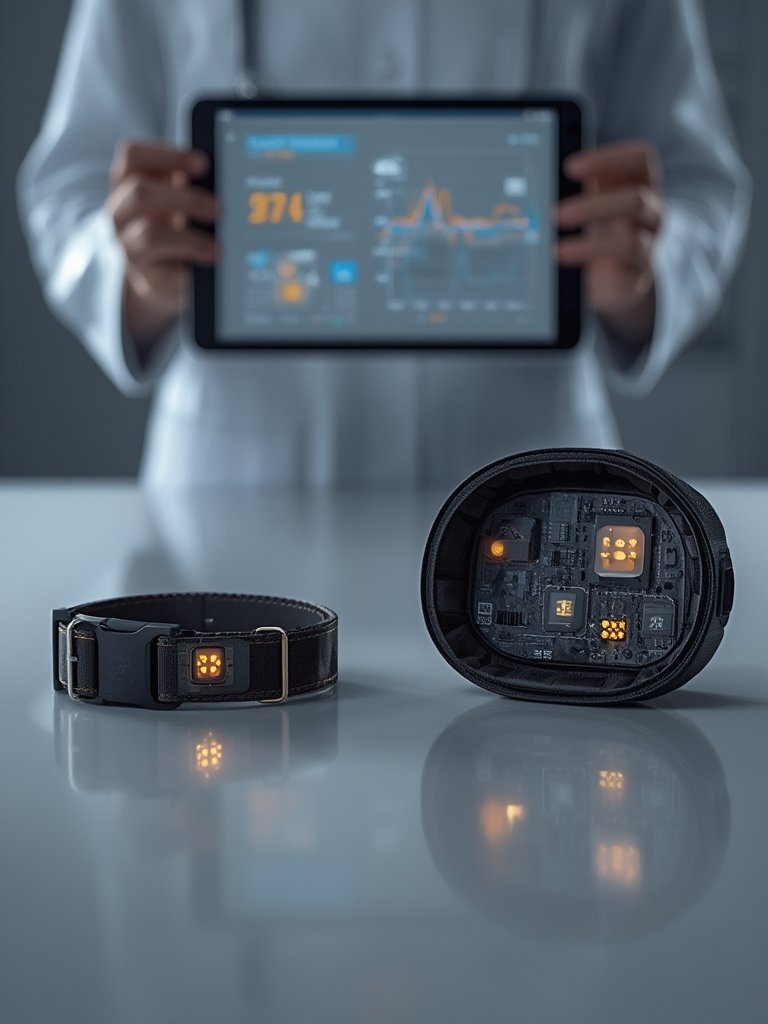
Today’s AI dog health trackers and smart health monitoring collars typically bundle the following sensors:
- Accelerometer — for precise movement, activity, and sleep pattern tracking
- GPS — for real-time location and escape monitoring
- Heart rate monitor — some using optical or electrical sensors; more common in dogs
- Temperature sensor — for tracking baselines and spikes, mostly in vests and some advanced collars
- RFID — for multi-pet identification and sometimes for vital tracking
- On-device processor (edge computing) — enables local AI analysis, reducing reliance on cloud servers
Heart rate monitor for cats and vests for vital signs are less common and may have size or comfort issues. Actual clinical validity—whether these metrics truly flag illness before symptoms—is largely unproven (Grand View Research).
Key metrics such as sudden drops in activity, abnormal heart rates, or temperature changes can be early health indicators—but also may be influenced by normal canine or feline behavior, environmental changes, or fit of the device.
Real-world user pain points and complaints to investigate
Frustrations run deeper than most brand pages admit. Based on community forums, pet-tech Reddit threads, and scattered Amazon reviews, here are the top buyer complaints new users should research:
- High rate of false positives or missed alerts, especially for motion and vitals analysis
- Poorer fit or discomfort for pets with unusual fur, neck size, or body shape
- Short battery life (often less than a week on a full charge with all features enabled)
- Connectivity glitches—app drops, Bluetooth range, or Wi-Fi sync issues
- Monthly cost creep due to subscriptions required for full feature set
- Data confusion in households with more than one pet
- Data “noise” from collar shifts, scratching, or intense play sessions skewing the results
Research gap: No systematic analysis of user complaints for 2023–2024 currently exists. Primary sources to check include Amazon reviews, Reddit’s r/pets or r/dogs, dog tech Facebook groups, and veterinary clinical feedback forums. Prospective buyers should read verified reviews and look for patterns within recent years.
Clinical evidence & case studies — what exists, what’s missing, and how to evaluate claims
Most brands imply or outright state their smart health monitoring collars or vital sign pet vests can “predict illness.” However, a search of peer-reviewed databases, veterinary association publications, and whitepapers finds no clinical trials, published case studies, or documented success rates proving early illness detection in dogs and cats.
How to evaluate: Look for studies with adequate sample size, randomized controls, real veterinary involvement, and transparent reporting of both detection rates and limitations. If none exist, treat any “clinically validated” claim with caution.
Companies may cite proprietary “trials” or pilot user cases, but without independent vet analysis or published data, these are marketing, not science. Buyers should request or look for public evidence before relying on devices for critical health decisions.
Pricing & subscription landscape — typical costs, models, and what owners actually pay
Because of a research gap, there has been no third-party published cost analysis for Predictive Pet Wearables. Here’s a realistic snapshot compiled from leading brand sites (as of 2024):
| Brand | Sensors Included | Device Price | Subscription/Month | Veterinary Validation? |
|---|---|---|---|---|
| Fi Smart Collar | Accelerometer, GPS, Light | $149 | $4–$8 | No |
| Whistle Health | Accelerometer, HRV, Temp | $99–$149 | $9–$13 | No |
| Personifi AI Shazam Band | HR, Temp, Accelerometer, Edge ML | $179 | $12 | No |
| Petpace (health vest) | HR, Temp, Resp, O2, Activity | $150–$250 | $15–$20 | Limited (pilot only) |
| Animo Collar | Accelerometer, Behavior | $89–$99 | None / Optional ($5) | No |
Typical Predictive Pet Wearables ask buyers for an upfront device fee plus a monthly subscription to access analytics, wellness alerts, and historical data. Subscriptions are usually per device and can double or triple total annual cost over the product’s lifespan. Always calculate device, subscription, replacement parts, and any required accessories before committing.
For comparison, see our related review on Pet Enrichment Tech to estimate hidden costs of “smart” features.
Technical differentiators and AI features that matter most for early-illness detection
Not all features are equally valuable—or trustworthy—for spotting trouble before it’s obvious. Here’s what stands out among top entrants:
- Edge vs. Cloud Processing: Devices with local (edge) AI analysis offer faster alerts and better privacy, especially important for multi-pet households or in clinics with strict data policies.
- ML Anomaly Detection: Machine learning-powered analysis is more reliable than simple threshold alerts, flagging subtle shifts in activity, heart rate variability (HRV), or temperature trends. But “AI” is often used loosely: check whether the brand details what its models are trained to detect and how often it’s been refined.
- Sensor Placement: Collars are proven for activity and basic vitals tracking, but vests are theoretically superior for true ECG/respiratory metrics—important for small dogs, cats, or breeds with thick fur.
- Data Fusion: The best systems combine accelerometer, vitals, and behavior cues (barking, scratching, sleep) for a holistic picture. Standalone metrics (like raw heart rate) can be misleading.
- Access & Integration: APIs that share wearable alerts with veterinary EMR systems—still rare—are a strong plus for clinics considering a purchase.
Curious about AI-driven tech in your living space? See our Smart Home Voice Control guide for tips on integrating pet health sensors with your household routines.
Overlooked topics competitors rarely cover (three prioritized ideas)
- Veterinary integration: Few brands provide clear pathways for real-time device data to trigger clinic alerts, interface with EMRs, or drive appointment scheduling. For veterinary managers or tech-driven clinics, direct integration is a must—ask vendors what integration tools or evidence-based alert thresholds they support.
- Long-term data ownership and privacy: Who truly owns your pet’s health data five years from now? How is raw and aggregated health data anonymized, shared, or deleted at end-of-service? Many wearables have vague privacy language and lack long-term commitment to pet owner (or clinic) data ownership.
- Multi-pet compatibility and household UX: In urban, multi-animal homes, data “noise” and device pairing issues challenge all systems. Ask about device tracking options, RFID/fob pairing, and app multi-profile support. Owners of more than one pet should compare real reviews of syncing accuracy and notification settings.
These pain points are rarely examined in other reviews, and represent a significant editorial opportunity. Think strategically and ask the tough questions—just as you would before any major home project.
Common negative reviews & warning signs to watch for
Many poor experiences with AI dog health trackers and smart health monitoring collars show up only in user feedback, not brand FAQs. Watch for these warning signs when searching Amazon, Reddit (try “r/dogs,” “r/pettech”), Facebook vet groups, and niche forums:
- Consistent false positives (especially for “sickness detected” alerts)
- Unexplained gaps or fluctuations in heart rate or temperature readings
- Batteries draining in days with advertised “months” of use
- Frequent app crashes or connectivity loss
- Poor collar fit leading to skin irritation or obvious discomfort in pets
- Customer service or warranty support that is slow or ineffective
For a reality check, always read “Most Critical” reviews—not just averages—and search for your specific breed or household setup. Take advantage of knowledgeable communities, just as you’d rely on independent advice before buying pet skincare.
How to evaluate vendors and choose the right device (actionable checklist)
- Is there clinical validation for any predictive claim? Request published studies or independent third-party validation.
- Does the sensor suite include heart rate, temperature, and activity tracking by breed/size?
- What accuracy data is provided (± bpm or °F, activity differentiation, false positive rate)?
- Battery life: advertised vs. real-world average per user reviews?
- Comfort and fit: multiple sizes for breed, adjustable for neck/girth, and pet safety features?
- Subscription: is it required, tiered, and what do base vs. full analytics cost?
- Is there owner access/export to raw data, or just to basic app notifications?
- API or direct integration with vet clinics or EMR? (Key for clinics; nice-to-have for owners)
- Multi-pet handling: does it separate profiles, or create data confusion in multi-animal homes?
- Warranty and support: at least 12 months, with clear U.S. (or local) support channels?
This checklist reflects urgency: smart health monitoring collars now represent the fastest-growing pet wearable segment—buyers must scrutinize claims and support to avoid costly mistakes.

Want a printable version? Jump to our call to action below.
Next steps for the reader (call-to-action + research transparency)
The Predictive Pet Wearables market is growing at an astonishing rate—from $2.70–$3.55 billion in 2023–2024, with expectations for it to more than double by 2030. But as a responsible buyer or vet, you need facts, not just features. Download our independent Predictive Pet Wearables comparison checklist or sign up for our round-up email for unbiased updates and user-reported reviews. If you’re already using a device, help build the evidence: submit your experience and data to support our upcoming community-driven case study.
Transparency: No clinical trials, cost surveys, or real-world reliability studies meet evidence standards as of June 2024. This blog calls for owners, tech companies, and veterinarians to collaborate in filling these gaps.
Related: Our Microbiome Pet Testing buyer’s guide applies the same evidence-first logic to at-home gut health kits for pets.
FAQ
Are smart health monitoring collars accurate enough for early illness detection?
No independent clinical trials verify that current collars can reliably predict illness before symptoms. Most brands lack peer-reviewed evidence, so use these tools for peace of mind, not for medical diagnosis.
Do I always need a subscription with Predictive Pet Wearables?
Most leading brands require a monthly subscription to unlock full analytics, alerts, and history. Budget for device plus at least 12 months of fees for the full experience.
How do I know if a Predictive Pet Wearable is comfortable and safe for my cat or dog?
Look for multiple size options, padded edges, and owner reviews mentioning comfort for your breed. Read negative reviews to spot recurring fit or irritation issues.
Is my pet’s data private and secure?
Few brands offer detailed transparency on long-term data retention, third-party sharing, or account deletion. Read all privacy policies and request clarification if ownership or retention is unclear.
Can my veterinarian access wearable data directly?
Direct EMR integration is rare. Some platforms allow data sharing via email or PDF exports, but few have APIs for live clinic use. Ask explicitly before buying for clinic use.