

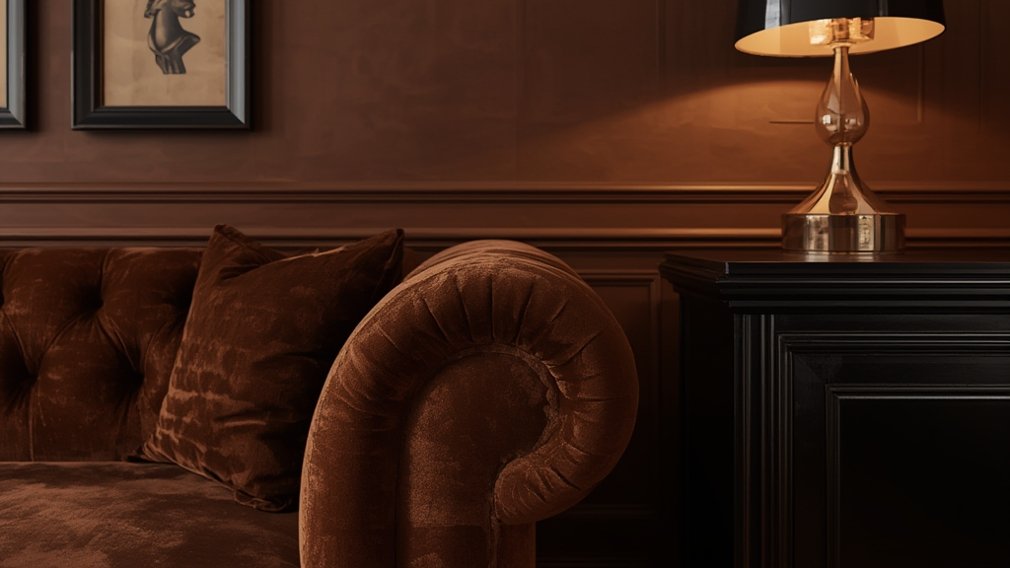
Chocolate Brown Maximalism is rewriting every rule of moody interior design 2026. If you’ve grown weary of all-white minimalism and crave a home that feels layered, expressive, and resilient, it’s time to make this bold, practical shift. Here’s your field-tested, real-world guide to moving from bright beige to a rich, chocolate-infused aesthetic—without sacrificing comfort, clarity, or light.
Key Takeaways
- Chocolate Brown Maximalism is the number one color trend for 2026, nearly doubling in demand since 2022, and signals a mainstream move away from flat, white spaces.
- Real transformation depends on strategic layering of textures—deep brown velvet sofas, dark wood heritage furniture, sculptural lighting, and curated statement pieces.
- Smart lighting, color balancing, and sourcing will help you avoid overwhelm and maximize warmth and visual clarity—even in smaller or lower-light rooms.
- Why now — Chocolate Brown Maximalism as the mainstream alternative to all‑white interiors
- Core elements—what defines Chocolate Brown Maximalism
- The overlooked interplay—layering dark wood heritage furniture and statement lighting
- Palette mechanics—how to build a mocha wall aesthetic without losing depth or cohesion
- Sourcing & pricing reality check for 2026 (what we know and what we don’t)
- Balancing moody chocolate with natural light & small spaces (designer and color-theory tactics)
- Common homeowner frustrations when moving from white to chocolate brown—and how to fix them
- DIY pitfalls & expert fixes — the most common mistakes and how to avoid them
- Before & after proof—how to create compelling case studies (and why current examples are scarce)
- Visuals & assets the writer must include
- Wrap & conversion — practical next steps for readers
- FAQ
Why now — Chocolate Brown Maximalism as the mainstream alternative to all‑white interiors
The shift is real: The 2026 1stDibs interior trends survey found that chocolate brown is the top color choice for 33% of professional designers—almost double the 2022 figure. Maximalism, with its focus on curated layers and bold hues, is outpacing minimalist requests, marking a cultural swing toward personal stories, warmth, and visual richness in the home. Designers confirm: the mainstream palette now leans into mocha, tobacco, and deep woods, moving away from all-white for deeper emotional impact and resilience.
The reasons run deeper than “it’s trendy.” After several years of blank-slate spaces, homeowners are seeking grounded, heritage-infused environments that stand up to years of living—stains, pets, and all—without constant worry.

Core elements—what defines Chocolate Brown Maximalism
This look isn’t just “decorating with brown.” True Chocolate Brown Maximalism means:
- A palette anchored by pure dark chocolate, toasted walnut, and tobacco leather—colors with warmth, not cool taupe or lifeless brown-beige.
- Signature materials: deep brown velvet sofas, heritage dark-wood furniture, supple leathers, handmade ceramics, and patterned textiles—especially those with vintage or heritage motifs.
- Sculptural and statement lighting: Think bold mid-century shades, glossy lacquered sconces, and mirrored forms to create contrast.
- Layered antiques or vintage finds for story and soul, not clutter.
- Balance of matte and gloss finishes, echoing chocolate brown across at least three surface types (velvet, wood, ceramic, or glass).
Unlike flat brown rooms from the past, every element is carefully orchestrated for visual rhythm. This approach brings tactile depth and a sense of curation that minimalist schemes simply can’t match. For more about how layering and mixed textures transform kitchen and bath spaces, explore our kitchen and bathroom remodel guide.
The overlooked interplay—layering dark wood heritage furniture and statement lighting
High-traffic design blogs call out moody woods and lighting—but rarely with any practical sequence. Here’s the gap: layering dark wood heritage furniture and statement lighting requires choreography, not chance. Here’s how to do it, step by step:
- Start with chocolate brown anchors: This could be a central deep brown velvet sofa or a lacquered sideboard. Ensure it’s the biggest, most tactile piece in the zone.
- Echo the color in three distinct textures: For example, combine velvet upholstery, ceramic lamp bases, and a patterned rug with chocolate and cognac tones before introducing any wood furniture.
- Add dark wood heritage furniture strategically: Opt for fewer, larger pieces—an arts-and-crafts armoire, mid-century walnut side tables—rather than too many small dark items, which can weigh a room down.
- Place and layer with intent: Use angles, overlap edges just slightly, and let furniture “speak” to statement lighting above or beside each zone.
- Choose sculptural statement lighting: Opt for chrome or gloss, smoked glass, or brass fixtures with unique forms. Position these above or adjacent to brown anchors to create visual lift and drama—especially vital in lower light spaces.
- Final rhythm: Keep 30-40% of your visual field lighter—mirrors, metallics, or a large light-toned rug—to prevent monotone darkness.
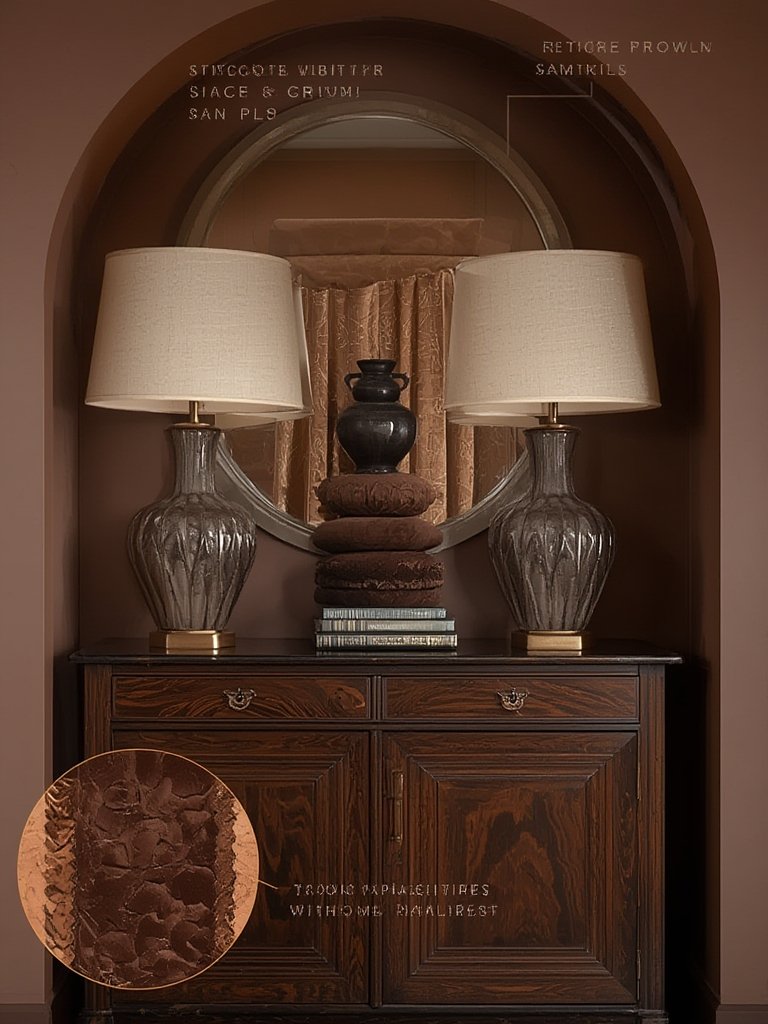
Palette mechanics—how to build a mocha wall aesthetic without losing depth or cohesion
Layering color isn’t just picking a brown and calling it done. To nail a mocha wall aesthetic that’s deep yet dynamic, here’s the practical recipe:
- Base paint: Choose a rich chocolate with a warm undertone. For trims and ceilings, try one shade lighter (think milk chocolate or nutmeg) or a high-gloss finish in the same hue for bounce.
- Three-texture rule: Always layer a velvet (sofa, ottoman), a ceramic or glass accent (table lamp), and something woven or nubby (blanket, jute rug) in your brown zone before adding art or accessories.
- Accent pastels or metallics: Break up all-brown depth with butter yellow, periwinkle blue, or burnished brass for a sense of rhythm. These should repeat at least twice in the zone (throw pillow and lamp, for example).
- Echo and pair: Designers recommend echoing brown across textures—walnut wood, velvet cushion, glazed ceramic. For more rhythm, mix high-gloss lacquer paneling with matte-finish woods.
- Finish samples: Always paint samples at least a 3×3 ft sample and view under all lighting conditions before committing.
You can get more pairing ideas and inspiration for warm, textural spaces from our home decor tips for warm spaces.
Sourcing & pricing reality check for 2026 (what we know and what we don’t)
There’s no public database or price tracker for 2026 deep brown velvet sofas or dark wood heritage furniture—but here’s the real-world situation:
- New retail: Deep brown velvet sofas from mid-range brands ($900–$3200) are widely available, but true heritage quality (kiln-dried hardwood frames, hand-tied springs) often exceed $4000. Stock can be limited due to surging demand for tobacco leathers and rich woods.
- Vintage/marketplaces: Platforms like Vinterior and local estate auctioneers regularly list dark wood pieces from $400 for smaller tables up to $2500+ for classic armoires or sideboards. Expect rapid sell-outs on especially sculptural or pristine vintage.
- Dealers/specialists: Expect to pay a premium ($2000–$8000) for authenticated late-century walnut and bespoke velvet reupholstering.
- Trends to watch: Shopper demand for brown, walnut, and heritage finishes is surging—stock moves fast and prices fluctuate. No formal price inflation data published yet, but a continued rise in interest is confirmed by multiple trend-watchers.
Tip: Always request detailed images of velvet pile direction and wood finish under daylight. If you need a deeper dive on budgeting or supplier strategy for remodels, see our guide to kitchen and bathroom remodel costs.
Balancing moody chocolate with natural light & small spaces (designer and color-theory tactics)
Concerned dark brown means dim, cluttered rooms? Top designers recommend these practical tactics:
- Mirrors, glass, metallics: Use a large mirror directly opposite a window or main light source. Incorporate metallic lamp bases and glass side tables to bounce light off brown fields.
- Light upholstery: Pair your deep brown velvet sofa with ivory, sand, or butter yellow pillows (blend pastels and light neutrals).
- Negative space: Edit accessories ruthlessly—every dark area should have visual “breathing room” around it.
- Ceiling and trim strategy: Leave ceilings lighter and add a gentle gloss to reflect light downward. Consider a mocha wall aesthetic for cocooning warmth; keep trims eggshell or gloss white for freshness.
- Placement: Place large dark pieces against the wall, not center of room, to anchor without blocking the light source. Float a lighter area rug in front for contrast.
Balance is the secret to comfort—and bigger perceived spaces. For smaller environments, tap more ideas from our small space design guide and apply similar editing principles inside.
Common homeowner frustrations when moving from white to chocolate brown—and how to fix them
There’s a big data gap: no 2026 homeowner surveys document frustrations in swapping white for Chocolate Brown Maximalism. Yet, recurring pain points from the field include:
- “It feels too dark or oppressive”: Fix by introducing reflective surfaces and painting only one or two zones, not every wall (e.g., feature wall plus trim only).
- “Lost sense of scale or space”: Balance each chocolate area with a contrasting area rug or white trim to visually stretch the room.
- “Shows every mark, pet hair, or velvet track”: Maintain with a velvet brush and targeted upholstery foam. Dab, don’t rub, any spills or marks.
- “Too busy, not cozy”: Layer in stages—first, install core brown furniture, then pause. Only add new textures and colors after 1–2 weeks so you can see what works in lived-in lighting conditions.
If you want further tips about durable, comfortable spaces that don’t compromise, our real-world bathroom remodel guide covers maintenance and mess-management strategies that also translate to living zones.
DIY pitfalls & expert fixes — the most common mistakes and how to avoid them
No one has surveyed “DIY chocolate room fails” in 2026, but experts agree on these silent traps:
| Pitfall | What Goes Wrong | Expert Fix |
|---|---|---|
| Painting every wall chocolate | Monolithic cave effect, lost sense of depth and light. | Limit to one or two feature walls; balance with off-white trim and ceiling. |
| Too much dark wood furniture | Visual heaviness, crowded feel. | Max 40% of floor area covered by heavy wood—keep the rest lighter (rattan, glass, or textiles). |
| Ignoring contrast and reflection | Flatness, “muddy” spaces, lack of liveliness. | Add one mirror, brass lamp, or metallic accent in each visual zone. Use gloss-finish wood or lacquer for brightness. |
| Clutter, not curation | Busy, dated rooms lacking cohesive story. | Layer slowly. Group accessories by color or shape; rotate art seasonally. |
For every DIY move, sample first, and limit strong brown to one-third of the surface—then step back and reassess in daylight and at night for livability.
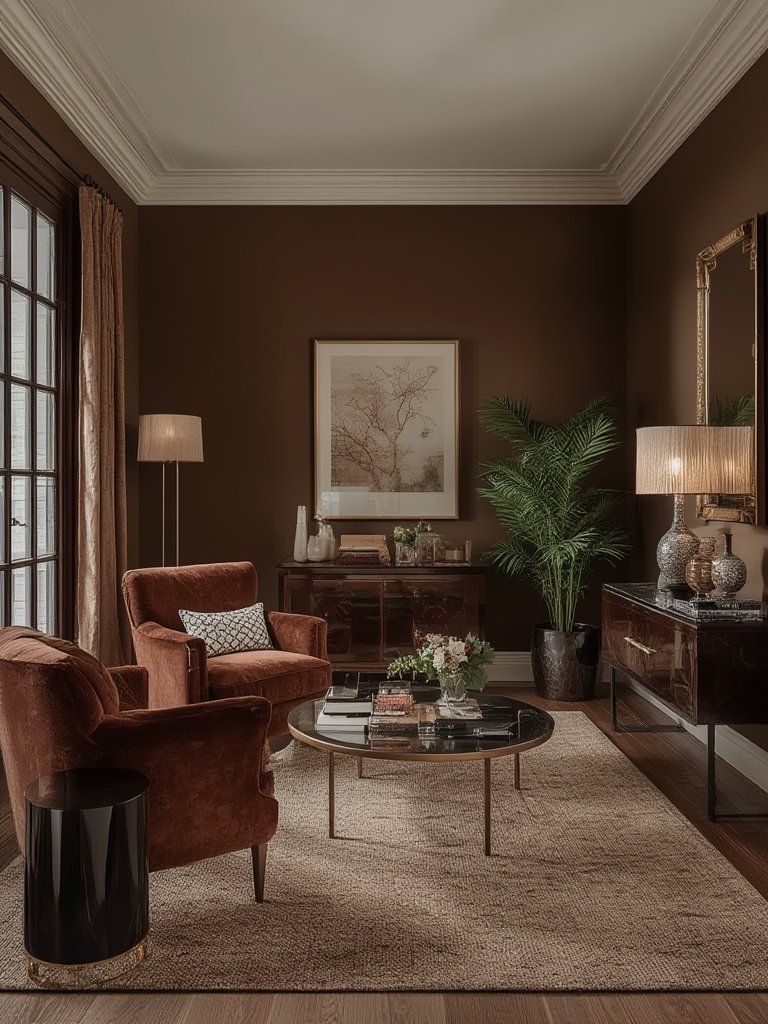
Before & after proof—how to create compelling case studies (and why current examples are scarce)
Transparency gap: There are no date-stamped, real-world before-and-after examples pitting mocha wall aesthetics against white rooms in any 2026 trend reports. This evidence gap gives you a chance to lead by example.
How to document your transformation:
- Shooting checklist: Capture “before” shots with full daylight, main anchor wall, and major seating zones visible. Take wide, medium, and close-ups of texture (esp. deep brown velvet, wood grain, metallics).
- Key metrics to record: Note any change in “perceived warmth” (rate 1–5), coziness, visitor reactions, and whether the room retains light at night vs. day.
- Must-have visual assets: Moodboards, material swatches, sofa texture close-ups, and annotated zone plans for any small rooms or tricky furniture layouts.
If you want a showcase for your before-and-after, consider submitting your transformation to outlets or even commissioning your own professional shoot for credibility.
Visuals & assets the writer must include
To stand out and truly guide your project:
- Moodboards: Collages showing layered shades of brown, heritage wood, ceramics, brass, and velvet. Label each material with its source for transparency.
- Material swatches: Close-up, natural-light photos of deep brown velvet sofa texture and dark wood heritage furniture detail (alt text: “Deep brown velvet sofa texture close-up”; “Dark wood heritage furniture detail view”).
- Lighting examples: Show chrome or mirrored statement fixtures in context—over sofas, sideboards, or reflective surfaces.
- Annotated plans: Simple diagrams indicating object placement for maximizing light, negative space, and color layers, especially in small rooms.
High-ranking articles lack these practical visuals—your annotated assets are how you win reader trust. Need more? Get quick wins from our fixtures care guide for hardware and finish-specific tips.
Wrap & conversion — practical next steps for readers
Ready to embrace Chocolate Brown Maximalism? Don’t overthink. Here’s your action checklist:
- Order 3–5 paint samples. Test them side-by-side on the wall at different times of day.
- Edit your furniture. Keep only the best-loved dark pieces; donate or repurpose the rest. Make a shortlist for dark wood heritage finds or a deep brown velvet sofa upgrade.
- Do a light audit. List every bulb, lamp, sconce. Add at least one sculptural or mirrored lighting piece per dark anchor zone.
- Set your budget. Watch vintage platforms weekly and book alerts for ideal pieces—prices are fluctuating with increased demand.
Download our complete palette and materials PDF, or request a personalized sourcing list for your next project. Or if you want a designer’s confidence, book a consult for step-by-step planning.
One last reminder: in the 2026 1stDibs survey, chocolate brown claims the top spot at 33%. If you want your home to feel inviting, unique, and futureproof, now is the time to go bold with Chocolate Brown Maximalism.
FAQ
Is Chocolate Brown Maximalism suitable for small or low-light rooms?
Absolutely—with the right light tactics. Use large mirrors, glass, or metallic accents to amplify natural light, and balance dark furnishings with lighter upholstery and art for an airy, cocooning feel, not gloom.
How do I keep a deep brown velvet sofa looking good?
Brush the velvet regularly to keep the nap upright; spot clean spills with a damp (not wet) cloth and velvet-safe cleaner. Rotate seat cushions to even wear. Consider a throw for busy zones and pets.
What’s the best way to introduce chocolate brown if I’m not ready to repaint?
Start with a statement piece—a deep brown velvet ottoman, heritage dark-wood side table, or mocha-patterned rug. Layer in brown through textiles and wall art before committing to paint or large furniture.
Are there affordable ways to source dark wood heritage furniture?
Yes—scour online vintage marketplaces, estate sales, and local auctioneers. Smaller items (like side tables or chairs) often come in under $600, but patience is key as high-demand pieces move quickly.
How do I avoid that “muddy” or flat look?
Always pair chocolate brown with contrasting textures and reflective surfaces. Limit dark coverage to no more than one-third of the room. Add gloss, metallics, or color pops in pastels for crispness and rhythm.