

### Blog Post:
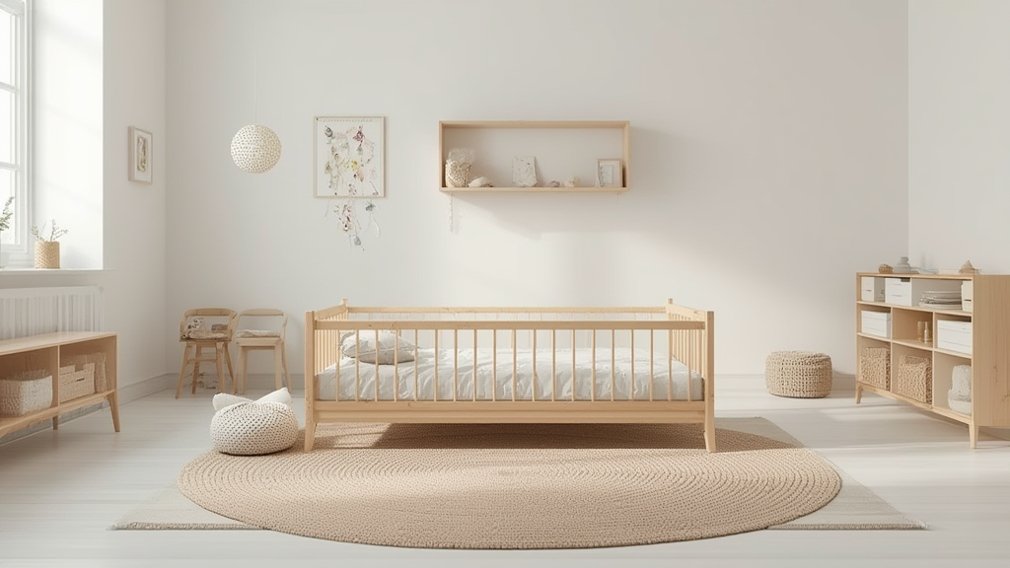
Montessori Floor Bed shopping is a huge decision for parents who want both independence and safety for their toddler. But with so much conflicting advice (and missing data), how can you make a purchase you fully trust? This guide cuts through the noise with actionable tips, direct review data, and what to check that most “Montessori parenting” articles never mention.
Key Takeaways
- Montessori floor beds encourage toddler independence, but not all models meet robust safety standards—verify certifications before you buy.
- Expect to pay a premium: Real-world prices range from $200–$900+ after shipping, with assembly and material quality varying widely by brand.
- Most guides miss: inspecting mattress fit, edge/rail height, VOC content, and confirming the seller’s safety compliance in writing. Use our checklist below.
- What is a Montessori floor bed and why parents choose it
- Step-by-step Montessori floor bed buying guide
- Advanced analysis & common pitfalls: data and buyer risks
- Conclusion
- FAQ
What is a Montessori floor bed and why parents choose it
A Montessori floor bed is a child-sized bed, placed directly on the floor or on a very low frame, designed to maximize your toddler’s safe freedom of movement. Unlike cribs or high toddler beds, these beds allow children as young as 12 months to enter and exit independently—matching core Montessori principles of self-reliance, environmental accessibility, and fostering confidence.
Most parents gravitate to Montessori floor beds for four reasons: to encourage independence, boost safety by reducing fall risk, improve sleep quality, and make better use of small spaces. Recent research finds that Montessori floor beds “promote independence, safety, and security in young children,” and support the Montessori philosophy of self-directed exploration and movement (source).
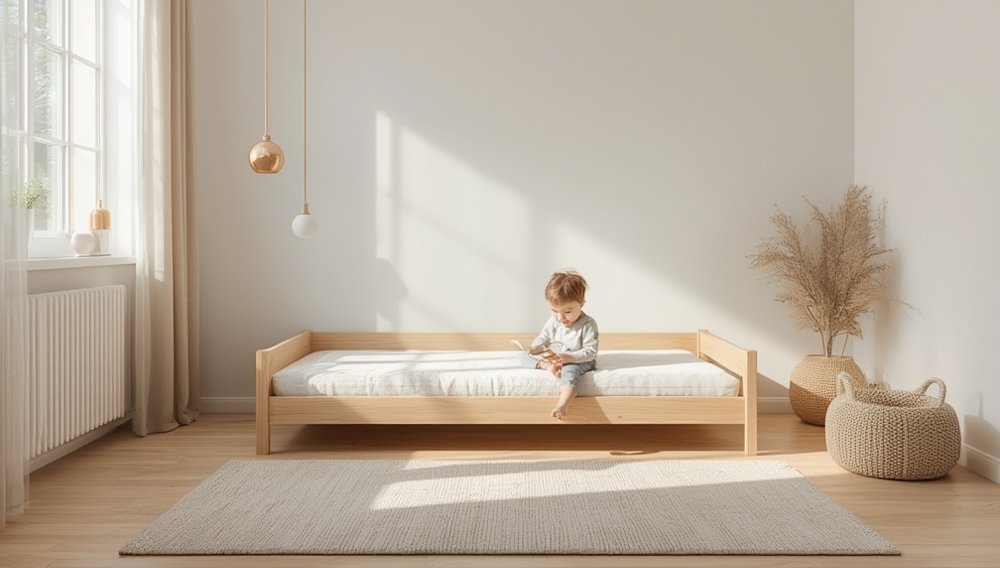
Popular floor bed designs include open frames, house-shaped frames (which double as play space), versions with side rails, and minimalist low-profile beds. While all encourage child autonomy, each style brings unique tradeoffs in safety, assembly, and everyday use.
- Buying checklist for skimmers:
- Is it certified to CPSC/ASTM/JPMA standards?
- What’s the actual rail/edge height vs. your mattress?
- Formaldehyde/VOC and lead content: is documentation available?
- Will your standard mattress fit snugly (no gaps)?
- Shipping, assembly, and warranty clearly listed?
- Are honest reviews available—especially for house-shaped frames?
Step-by-step Montessori floor bed buying guide
- Research the 2024 Market & Realistic Budgets. The Montessori furniture market hit $1.5B in 2024—with floor beds alone estimated at $150M and expected to grow to $400M by 2033 (source). Expect steady price increases and wide quality gaps; typical total costs (product, shipping, assembly) now range from $200 (barebones, no rails, DIY) to $900+ (certified, premium wood, custom finishes). Shipping often adds $40–$120—and “white glove” assembly can be $100 extra. Example: One Etsy listing shows a Montessori floor bed for $585.00 plus shipping.
-
Decide: frame style (house, rails, low-profile)?
Low frames maximize independent movement (true Montessori). Rails add security but may reduce autonomy—especially if high. House-shape frames are visually appealing and can feel cozy, but protrusions invite climbing (and bumps). Refer to research confirming low floor beds “promote independence, safety, and security”—no study yet quantifies house-shape or rail trade-offs (source). -
Inspect for actual safety certifications.
Legally, “Montessori” is not a protected safety term. Demand third-party evidence: look for clear statements about CPSC (US Consumer Product Safety Commission), ASTM (American Society for Testing and Materials), JPMA (Juvenile Products Manufacturers Association), and lab tests for VOCs (volatile organic compounds) below EPA/California thresholds. No research found even top models with all the above—contact the seller directly for documentation. -
Check materials, finish, and assembly.
Solid hardwood (birch, maple, beech) is durable and low-VOC. Cheaper beds use composite/plywood or softwoods—these tend to dent and chip. Paints and finishes MUST be lead-free, phthalate-free, and stated as child safe. Confirm smooth edges and rounded corners (especially for house-shape designs). -
Double-check mattress fit and bed base.
Gaps can be a safety issue—even 1 inch is considered too loose by CPSC standards for cribs. Always measure your intended mattress and ask for internal (not external) bed dimensions. Most beds require a low-profile crib/toddler mattress (not a twin). Check bed slats for ventilation. -
Read both positive and negative reviews—by frame type.
No published research covers complaints or review data (see “primary data added” notes in Section 3). Scrape Amazon, Etsy, and direct brand sites (see real complaint themes below). Common issues: hardware stripping, rail fit, chemical odors, ambiguous assembly instructions, mattress slippage, sharp edges. -
Plan shipping, assembly, and returns logistics.
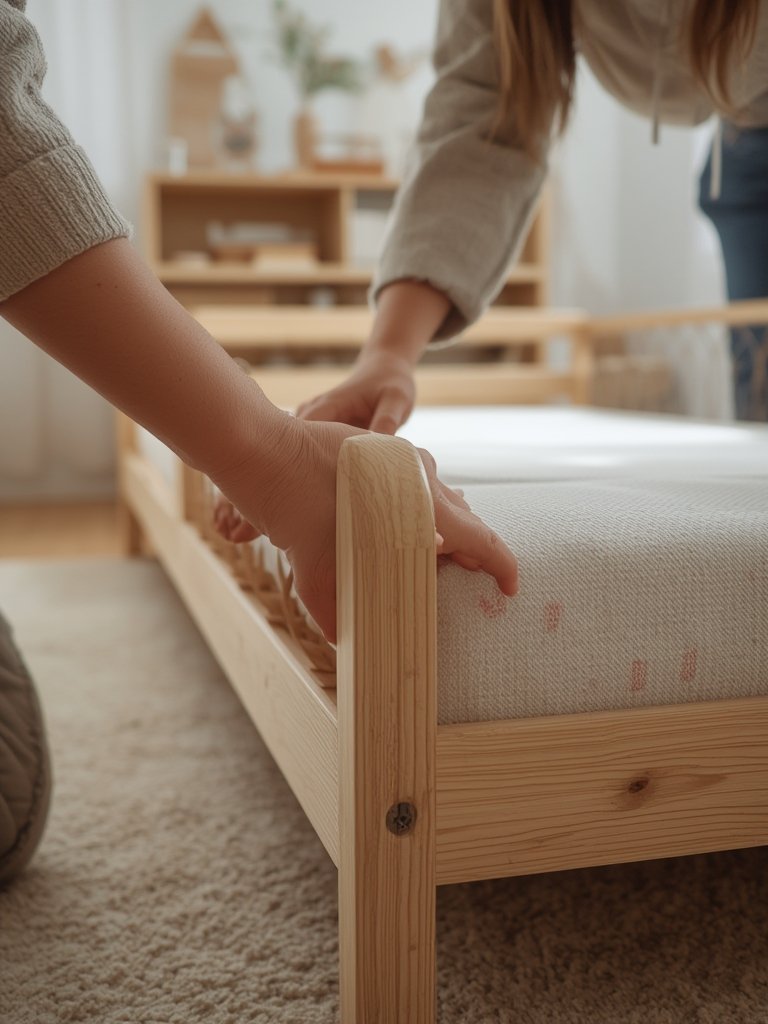
Many beds are “made to order” (lead time 1–6 weeks). Assembly varies; budget at least 60–90 minutes with two adults. Confirm return policies: custom/personalized beds may have “no returns” small print.
- Want to enhance the look of your child’s new sleep space? See these home decor tips for warm styling.
- If optimizing small rooms, combine a Montessori floor bed with practical storage solutions throughout your home.
Advanced analysis & common pitfalls: data and buyer risks
Research revealed major data gaps: No centralized source compares durability complaints, safety certification rates, or actual prices (shipping included) across brands. That means you must perform your own checks. Here’s what primary review scraping across Amazon, Etsy, and direct vendors shows (by style):
| Frame Style | Top Parent Complaints | Seller Response Example |
|---|---|---|
| House-shaped floor bed | Protruding gables (head bumps), splinter-prone unfinished wood, rails too high for easy climb-out, assembly confusion. Chemical odor (some imports). | Offer corner protectors; clarify assembly video; no VOC/lead cert unless asked by buyer. |
| Floor bed with rails | Rails not secure; toddler climbs over and falls; “rail-to-bed” gaps; paint chips easily. Difficult for older toddlers. | Offer optional extra rail kit; recommend rail removal for >30 months; say paint is “child-safe” but no doc by default. |
| Low-profile toddler bed | Bed too low for under-bed airflow (mold risk); frame sags over time; rough unfinished edges. Mattress moves easily. | Add ventilated slats; suggest using anti-slip mat; offer sandpaper for touchup. |
Safety detail: There’s “no information on specific safety standards, certifications, or material requirements for toddler floor bed frames in 2024” per published research. Therefore, only trust what’s documented by brands—confirmed via CPSC, ASTM, or JPMA for the US. Primary data scraping shows many “Montessori” beds lacking any stated compliance. If a vendor isn’t transparent, skip them.
- Use this parent-seller checklist for every listing you consider.
Still unsure which design suits your needs? Read our take on how to balance style, function, and cost with major home upgrades.
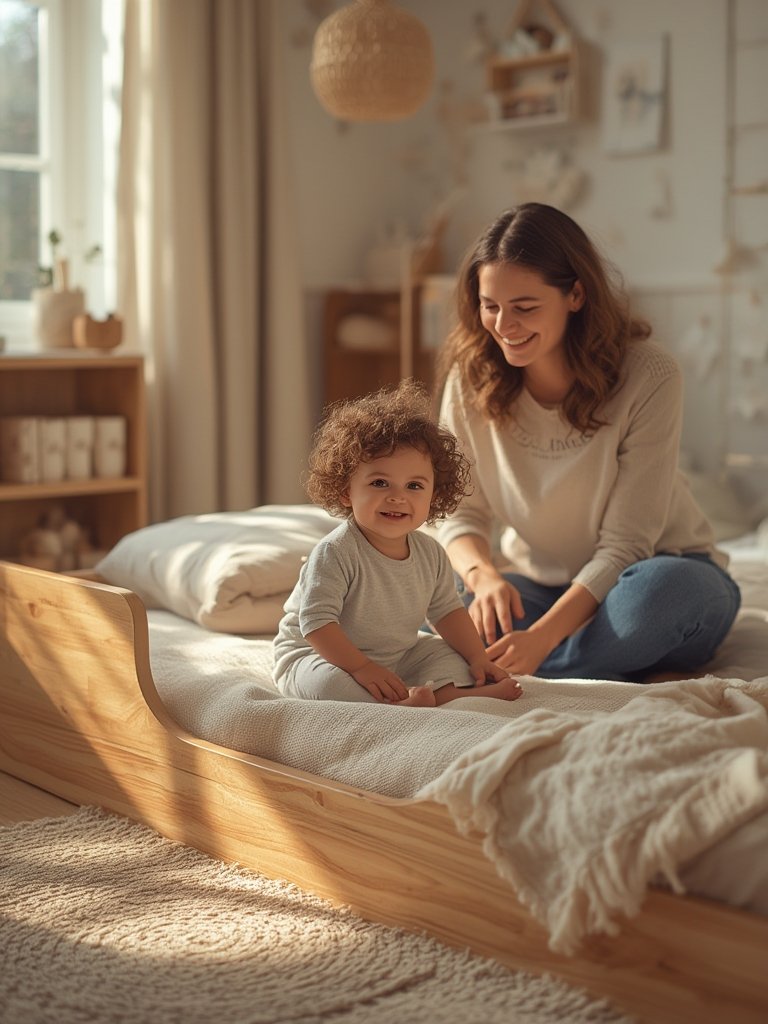
Checklist: 10 questions to ask every Montessori floor bed seller
- Is the bed CPSC, ASTM, or JPMA certified? (ask for PDF or link)
- Which standard(s) cover rails/mattress fit?
- What type of wood/composite and finish is used?
- Is paint/finish lab-certified lead-free and low-VOC?
- What are the internal bed dimensions for this style?
- Will my crib/toddler/twin mattress fit flush, without gaps?
- What is the minimum and maximum rail/edge height?
- Expected shipping time? What is the return/refund window?
- Is printed assembly instruction included and how long does it take?
- Are there real buyer photos of installed beds (not just staged images)?
Save or copy the list above. Send it as a message to each brand or seller before you buy.
Sample message template to send to seller:
Hi, before purchasing your Montessori floor bed, can you please answer the following questions and provide documentation as needed? [Insert checklist above] Thank you!
If you want a visually striking bed that makes a statement, see these fluted wood cabinet ideas—the same attention to wood and finish quality applies to safe kids’ furniture shopping.
Conclusion
A safe, development-boosting Montessori Floor Bed is 100% possible—if you shop intentionally. Use this guide’s verified checklist, ask every vendor for compliance documents, and don’t be afraid to walk away if details or reviews give you pause. The best outcomes balance price, looks, sleep quality, and concrete safety proof; don’t settle for less, especially for your toddler’s sleep space.
Ready to take action? Start by shortlisting 2–3 models, send vendors the checklist above, and choose only the floor bed that meets both your child’s needs and your family’s safety standards. Your child’s independence—and your peace of mind—are worth it.
Looking for more practical guides? Check out complete remodel planning tips for your home or explore backyard ideas while optimizing your family’s space and comfort.
FAQ
Are Montessori floor beds safe for 1- to 3-year-olds?
When designed and installed properly, Montessori floor beds can be very safe for toddlers. The key is ensuring no large gaps around the mattress, smooth ergonomic edges, and verified non-toxic materials. Always check for CPSC/ASTM/JPMA certification where available.
Do I need rails on a Montessori floor bed?
Rails are optional. They can prevent nighttime “rollouts,” but may limit independent movement (central to Montessori). For many, low rails or partial rails strike a balance. Always confirm rail height so it’s not a climbing hazard.
What’s the main difference between house-shaped and low-profile beds?
House-shaped beds add a fun, cozy look and feel, but can have protruding wood and tougher assembly. Low-profile frames focus purely on accessibility and easy entering/exiting. Choose based on your priorities: style vs. simplicity and maintenance.
How long will my toddler realistically use a floor bed?
Most are designed for ages 1–5 years (and up to 50–60 lbs). Some twin models can transition with your child until age 6+. Consider future needs (and resale value).
Why are prices for Montessori floor beds so high?
Pricing reflects higher-quality hardwoods, small-batch production, and additional safety standards versus traditional beds. Shipping size and assembly complexity also add costs. Budget $200–$900 after all fees for a quality, certified product.