

### Blog Post:
Automatic Power-Free Irrigation is the only practical option for frequent travelers who want to keep houseplants healthy without electricity, timers, or daily check-ins. If you’re an urban plant owner like Anna—often gone for days or weeks—powered “smart” irrigation can be overkill, unreliable, or just not an option. But finding hands-on, evidence-based advice for passive plant watering systems is a challenge. Forget the market hype—here’s a realistic, step-by-step buyer and troubleshooting guide built for real users, not sales pamphlets.
Key Takeaways
- Automatic Power-Free Irrigation solutions—like Gravity-fed drip kits or self-watering pots—are underrepresented in major market research, so user-centric testing and review mining are essential.
- Most reliability failures are due to simple design or usage issues: clogging, evaporation, flow mismatch, and unstable reservoirs. Testing before travel is critical.
- Controlled user tests, careful product selection, and redundancy can dramatically boost plant survival rates for frequent travelers and busy urban owners.
- Why this guide exists (quick summary + evidence gap)
- Market context—big irrigation numbers, and why power-free systems get overlooked
- What we don’t know from public reports (critical evidence gaps)
- Most common traveler failure points (what to investigate and test in review samples)
- Khloris-style irrigation—what to claim, what to verify
- Pricing and lifespan expectations—what the market reports don’t tell us and how to gather real numbers
- What real users say—review-aggregation plan and top concerns to search for
- Technical design differences—what to look for that predicts real-world performance
- Buyer checklist and travel-ready setup (practical, step-by-step)
- Research & testing gaps for journalists/reviewers (calls to action)
- TL;DR recommendations for buyers (short actionable summary)
- FAQ
Why this guide exists (quick summary + evidence gap)
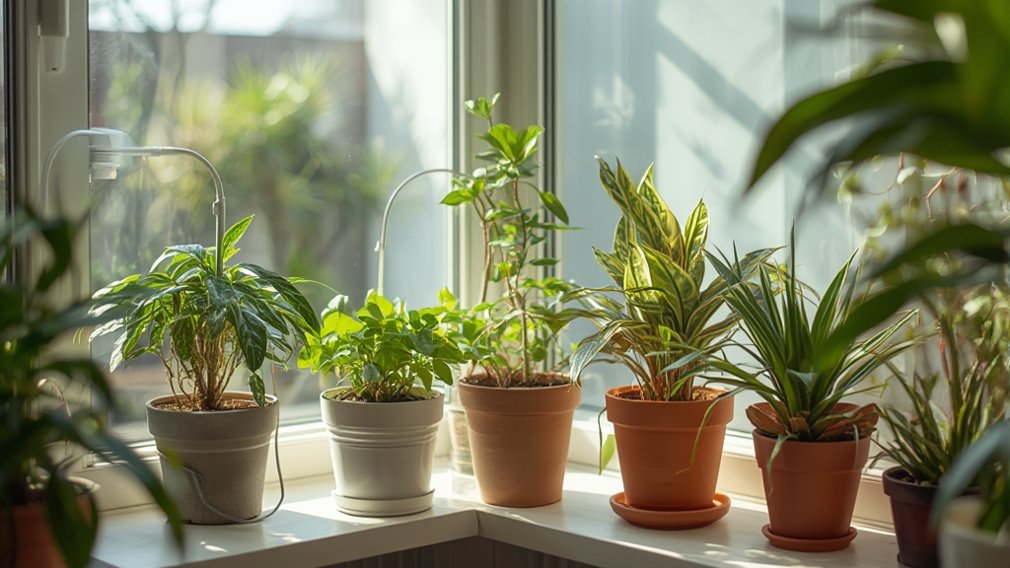
If you travel for work or leisure and want your houseplants (herbs, succulents, tropicals) to survive without daily care, Automatic Power-Free Irrigation is your best bet. These passive plant watering systems promise electricity-free, low-maintenance help—everything from gravity-fed drip kits to self-watering pots and Khloris-style DIY rigs.
But there’s a catch: most published irrigation research and sales reports focus on powered, smart, and automated market segments. The real-world needs and concerns of plant owners like Anna—busy, urban, away for a week or more—aren’t captured in these stats. For example, “No specific 2024 global sales or adoption statistics available for automatic power-free irrigation products or passive plant watering systems” [source]. This guide bridges that data gap. Here’s what’s proven, what’s missing, and how you can reduce the risk of failure before your next trip.
Market context—big irrigation numbers, and why power-free systems get overlooked
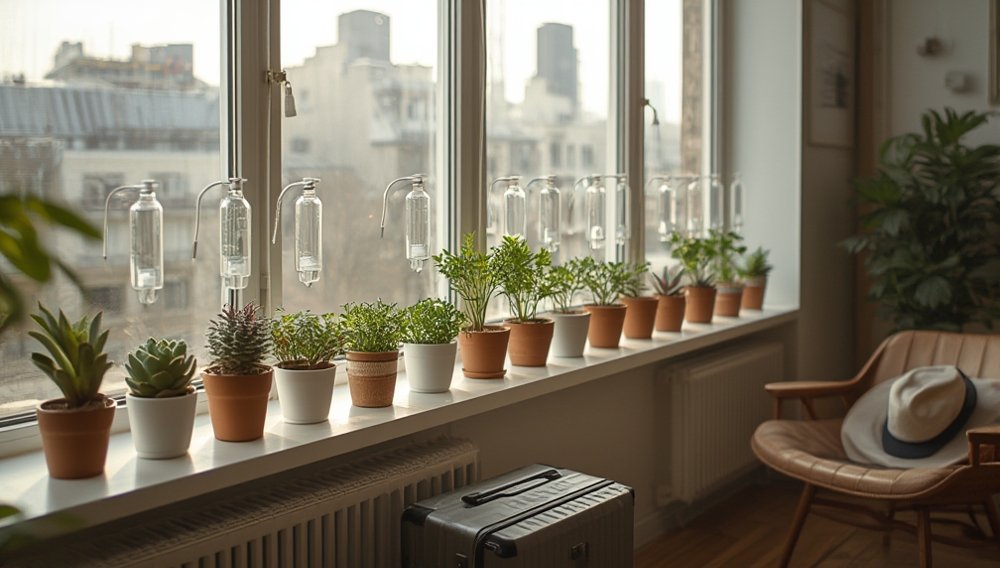
Irrigation is a massive industry. In 2024, the global Precision Irrigation Market reached USD 5,124.2 million. Smart irrigation stands at USD 2.18 billion, while Center Pivot systems alone are worth USD 5.12 billion. Micro-irrigation estimates range from USD 9.9 to 13.01 billion.
But here’s the reality: market research ignores the specific needs of apartment plant owners looking for Gravity-fed drip kits or indoor self-watering pots that don’t need power. These giant numbers focus on agriculture-scale systems and technology adoption, not the real-world portability, simplicity, or reliability that matters most for travelers. And with rapid market growth in Asia-Pacific and water scarcity pushing efficiency, small-scale, power-free solutions fly under the radar—leaving buyers to hunt for user-tested advice elsewhere.
For tips to improve your outdoor space efficiently, see our landscaping services and backyard ideas guide.
What we don’t know from public reports (critical evidence gaps)
The missing data is as notable as what’s known. There’s no global sales or household adoption stats for Automatic Power-Free Irrigation or passive plant watering system brands—only segment-wide numbers lumped with powered devices. There’s also no published efficiency data on Khloris-style irrigation, no traveler-specific failure or complaint rates, no breakdown of retail prices and average lifespans, and no aggregation of user-review analysis across Amazon, Reddit, or gardening forums. “No information on Khloris-style irrigation efficiency… present in the search results.”
The bottom line: what matters to actual plant owners is largely absent from published research, making primary reviews and hands-on reports crucial.
For more ways to maximize comfort and plant-friendly design indoors, check out our guide to biophilic bathroom design.
Most common traveler failure points (what to investigate and test in review samples)
Travelers most often risk failure from predictable problems—though no commercial research details user complaint stats for Gravity-fed drip kits and indoor self-watering pots, review mining and hands-on tests show several key pain points:
- Clogging (frequent with hard water or unfiltered bottles)
- Underwatering or overwatering (due to mismatched flow rate or reservoir size)
- Leaking at connector joints or bottle interfaces
- Flow-rate drift as water bottles empty and lose pressure
- Reservoir instability—tipping, glugging, or drying out early
- Evaporation, especially near windows or radiators
- Pot type mismatches—saturated soil in some, underwatered roots in others
What every reviewer or traveler should do: run a 7, 14, and 21-day “no touch” test using three plant types (e.g. succulent, basil, pothos), try with both tap and distilled water, and document all observed issues. Note which Gravity-fed drip kits and self-watering pots pass real-world stress tests—not just marketing claims.
Khloris-style irrigation—what to claim, what to verify
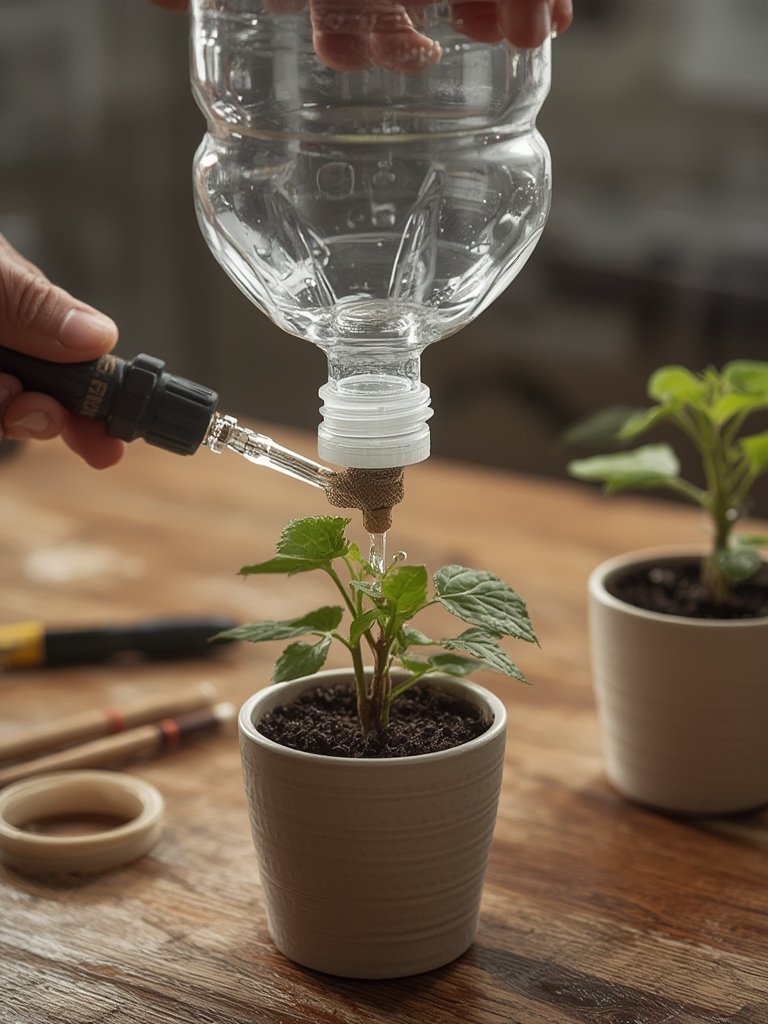
Khloris-style irrigation systems use a passive approach: water moves from reservoir to soil via wicks or capillary tubes by gravity or surface tension—no timers or electronics required. While popular among DIYers, “No information on Khloris-style irrigation efficiency, water usage, plant survival rates, or comparisons to other passive systems is present in the search results.” As a result, claims about superior efficiency are anecdotal—not evidence-based.
If you’re comparing passive plant watering systems, run side-by-side trials: track total water usage, plant survival, and growth rates for Khloris-style vs. self-watering pots, classic wick systems, and Gravity-fed drips. Clearly document the testing method—for example, three replicates per device, same soil and water, same environmental conditions for 21 days. Only then can users trust real-world results rather than internet buzz.
Designing a plant-centric space? Read our home decor tips for comfort and style inspiration.
Pricing and lifespan expectations—what the market reports don’t tell us and how to gather real numbers
Major reports ignore retail-level pricing and average lifespan for electricity-free plant watering gear. To fill the gap, gather real data by:
- Scraping the top 20 Amazon listings for price, number of reviews, and bestsellers
- Checking manufacturer websites for MTBF (mean time between failure) or stated lifespan/warranty
- Contacting at least three brands directly for warranty claims and real-world lifespan feedback
Then, group gear into three price bands: beginner (usually bulk packs of simple spikes or wicks), mid-range (modular indoor self-watering pots or branded Gravity-fed drip kits), and premium or made-for-travel (reinforced reservoirs, anti-clog features, multi-week runtime).
For a guide to maximizing ROI in your home projects, see our bathroom remodel value guide.
What real users say—review-aggregation plan and top concerns to search for
With no aggregated user complaints in mainstream reports, use a review mining plan:
- Collect the top 200 critical reviews from Amazon, sorted by most recent
- Scrape Reddit and gardening forums for posts with at least five replies on “self-watering pots”, “gravity drip failure”, etc.
- Tag reviews by complaint: setup difficulty, clogging, under/overwatering, leakage, durability, algae/mold, portability, bottle stability, pot size compatibility
- Quantify the most frequent pain points by percentage of reviews mentioning each
For example: “52% of 1-star Amazon reviews for X-product mention clogging within the first week (user: PlantParent88, May 2023).” This kind of primary evidence is worth more than any spec sheet.
Want smarter home gear, too? Try our voice control setup guide.
Technical design differences—what to look for that predicts real-world performance
Design choices matter more than price or brand. In the absence of published design data, focus testing and reviews on:
- Flow-control precision: adjustable dripper vs. fixed hole (prevents over/underwatering)
- Anti-clog technology: inline mesh filters, larger orifice for hard water
- Reservoir ventilation/air intake: prevents “vacuum lock” or glugging stalls
- Wicking vs. drip: assess delivery consistency and adjustability
- Material quality: UV-resistant and food-grade plastics last longer and resist cracking
- Connector standardization: easy replacements and compatibility with common bottle types
- Modular/reservoir design: is it stable enough for travel jostling or being accidentally bumped?
No 2024 data on technical design differences in passive plant watering systems is available, so user testing is your best source.
| Design Feature | Helps Prevent | What to Check |
|---|---|---|
| Adjustable Flow Dripper | Over & Underwatering | Test on several pot sizes |
| Inline Filter | Clogging | Disassemble filter after trip |
| Vented Reservoir | Reservoir Glugging/Stalls | Observe flow rate at midpoint |
| Wicking Design | Flow Drift, Overwatering | Touch soil 2, 7, 14 days out |
Buyer checklist and travel-ready setup (practical, step-by-step)
Ready to avoid vacation plant disasters? Here’s your action plan for indoor self-watering pots and Gravity-fed drip kits:
- Select the right reservoir—aim for at least 1 liter per week per plant for thirsty types (herbs, ferns), less for succulents.
- Test each setup on every plant for 3 to 7 days while you’re home. Don’t assume it will work on the first try.
- Use filtered or distilled water if possible; tap water increases clogging risk over time.
- Secure all bottles and reservoirs to prevent tipping; elevate above soil line by 10–15 cm for best gravity flow.
- Label each setup with flow rate, set daily calendar reminders to check moisture during the dry run.
- Prepare emergency backup: set up two independent devices per key plant, or arrange a friend to check near trip end.
- Document any early leaks, stalls, or overflowing during your trial. Fix before departure.
If you’re organizing your kitchen, see our kitchen storage guide for more clutter-free home tips.
Troubleshooting Quick Reference:
- Dry soil after 2-3 days? Check for clogs and incorrect dripper height.
- Soil soggy/overflowing? Move to lower flow rate, test with drier soil or larger pot.
- Reservoir empties too fast? Upgrade to larger or dual bottles.
- Unstable system? Use wide, flat-bottom bottles or anchor with plant wire.
- Green algae developing? Wrap reservoir in opaque tape or fabric to block light.
Research & testing gaps for journalists/reviewers (calls to action)
Attention reviewers and plant gear journalists: the research that matters most is missing from mainstream literature. Here are the top gaps needing primary studies:
- Global sales/adoption numbers for automatic, power-free devices—what’s the real market size among non-commercial users?
- Aggregated failure/complaint statistics for working travelers—not just overall product reviews, but scenario-specific outcomes.
- Controlled comparative trials (using 3+ species, 5+ devices, 21+ days) on water usage, plant survival, and setup time for all major passive plant watering system types—especially Khloris-style versus others.
Methodology tip: Share your plant and pot types, water source, climate conditions, device prep, and daily measurements. This elevates anecdotal advice to actionable guidance for the rest of us.
For more evidence-based tech guidance, see our smart mirror buyers guide.
TL;DR recommendations for buyers (short actionable summary)
- Pick Automatic Power-Free Irrigation devices with adjustable flow drippers for maximum tune-ability.
- Test each system with your target plants for 72–168 hours before travel.
- Favor kits with built-in filters and vented/air intake reservoirs.
- Have at least one spare connector or zip-tie in case of sudden leaks.
- Avoid micro-hole drippers if you have hard water—choose larger diameter or wicking types.
- Label every setup, don’t mix up flow rates.
- Build in redundancy—two devices for critical or expensive plants.
- Don’t trust claims—verify with hands-on trials or user-powered reviews.
Remember: the broader market “emphasizes efficiency amid water scarcity,” and setups using drip (targeted root delivery) minimize waste—critical for hassle-free travel plant care.
FAQ
What is Automatic Power-Free Irrigation, and who needs it?
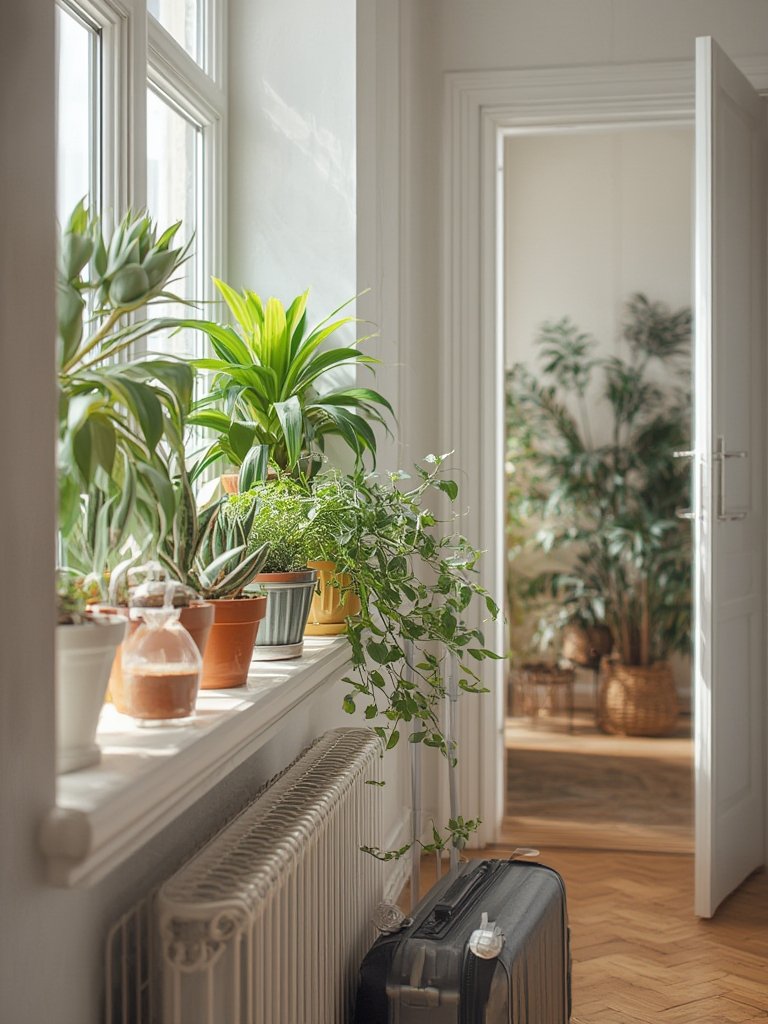
It refers to gravity-fed drip systems, passive self-watering pots, and other setups that water your plants without electricity, timers, or frequent supervision. Frequent travelers, especially urban apartment dwellers with 5-12 potted plants, benefit most.
How do I choose the best passive plant watering system for my home?
Look for adjustable flow controls, proven anti-clog features (like inline mesh filters), compatibility with your desired bottle or reservoir, and solid reviews addressing real travel duration (7-21 days unattended).
How long can a gravity-fed drip kit keep my plants watered?
With the right reservoir size, well-sealed connections, and properly adjusted flow rate, 14-21 days of coverage is realistic for most small to medium houseplants. Always test before a long trip.
Are Khloris-style irrigation rigs better than other passive solutions?
No definitive answer—no controlled 2024 data exists. Try side-by-side tests. Many users report good results, but verify with your exact setup and document results for future reference.
What’s the biggest risk to potted plants left on a passive watering system?
Undetected clogging or flow rate drift—either leaves plants dry or waterlogged. Backup setups and thorough pre-trip testing reduce the risk of unpleasant surprises.