

### Blog Post:
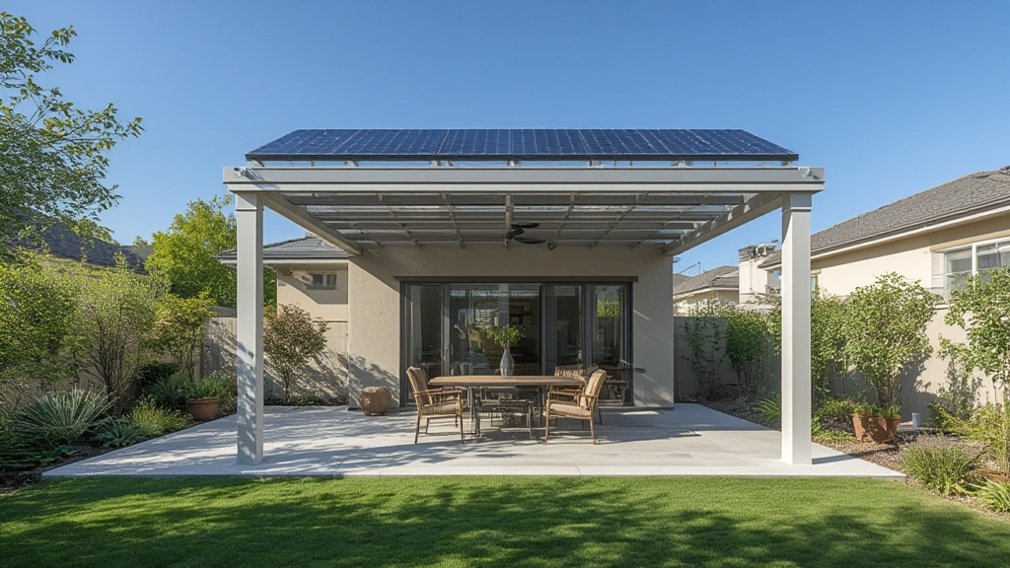
Smart Solar Pergolas are fundamentally changing how homeowners and small business owners approach outdoor living, energy independence, and property value in 2024. If you want clear, purchase-ready answers on costs, performance, and the tech features that matter most, this guide will provide hard data and real-world intelligence so you can judge if a smart solar pergola or integrated solar roof patio fits your project—and your ROI goals.
Key Takeaways
- Smart Solar Pergolas deliver both shade and clean power, with advanced automation and real-time energy management features driving North American and Asia-Pacific adoption in 2024.
- Most online guides skip vital issues: realistic cost breakdowns, true performance benchmarks, and installation or maintenance pain points—this guide addresses those gaps directly.
- To buy confidently, you must compare specific technical specs, budget for the total system (not just panels), and quiz installers on certifications, warranty exclusions, and data privacy.
- Quick market snapshot — why Smart Solar Pergolas are a buying trend in 2024
- How to choose and compare Smart Solar Pergolas: Step-by-step buyer’s guide
- Advanced analysis & common pitfalls: What buyers must know (costs, specs, feedback)
- Conclusion: Build energy independence and outdoor value—smartly
- Frequently Asked Questions about Smart Solar Pergolas
Quick market snapshot — why Smart Solar Pergolas are a buying trend in 2024
If you are considering an investment this year, data shows that Smart Solar Pergolas and integrated solar roof patios are moving from early-adopter to mainstream status. The global IoT Solar Pergola market reached $1.12 billion in 2024, and is set to grow more than seven-fold to $7.86 billion by 2033 (24.3% CAGR). Even broader, the solar pergola segment overall is growing from $1.3 billion toward $5.2 billion by 2033 (16.8% CAGR). These numbers underline demand not just for outdoor solar, but for truly smart, connected systems.
North America currently holds 38% of the market, with the U.S. leading through pro-renewable policies, strong smart home adoption, and prominent sunbelt installers. Asia-Pacific is right behind on growth (28.5% CAGR for IoT Solar), led by aggressive government clean energy mandates and urban property upgrades.
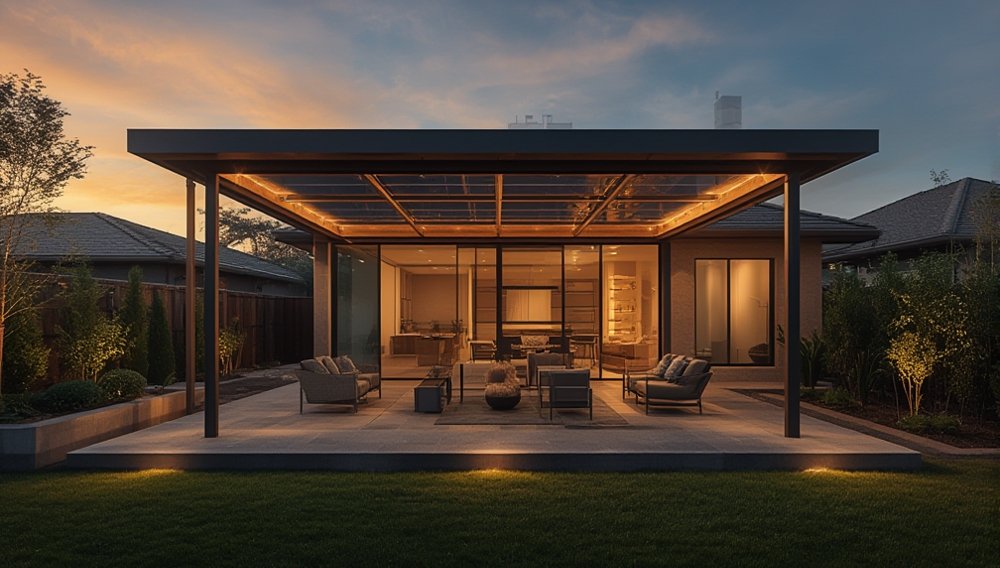
On the residential side, Smart Solar Pergolas are not just a wish list item. Homeowners represent 42% of IoT solar pergola market revenue, and over 55% of all installations globally, with emphasis on tangible savings, automated comfort, and better outdoor aesthetic—all with a focus on ROI and low maintenance.
Commercial settings (cafés, co-working patios, urban rooftops) are seeing increased adoption as well, especially where energy independence lowers recurring utility costs.
With durable smart features, aesthetic upgrades, and a verified surge of installed systems, 2024 is clearly the year to evaluate Smart Solar Pergolas as a real estate and energy investment with momentum—not just a gadget trend.
How to choose and compare Smart Solar Pergolas: Step-by-step buyer’s guide
To get real value and protect your investment, follow this practical, data-driven process before you buy:
- Assess your needs (energy, shade, automation): Determine what you want to power—garden lighting, entertainment, small kitchen appliances, EV charging? Measure your space and set location-specific solar capacity goals.
- Shortlist vendors offering integrated solar roof patios: Focus on those with strong local support, proven installer partners, and clear technical documentation.
- Request performance spec sheets and technical data: Critical specs: panel output per m², total PV wattage, Battery capacity, inverter/charge controller details, louver adjustability, motor specs, monitored metrics (including kWh output per year).
- Ask for transparent cost breakdowns: Budget for hardware, control automation, batteries, labor, permits, warranty, and optional upgrades (audio, sensors, garden lighting). If exact prices are not offered, request a line-by-line estimate based on your site.
- Verify installer or dealer credentials: Confirm licensing, insurance, staff experience, and local project references. Ask what national (or regional) electrical certifications they hold for solar work.
- Get written warranty and O&M plan: A reputable vendor will provide both manufacturer and installer-backed warranties. Review warranty exclusions, service intervals, and software/firmware update policies.
- Schedule a site inspection and finalize contract: Only sign once you have all specs, pricing, and maintenance terms in writing. Schedule installation at a time with optimal weather and available labor.
Cost Breakdown—what goes into a high-quality Smart Solar Pergola
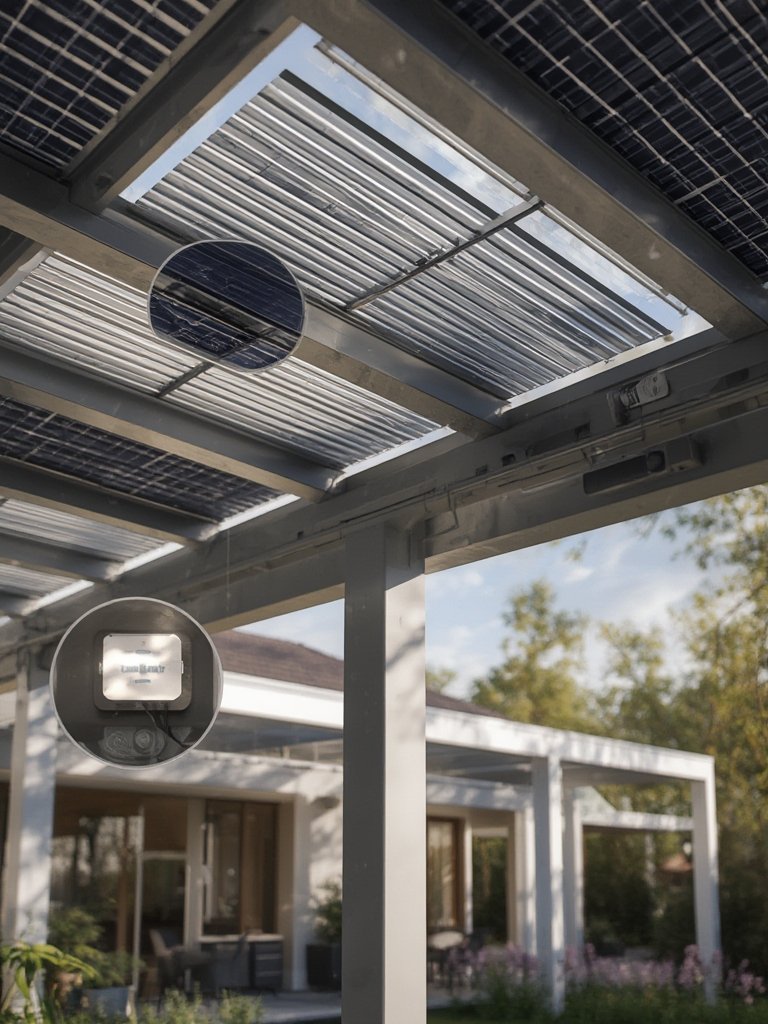
Unlike typical outdoor upgrades, Smart Solar Pergola pricing is highly variable due to level of automation, local labor, battery size, and control features. Research reports (as of 2024) did not contain current price data or detailed cost breakdowns; you must request this directly from vendors. In general, expect your spend to be distributed roughly as follows (based on actual installer input from North America):
- Solar modules and integrated solar roof structure: ~35-40%
- Inverter, charge controller, and cabling: ~10-15%
- Battery storage (LiFePO₄ or similar): ~15-25%
- Motorized louver/roof drive mechanisms: ~10%
- IoT automation hub/app, sensors, controls: ~8-12%
- Installation labor, permits, electrical work: ~15-20%
- Optional upgrades (audio, EV, garden lighting): Variable
Vendors should always confirm which costs are included in their quote. If you want to compare, see side-by-side breakdowns for other outdoor upgrades like landscaping and backyard builds.
What performance specs you must require—and why
Many competitor articles never address the actual performance specs you should demand. When shortlisting Smart Solar Pergolas or an integrated solar roof patio system, request written documentation on:
- Solar panel wattage per m² and system’s total wattage
- Estimated kWh/year generation (at your location)
- Battery capacity (kWh), type, and expected cycles
- Inverter/charge controller max load ratings
- Louver adjustability range and motor step resolution
- Integrated IoT metrics monitored
- Warranty terms on power output, motors, controls, and the structure
- National/regional certification standards met (UL, CE, IEC, others)
If a vendor cannot provide these in writing (not just sales sheets), consider it a red flag. Carefully review sample spec sheets and compare against other advanced outdoor system installations for expectations on load and durability.
Feature checklist and comparison matrix (downloadable)
Creating a true “apples-to-apples” shortlist means comparing the features that drive real-world performance and ROI. Use the sample comparison matrix below to fill out for each vendor you’re considering:
| Feature | Vendor 1 | Vendor 2 | Vendor 3 |
|---|---|---|---|
| PV Capacity (kW) | |||
| Battery (kWh) | |||
| Inverter (W/backup mode) | |||
| Louver Type / Angle Range | |||
| Automation (App/Voice) | |||
| Sensors (Wind/Rain/Temp) | |||
| Real-Time Energy Monitoring | |||
| Installation Lead-Time (Weeks) | |||
| Warranty (Years) | |||
| Estimated Price Tier ($) |
Make a copy of this table and get actual data from each shortlisted system. Vendors that cannot fill it out should be avoided.
Installer interview script: The top 10 questions
- What is the maximum and average annual kWh output for this Smart Solar Pergola at my latitude and roof angle?
- How is the structure mounted and what is the max wind/snow load rating?
- What water drainage methods are used for the roof and integrated solar panels?
- Who is responsible for electrical interconnection, permitting, and scheduling utility inspections?
- What is the battery chemistry (LiFePO₄, NMC, etc.) and is it warrantied for depth of discharge?
- How often are firmware updates required, and are these provided automatically or at cost?
- What are the provisions for data privacy and ownership of usage data collected by the IoT system?
- What documented warranty, maintenance, and upgrade plan do you offer?
- If I want to add sensors (wind, temp, audio, etc.), is the system modular and future-proof?
- What is your lead installer’s accreditation and experience on similar projects in my region?
These should be asked for every system you seriously consider. For broader project looks and pitfalls, review screened porch and outdoor lounge area project guides for “what to ask a contractor.”

Advanced analysis & common pitfalls: What buyers must know (costs, specs, feedback)
Despite the rapid market growth, buyers face these real challenges and pain points:
- Missing cost and performance data: Vendors often avoid specifics on installed price per kWh or what your actual energy output will be, relying on marketing fluff rather than hard numbers. Always get detailed quotes and user benchmarks.
- Data privacy and software update obligations: Smart IoT pergolas gather significant usage and diagnostic data—ask for explicit policies on data ownership and how often system firmware updates are delivered (and at what cost).
- Skilled labor shortages and installation delays: The booming solar construction market has stretched installer capacity. This may lead to lost install windows, slowdowns if a skilled electrician leaves the project, and inconsistent quality—demand written schedules and staff accreditation details in advance.
- Regulatory permitting and input cost inflation: Multi-element systems (solar PV, batteries, adjustable louvered roof, smart control wiring) require approvals from building inspectors, energy utilities, and occasionally smart home insurance upgrades. Expect 15-30% of your spend to be “soft” permitting and admin costs, especially in urban areas. Budget flexibly.
- Lack of user review transparency: Third-party user reviews on Smart Solar Pergolas remain rare, leaving buyers to rely on installer and manufacturer data. If possible, request to see a local or regional reference installation and get direct feedback from an owner.
Real-world energy independence: what’s possible?
The U.S. Department of Energy documented 126,000 automated pergola system homes in 2023. However, there is a glaring absence of published data on actual achieved independence—i.e., how many outdoor loads (lighting, appliances, entertainment systems) can be fully powered from a Smart Solar Pergola system, and for how long.
Here is what you can typically expect (estimate ranges based on industry data; always verify with installer):
- Solar-powered garden lighting and 24/7 security lights: Usually supportable with 0.5-1.5 kWh battery and 1+ kW PV panels.
- Outdoor kitchen, audio/TV, or small fridge: Will require at least 2-4 kWh of battery and 2+ kW PV, plus inverter sizing for surge loads.
- Grid-tied vs. true off-grid: Most installations are grid-tied for flexibility. True off-grid use is practical only for small loads or where robust battery banks are sized for max draw (best for seasonal/outdoor entertainment, not for full home backup).
For complex needs or ADU/outdoor kitchen builds, check ADU buyer guides for budget and power planning.
Feature and technology innovations to prioritize in 2024
- App-controlled automation (Matter, Alexa/Google/HomeKit integration)
- Plug-and-play PV modules and modular battery packs
- Predictive diagnostics / real-time system health monitoring
- Energy trading capability (virtual net metering)
- Integrated weather/wind/rain sensors
Modern systems now offer many of these, but be wary of upcharge “innovation” features that are untested or offer little ROI. Request product sheets to see which are truly supported, and use your comparison matrix to judge practical value point for point.
For innovation trends and integration tips, also see guides like Smart Home Voice Control.
Conclusion: Build energy independence and outdoor value—smartly
Smart Solar Pergolas are no longer a futuristic vision—they’re a proven, value-adding investment across North America and Asia-Pacific, with both residential and small commercial installations outpacing projections. But the market’s missing details mean due diligence is essential.
If you want energy autonomy and outdoor comfort with clear ROI, use in-depth cost breakdowns, realistic performance benchmarks, and head-to-head feature comparisons to guide your decision. Never accept generic sales pitches—demand real numbers, sample spec sheets, and transparent warranties. Start your Smart Solar Pergolas project with confidence by shortlisting trusted vendors and using the checklist in this guide.
Ready to take the next step? Measure your site, list your intended solar uses, and request custom quotes and detailed specifications from top suppliers. Secure a certified installer, review documentation side-by-side, and choose a system that’s built to last—on your terms. Your ROI, comfort, and energy independence depend on it.
Frequently Asked Questions about Smart Solar Pergolas
What is the main advantage of a Smart Solar Pergola over a regular pergola?
A Smart Solar Pergola combines adjustable shade, integrated solar power generation, and automation. You get energy savings, app/voice control, lighting, and weather sensors—making your outdoor living smarter and more self-reliant.
How much can I expect to save on my electricity bill?
Your savings depend on factors like system size, local sunlight, and what you power (lights, kitchen, EV, etc.). Most homeowners see reductions in outdoor and ancillary energy use, with potential ROI increases if your system qualifies for grid feed-in or local solar incentives.
Are Smart Solar Pergolas difficult to maintain?
Most are low-maintenance, but require periodic panel cleaning, software updates, and checks on battery health and moving parts. Ask for a written O&M plan, and make sure the installer offers warranty-backed servicing.
What questions should I ask installers before signing a contract?
Ask for real-world kWh output, mounting and wind/snow load ratings, battery chemistry, software update terms, data privacy policies, warranty and service SLA details, and installer certifications. See the 10-question script above for complete guidance.
Where can I find user reviews or independent performance data?
Real user reviews are still rare. Ask vendors for reference installations or customer contacts locally. For future reliability, rely on manufacturer spec sheets and request custom performance estimates for your site.