

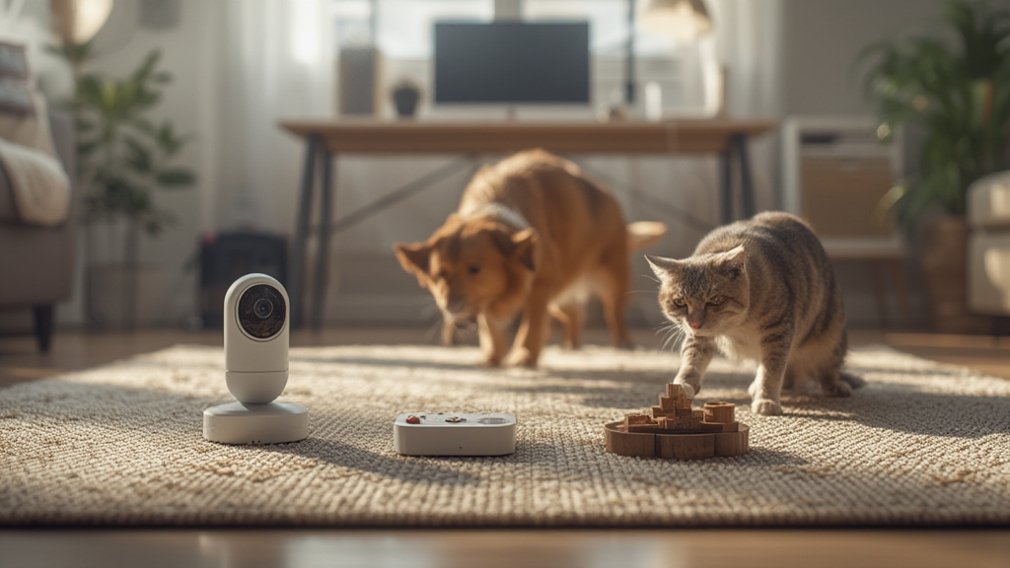
Pet Enrichment Tech is transforming work-from-home life for busy pet parents—helping energetic dogs and indoor cats stay engaged, safe, and calm without constant hands-on attention. If you’re considering which gadgets to trust with your furry friend, here’s what matters most before you buy.
Key Takeaways
- Set up for reliability: Battery, connectivity, and safety features are crucial for truly “hands-off” pet enrichment tech.
- Rotate devices and customize routines: Prevent pet boredom by mixing smart puzzle toys, laser toys, and AI cameras based on your work-from-home schedule.
- Evidence gaps: User reviews, spec sheets, and expert opinions matter—independent studies on enrichment effectiveness are mostly missing.
- Market snapshot — why Pet Enrichment Tech matters for WFH owners
- Quick category primer — what each product actually solves
- Buyer’s checklist — the technical specs and features that matter most for WFH reliability
- Side-by-side use-case guide — which product to buy by schedule, pet profile, and goal
- Common frustrations & unmet needs
- Price range, lifespan, and return/dissatisfaction signals — what we can and can’t state confidently
- Evidence of effectiveness — what studies or expert input exist
- Top 3 content gaps competitor posts usually miss
- Research checklist for the writer — sources & data points to obtain before drafting product recommendations
- Tone, structure, and transactional elements to include
- Conclusion
- FAQ
Market snapshot — why Pet Enrichment Tech matters for WFH owners
The global pet tech market reached USD 7,678.2 million in 2024, with pet wearables (like collars and activity trackers) making up 38% of sales. Smart feeders and pet-camera units—many with treat-dispensing and voice features—represented 34% of the market. Most importantly, adoption of smart pet devices is accelerating: in the U.S. and Europe, 62% of pet owners invested in these devices in 2024, compared to only 49% in 2022 (source). This momentum is fueled by higher owner expectations: just as many people now run their home and kitchen from their phones, they expect dependable, automated engagement for their pets—especially when juggling work and meetings from home.

Quick category primer — what each product actually solves
Pet enrichment tech falls into a few main types, each addressing different needs for dogs and cats:
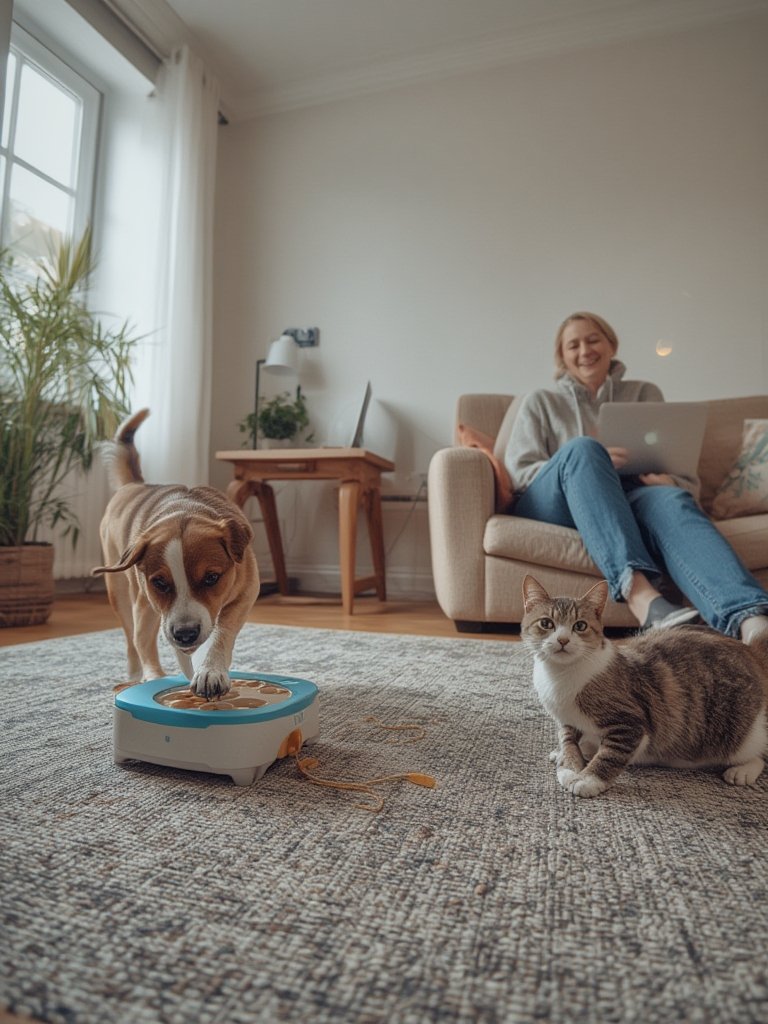
- smart dog puzzle toys: Designed for self-play or minimal owner intervention. Dispense treats or kibble based on puzzle-solving, providing both mental and physical stimulation. Best for dogs who need mental challenges and are prone to boredom or chewing. Many options now have “smart mode” features or mobile app controls for tracking and adjusting complexity.
- automated cat laser toys: Give energetic or indoor cats exercise with unpredictable laser patterns, usually set to auto-run or scheduled timers. Some incorporate randomization to prevent simple memorization; choose models that shut off automatically for safety.
- AI pet cameras: Let owners check in remotely, speak to pets, and dispense treats on schedule or in response to movement. Especially helpful for separation anxiety in both dogs and cats. Advanced models use AI to detect barking, movement, or distress.
- Interactive snuffle mats: These combine scent-driven enrichment (nose work) with searching for treats, slowing down meal times and providing low-tech but highly effective engagement, especially for dogs of all ages.
When deciding, think about your pet: Puppies, high-energy adult dogs, and inquisitive cats need different mixes of “skill” and “screen time.” Smart dog puzzle toys and snuffle mats can keep dogs busy longer; laser toys entertain cats when you can’t engage, but should be counterbalanced with tactile toys outside tech time.
For more info on optimizing your living spaces for pets and humans, see our small screened-in porch guide—perfect for when you want your pets to safely enjoy the outdoors, too.
Buyer’s checklist — the technical specs and features that matter most for WFH reliability
The difference between a “set-and-forget” solution and daily frustration lies in a few technical details:
- Battery life / mains power: For smart dog puzzle toys and automated cat laser toys, look for long-life rechargeable batteries or options with direct USB/mains power. Short battery life means more interruptions.
- Connectivity reliability: AI pet cameras and feeders should offer stable Wi‑Fi, clear app support, and fallback modes (like local operation or Bluetooth) when the network is spotty.
- AI features: The best devices use motion detection, scheduling, and individualized learning to adapt play or treat rewards. Adjustability is key for sustained engagement.
- Safety mechanisms: Auto-shutoff, overheat sensors, and chew-resistant materials are non-negotiables. For interactive snuffle mats, ensure machine-washability and food-safe fabrics.
- Maintenance and cleaning: Devices that require tedious disassembly or have tricky crevices for treats will likely be shelved in a few weeks.
Always read reviews from remote workers, not just general buyers. Their frustrations—like missed treat dispensing during Zoom calls—mirror what you are most likely to encounter.
For more on hands-off automation, see our smart home voice control buyer’s guide.
Side-by-side use-case guide — which product to buy by schedule, pet profile, and goal
Choosing the right mix of pet enrichment tech is less about having the latest gadget, and more about matching your remote work schedule and your pet’s temperament. Here’s a breakdown:
| Scenario | Recommended Devices | Why It Works | Rotation Ideas |
|---|---|---|---|
| Short focus sprints (30-60 min meetings) | Interactive snuffle mat, simple puzzle toy | Low-tech, minimal risk; slows feeding, promotes self-play | Alternate between treat-stuffed and kibble-only mats |
| Back-to-back calls (2-4 hrs) | Smart dog puzzle toy, AI pet camera w/ treat | Delay boredom; check in and dispense treat during a break | Rotate puzzle toy designs weekly to prevent habituation |
| Full workday away from desk | Automated cat laser toy, smart feeder, AI camera for remote calm | Motion triggers break up long periods alone | Set timers differently each day; hide toys between sessions |
For deeper remodeling tips that create a WFH- and pet-friendly home base, see our kitchen and bathroom remodel guide.

Linking your enrichment tech to your daily routine improves both pet happiness and your own productivity. For an energy-saving angle on home upgrades that complement responsible pet ownership, check out our energy-efficient bathroom guide.
Common frustrations & unmet needs
No device is perfect. Here’s what buyers should expect—and where objective review data is still lacking:
- Setup headaches: App pairing can be buggy, instructions unclear, or QR codes unresponsive. This is especially true for first-gen AI pet cameras.
- Connectivity drops: Spotty Wi‑Fi means some owners miss live notifications or treats get “stuck” until they reconnect.
- Durability doubts: Aggressive chewers often outsmart or destroy parts. Budget versions of smart dog puzzle toys may have weak seams or thin plastic; check for verified “chew-tested” claims.
- Losing pet interest: Pets may tire of automated cat laser toys or puzzles after a few weeks. Devices without variable patterns or difficulty settings accelerate this problem.
- Safety hazards: Cheap batteries, non-food-grade plastics, and exposed motors are a risk—read spec sheets closely, and choose well-known brands with strong return policies.
- Messy operation: Treat-dispensing can mean crumbs, stuck treats, or greasy buildup—if parts are hard to clean, you’ll dread using it.
Most of these issues show up in verified owner reviews, but there is a lack of consolidated, independent data ranking which brands or models have the highest rates of specific problems. For a similar discussion about maximizing durability in daily-use home products, see our guide to fluted wood cabinets.
If you encounter any of these frustrations, document your issues—it helps other buyers and pushes the market forward.
Price range, lifespan, and return/dissatisfaction signals — what we can and can’t state confidently
Based on high-level market observation, here is a general guide for price and durability to help narrow your shortlist:
- Budget (<$40): Basic interactive snuffle mats, entry-level automated cat laser toys; expect 6-12 months’ life with mild use.
- Mid-range ($40–$100): More advanced smart dog puzzle toys and some AI pet cameras; typically offer moderate adjustability, better warranty support, and more durable plastic or fabric blends.
- Premium (>$100): AI pet cameras with smart notifications, 2-way audio, and treat control; rugged and reinforced interactive toys; optional app integration and automated scheduling. Should last 2 years or more with regular cleaning.
Average price, return rates, and lifespan details for specific models or brands are not currently available in public research. Look for clear warranty and satisfaction guarantees before buying.
For more on balancing upgrade costs and long-term value, our bathroom remodels guide provides a similar price-band approach for another major investment area.
Evidence of effectiveness — what studies or expert input exist
Currently, there is a lack of independent studies, controlled trials, or long-term behavioral surveys proving that smart dog puzzle toys, interactive snuffle mats, or automated lasers reduce destructive behavior or separation anxiety for pets home alone. Most claims come from manufacturers or influencers, not third-party experts.
- What would count as evidence? Controlled experiments tracking boredom, stress, or destructive acts before and after enrichment tech is introduced.
- Owner/behaviorist endorsements: Look for products validated by veterinarians or certified animal behaviorists—but check for genuine, named reviews, not just “vet-recommended” labels.
- Direct owner surveys: Because the field changes rapidly, new peer feedback is crucial. Search for up-to-date Amazon “verified purchase” reviews that report on both initial setup and sustained interest months later.
Until more thorough research is public, rely on a wide mix of expert input and crowdsourced experiences when vetting any enrichment device.
Top 3 content gaps competitor posts usually miss
- 1. WFH-specific device rotation strategies. It’s not just about having a device, but rotating types (smart dog puzzle toys, interactive mats, laser toys) based on your real work schedule and pet boredom thresholds.
- 2. Practical setup and “out-of-box” reliability troubleshooting. Stepwise guides for syncing AI pet cameras, managing buggy apps, or prepping puzzle toys for repeat use are seldom covered honestly.
- 3. Long-term engagement and safety/wear guidelines. Few guides explain how to spot declining engagement (signs of pet fatigue or device damage), or provide maintenance reminders to keep toys safe year-round.
If you want comprehensive, actionable help beyond surface-level shopping lists, prioritize resources that break down these topics.
Research checklist for the writer — sources & data points to obtain before drafting product recommendations
To provide a truly authoritative buyer’s guide for pet enrichment tech, prioritize gathering:
- Recent Amazon or Best Buy verified-purchase reviews (look specifically for WFH users/owners of energetic pets).
- Manufacturer specification sheets listing battery life, materials, durability, and warranty.
- Sales rank data from major retailers to flag reliability and satisfaction trends.
- Peer-reviewed behavior studies and published vet/behaviorist interviews about boredom, anxiety, and safety outcomes.
- Owner-conducted surveys on ease of setup, app issues, pet interest levels over time, and common failure/frustration patterns.
Much of this data is not available in current surface research. Writers should combine direct owner insights with credible third-party evidence for balanced recommendations.
Tone, structure, and transactional elements to include
- Practicality front and center: Be decisive about “what’s best for X”—not every product is for every pet or owner.
- Clear buy triggers: Use best-for-use-case callouts (e.g., “Best for high-energy dogs during meetings,” “Best budget for daily sniffing”). Include quick-fix sections for common setup issues.
- Safety checklist: Always remind buyers to check for food-safe, chew-proof, and auto-shutoff specs before buying.
- CTAs and comparison bullets: Don’t make readers hunt for the next step. Recommend “shop the picks,” “compare trusted models,” or “review owner ratings” explicitly.
- Evidence-based trust: Reference the 62% smart pet device adoption rate in 2024 to normalize pet tech purchases, but emphasize that hands-on due diligence—using setup reviews and expert input—is how you avoid regret.
Conclusion
Smart Pet Enrichment Tech can deliver game-changing peace of mind for work-from-home pet parents—but only when you choose and manage devices with a practical, skeptical eye. Prioritize reliability, safety, and realistic setup based on what your own routine demands. Ready to simplify your workday? Start building a smart pet toolkit today, compare feature sets closely, and look for devices proven to keep pets entertained long-term with minimal stress for you.
Want more strategies for optimizing your home life, comfort, and tech integration? Explore our latest guides on home decor tips and landscaping ideas next.
FAQ
Are smart dog puzzle toys safe for unsupervised play?
If the toy comes from a reputable brand and is labeled “chew-resistant” with no exposed batteries or small parts, it’s generally safe for most dogs. Always check it for wear and remove it if you spot cracks or loose components.
How long do automated cat laser toys keep my cat entertained?
Most cats maintain interest for 10-15 minutes at a time. Rotate their use, hide the toy between sessions, and blend with tactile or scent-based enrichment for best results.
What if my Wi‑Fi drops during a work call—will my AI pet camera still work?
Some models revert to local mode, continuing scheduled treat dispensing regardless of network connectivity. Check the product specs for backup features and always test before relying on remote operation.
Do interactive snuffle mats help with separation anxiety?
For many dogs, yes—searching for treats occupies their mind and slows their heart rate. But results vary, so watch your pet’s behavior the first few times and consult your vet or a behaviorist if serious anxiety persists.
How do I know if my pet is getting bored or frustrated with a device?
If your pet stops interacting with the gadget or shows signs of stress (barking, scratching, pacing), it’s time to rotate devices or introduce new challenges. Mix technology with classic toys and human interaction for sustained engagement.